Pope Urban II — "Let no delay postpone the journey, but let all, having leased their lands and co…"

Let no delay postpone the journey, but let all, having leased their lands and collected money, when winter has ended and spring has begun, zealously set out on the road with God as their guide.
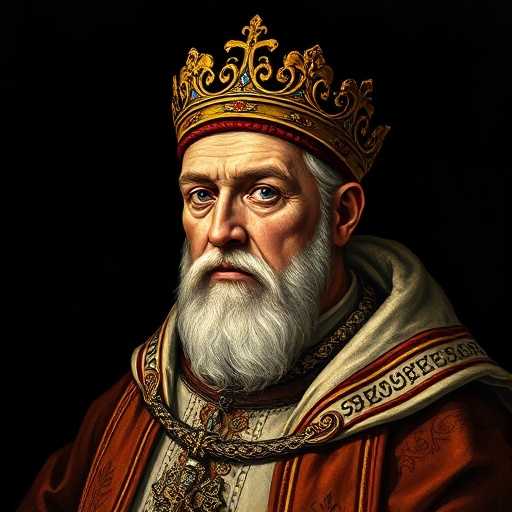
Pope Urban II — Pope Urban II Medieval · Launched the First Crusade

Get This Quote & Author's Image Illustrated On:

Click any product to generate a realistic preview. Up to 3 at a time.
* Initial load can take up to 90 seconds — revising the preview in another color is nearly instant.

Kitchen

Apparel

Other

About Pope Urban II (c. 1042-1099)

Pope (1088-1099) whose Council of Clermont speech (November 1095) launched the First Crusade — the founding event of nine centuries of Christian-Muslim military conflict. Closely associated with Pope Gregory VII (his predecessor on papal-imperial reform). For an intellectual contrast, see Saladin, Kurdish-Muslim Sultan of Egypt and Syria (1138-1193) — Saladin recaptured Jerusalem in 1187, undoing the First Crusade Urban II launched 92 years earlier. Saladin's chivalrous treatment of Christian prisoners became the canonical Muslim counter-image to Crusader brutality. The cleanest before/after pairing of the Crusades' moral arc.

Details

Letter to the Flemings, c. December 1095

Date: 1095

Shocking

Verification

Unverifiable

Found in 1 providers: grok

1 source checked

Understanding this quote

What it means

Waste no time preparing — lease your property, gather your funds, and depart when spring arrives. God will guide those who commit fully and move without hesitation. This is a call to decisive, total action: sell off your earthly ties, prepare practically, and march. Delay is a moral failure here, not just a logistical inconvenience.

Relevance to Pope Urban II

Urban II delivered this call at the Council of Clermont in 1095, personally launching the First Crusade. As pope, he wielded spiritual authority to mobilize armies — framing military action as divine pilgrimage. His background as a Cluniac monk shaped his belief in radical commitment: just as monks renounced worldly comfort, crusaders must abandon lands and livelihoods for God.

The era

In 1095 medieval Europe, land was identity and livelihood — leasing it to fund a military pilgrimage was an enormous sacrifice. The Byzantine Empire had just sent urgent appeals for help against Seljuk Turks who had seized Jerusalem. Feudal lords, peasants, and clergy alike responded en masse, beginning a century of holy wars that reshaped Europe, the Middle East, and Christianity itself.

AI-generated insights based on extensive research and information for context. Factual errors? Email [email protected].
Your Cart

Your cart is empty