What it means
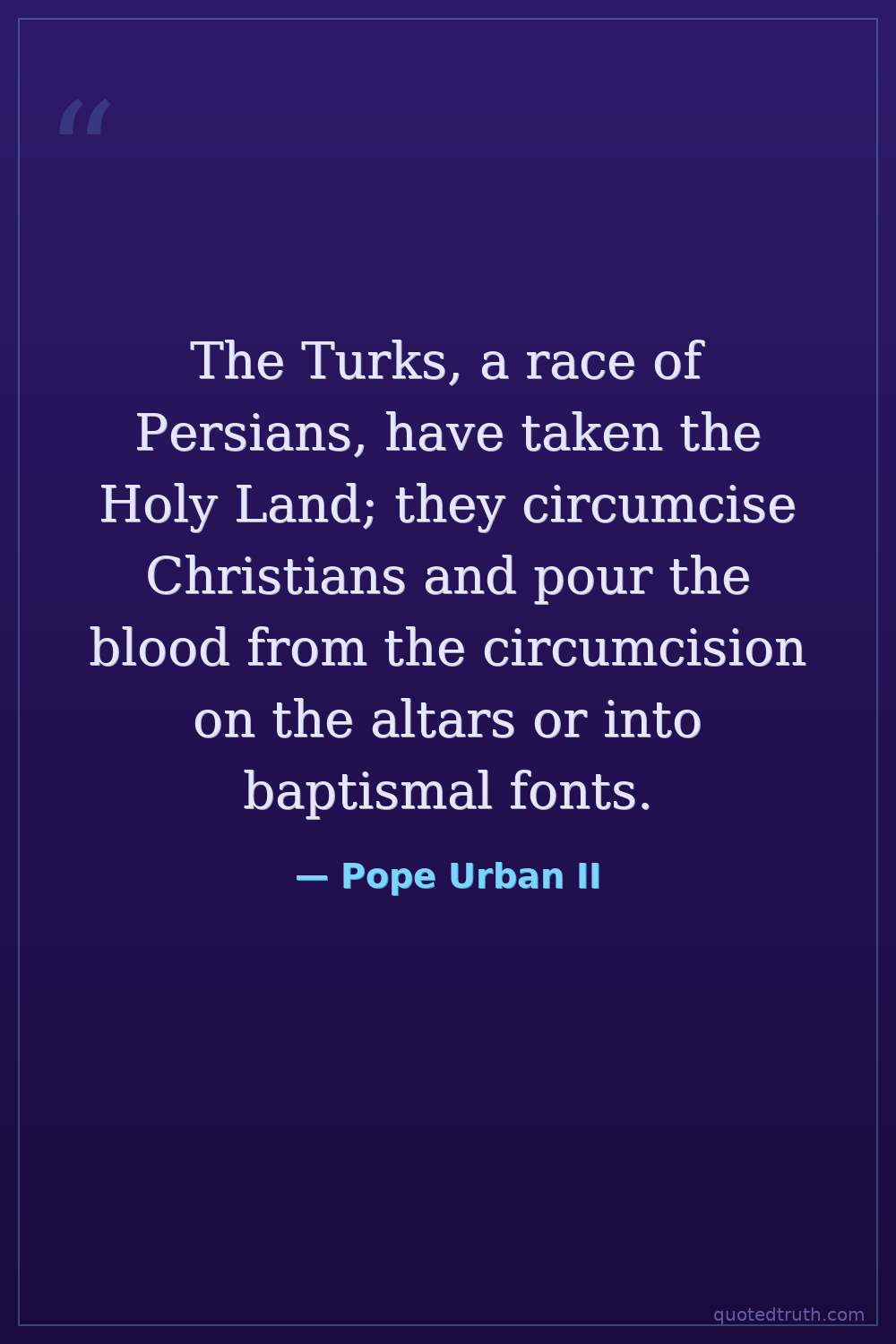
The speaker accuses Seljuk Turks of seizing the Holy Land and ritually defiling Christians through forced circumcision, with the blood deliberately poured onto Christian altars and baptismal fonts. The claim frames Muslim rule as active sacrilege against Christian bodies and sacred spaces. Whether literally true or propagandistic, the purpose is to provoke outrage and moral urgency: the holiest places of Christianity are being desecrated, and Christian blood marks that desecration.
Relevance to Pope Urban II
Urban II delivered this speech at Clermont in 1095 to launch the First Crusade. As pope, his authority rested on defending Christendom and the Church's sacred spaces. These lurid, visceral accusations reflect his calculated use of emotional rhetoric to overcome European knights' reluctance. Urban understood that abstract theology wouldn't mobilize armies; graphic claims of bodily violation and liturgical desecration would. This speech defined his papacy and reshaped medieval history.
The era
By 1095, Seljuk Turks had defeated Byzantium at Manzikert (1071) and controlled Jerusalem. Emperor Alexios I appealed to Rome for military help. Medieval Europeans held Jerusalem as the literal epicenter of salvation history. Pilgrimage routes were disrupted. The idea that Muslim rulers were defiling baptismal fonts—the entry point to Christian identity—struck at the era's deepest theological anxieties about purity, holy space, and the Body of Christ under siege.
AI-generated insights based on extensive research and information for context. Factual errors? Email [email protected].