What it means
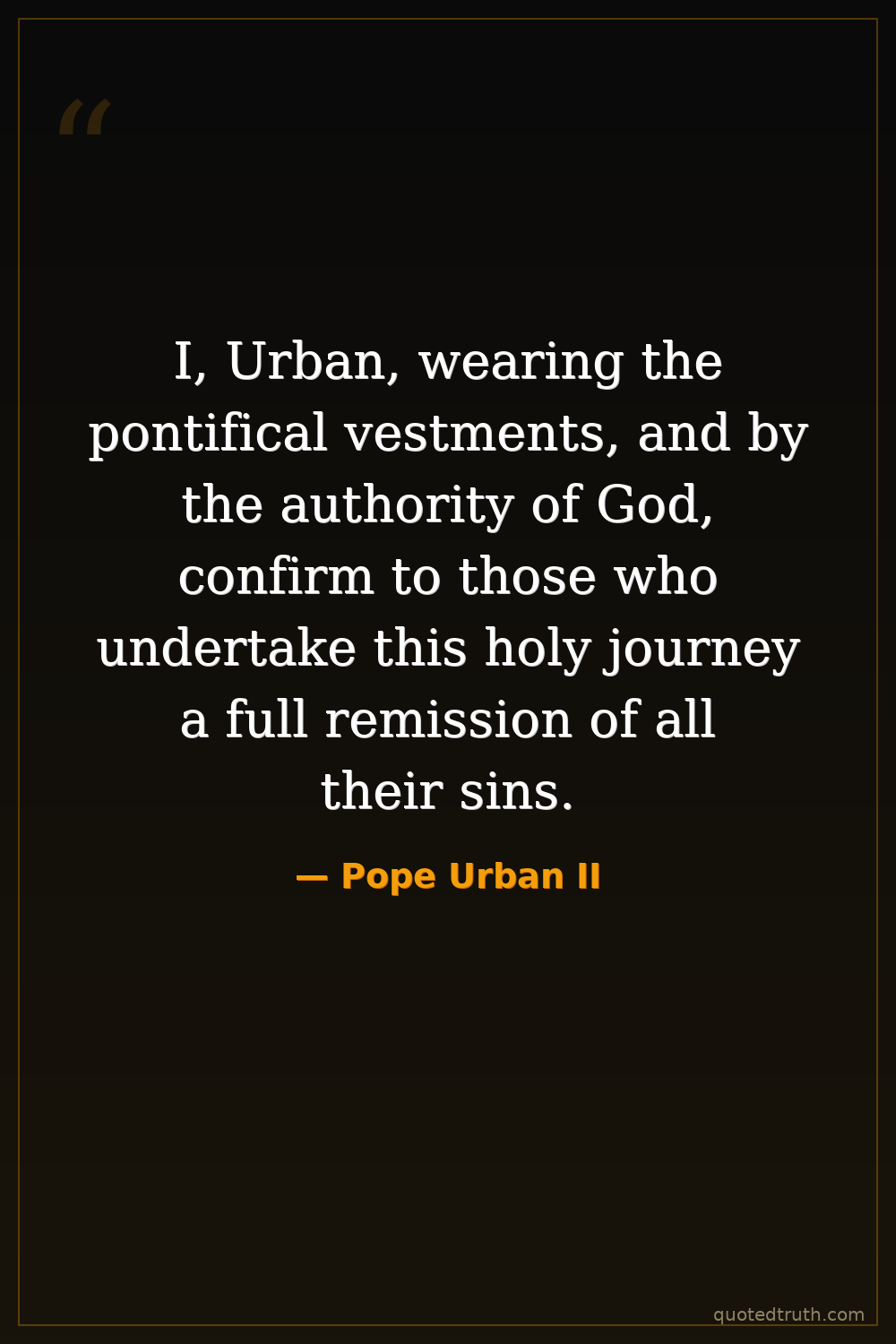
Urban II formally declares that anyone who joins the military pilgrimage to Jerusalem will receive complete forgiveness for every sin they have committed. He frames this as divine authority channeled through his papal office, making the promise spiritually binding. Participation in the campaign is presented as a penitential act so profound it wipes the soul clean, removing both guilt and punishment that would otherwise be owed to God.
Relevance to Pope Urban II
Urban II, elected pope in 1088, spent his pontificate reasserting papal supremacy after the Investiture Controversy had weakened Rome's authority. Launching the Crusade at Clermont in 1095 was simultaneously a military mobilization and a demonstration of papal power over Christendom. Offering plenary indulgences was his signature theological lever, binding warriors to Rome through spiritual debt while reclaiming the Holy Land and reuniting Eastern and Western churches.
The era
In 1095 medieval Europe, sin carried concrete judicial weight: confession required satisfaction through penance, sometimes years of fasting or pilgrimage. Crusaders feared dying in mortal sin and suffering purgatory or hell. The Church simultaneously faced the Investiture Crisis, Seljuk Turk advances into Byzantine territory, and fractured Christian unity. Urban's indulgence offer resolved spiritual anxiety, redirected endemic knightly violence outward, and dramatically expanded papal authority over secular warriors.
AI-generated insights based on extensive research and information for context. Factual errors? Email [email protected].