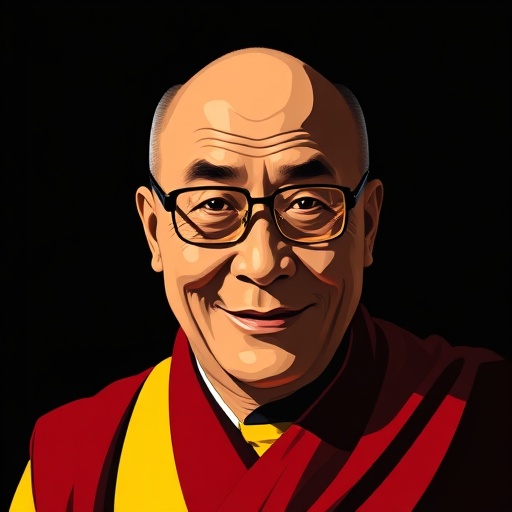
Dalai Lama (14th) — "My father was a farmer, my mother was a farmer. My family was very poor."
My father was a farmer, my mother was a farmer. My family was very poor.
My father was a farmer, my mother was a farmer. My family was very poor.
Click any product to generate a realistic preview. Up to 3 at a time.
* Initial load can take up to 90 seconds — revising the preview in another color is nearly instant.
"We are visitors on this planet. We are here for ninety or one hundred years at the very most. During that period, we must try to do something good, something useful, with our lives. If you contribute …"
"I think the most important thing is to be a good human being. That is the essence of all religions."
"Happiness is not something ready-made. It comes from your own actions."
"The purpose of our lives is to be happy."
"I like to play golf, but I am not very good at it. I usually lose my balls in the bushes."
Found in 1 providers: grok
1 source checked
The Dalai Lama is declaring his roots without embellishment — both parents worked the land and the family had little money. It is a grounding statement about where he came from before becoming one of the world's most recognized spiritual figures. It signals that wisdom and leadership do not require privilege, that his authority emerged from shared human experience rather than inherited wealth or social advantage.
Tenzin Gyatso was born in 1935 in a tiny village in Amdo, northeastern Tibet, to a farming family — his father also traded horses. Recognized as the 14th Dalai Lama at age two, he moved from a mud-brick farmhouse to the Potala Palace. Throughout his decades of exile, he consistently invokes his ordinary origins to emphasize that compassion and inner peace belong to everyone, not only the privileged or educated.
Tibet in the 1930s was overwhelmingly agrarian, most families living as subsistence farmers or herders within a feudal structure. Born just before World War II and China's annexation of Tibet in 1950, the Dalai Lama's childhood unfolded amid isolation, scarcity, and looming political upheaval. His emergence from rural poverty into global spiritual leadership coincided directly with Tibet's loss of sovereignty and the creation of the Tibetan refugee diaspora.
AI-generated insights based on extensive research and information for context. Factual errors? Email [email protected].
Your cart is empty