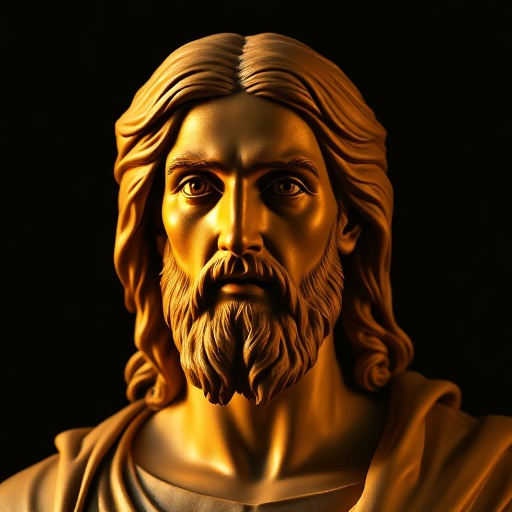
Jesus Christ — "Give back to Caesar what belongs to Caesar—and to God what belongs to God."
Give back to Caesar what belongs to Caesar—and to God what belongs to God.
Give back to Caesar what belongs to Caesar—and to God what belongs to God.
Click any product to generate a realistic preview. Up to 3 at a time.
* Initial load can take up to 90 seconds — revising the preview in another color is nearly instant.
"The harvest is plentiful but the workers are few."
"Whoever does not receive the kingdom of God like a little child will never enter it."
"Woe to you who are rich, for you have already received your comfort."
"Get behind me, Satan!"
"If anyone has ears to hear, let them hear."
From a response to a question about paying taxes (Mark 12:17)
Date: c. 30-33 CE
PhilosophicalFound in 1 providers: gemini
1 source checked
Honor the obligations you owe to each authority in your life. Civil governments have legitimate claims—taxes, laws, civic duties—and you should meet them. But spiritual and moral loyalty belongs to a higher power, and no political ruler can claim that. Keep the two realms distinct, give each its due, and do not let one swallow the other or excuse you from the other.
Jesus said this when opponents tried to trap him by asking whether Jews should pay the Roman poll tax. Refusing would mark him as a rebel; accepting would alienate his followers. He pointed to Caesar's image on the coin and sidestepped the trap, revealing his core teaching: the kingdom of God transcends earthly politics. It reflects his refusal of zealot militancy and his focus on inner spiritual allegiance.
First-century Judea was an occupied Roman province, and the tribute tax was deeply resented—coins bore Caesar's image and a claim of divinity, which many Jews considered idolatrous. Tax collectors were despised collaborators. Violent revolts, like the one led by Judas of Galilee, erupted over this very issue. Religious factions debated compliance fiercely, and Jesus's answer cut through the political minefield while affirming that Roman rule did not override God's ultimate authority.
AI-generated insights based on extensive research and information for context. Factual errors? Email [email protected].
Your cart is empty