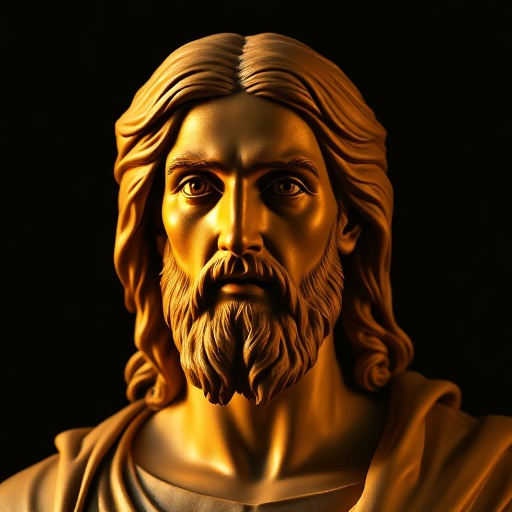
Jesus Christ — "So the last will be first, and the first will be last."
So the last will be first, and the first will be last.
So the last will be first, and the first will be last.
Click any product to generate a realistic preview. Up to 3 at a time.
* Initial load can take up to 90 seconds — revising the preview in another color is nearly instant.
"Do to others as you would have them do to you."
"My kingdom is not of this world."
"You serpents, you brood of vipers, how are you to escape the condemnation of hell?"
"If anyone comes to me and does not hate his own father and mother and wife and children and brothers and sisters, yes, and even his own life, he cannot be my disciple."
"I did not come to bring peace, but a sword."
From the Parable of the Laborers in the Vineyard (Matthew 20:16)
Date: c. 30-33 CE
PhilosophicalFound in 1 providers: gemini
1 source checked
Worldly rankings get flipped. The people society puts on top—the wealthy, the powerful, the celebrated—won't hold that spot in the end, and those treated as nothing—the poor, the overlooked, the humble—will be elevated. It's a warning against measuring your life by status and a promise that the current scoreboard isn't the final one. Position now doesn't predict position later.
Jesus built his ministry around outsiders—fishermen, tax collectors, lepers, women, children—and openly criticized religious elites who assumed their rank guaranteed God's favor. He washed his disciples' feet, rode a donkey instead of a warhorse, and died executed as a criminal. This saying captures his core reversal: greatness comes through service, not dominance. He lived the inversion he preached, which is why the line carried weight.
First-century Judea ran on rigid hierarchy: Roman occupiers over locals, priests over laity, men over women, landowners over peasants, Jews over Samaritans and Gentiles. Honor and shame governed daily life, and your birth largely fixed your ceiling. Messianic expectation assumed a warrior-king who'd crown the righteous insiders. Jesus flipping the order—promising the bottom rung would rise—was politically and religiously incendiary, threatening both Rome's order and the Temple establishment's authority.
AI-generated insights based on extensive research and information for context. Factual errors? Email [email protected].
Your cart is empty