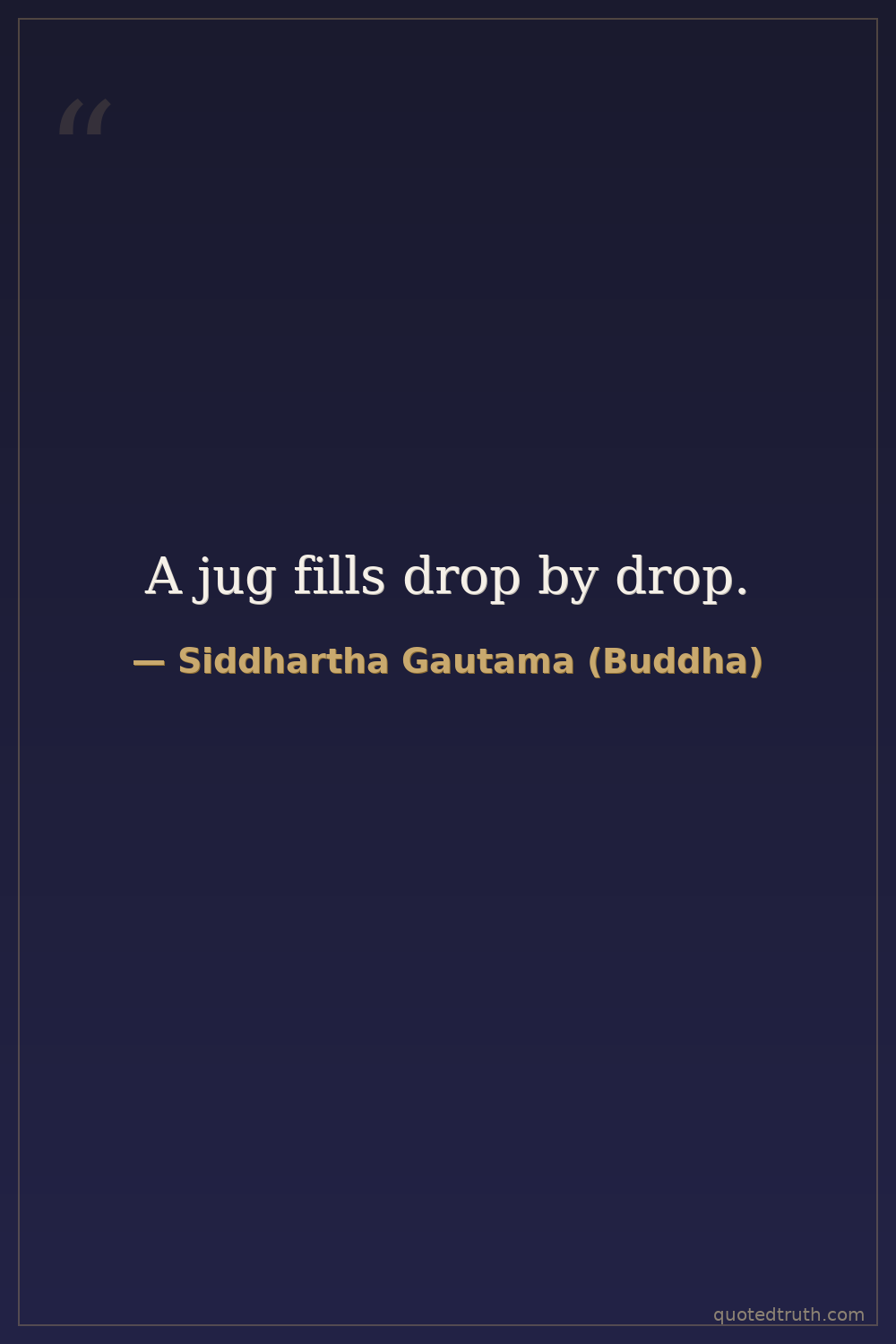
Siddhartha Gautama (Buddha) — "A jug fills drop by drop."
A jug fills drop by drop.
A jug fills drop by drop.
Click any product to generate a realistic preview. Up to 3 at a time.
* Initial load can take up to 90 seconds — revising the preview in another color is nearly instant.
"The virtues, like the Muses, are always seen in groups. A good principle was never found solitary in any breast."
"All that we are is the result of what we have thought: it is founded on our thoughts, it is made up of our thoughts. If a man speaks or acts with an evil thought, pain follows him, as the wheel follow…"
"However many holy words you read, however many you speak, what good will they do you if you do not act on upon them?"
"If a man foolishly does me wrong, I will return to him the protection of my boundless love. The more evil that comes from him, the more good will go from me."
"I do not believe in a fate that falls on men however they act; but I do believe in a fate that falls on them unless they act."
Found in 1 providers: gemini
1 source checked
Big results come from tiny, repeated actions. A single drop seems insignificant, but enough drops eventually fill a container. The same logic applies to learning, saving money, building skills, breaking habits, or accumulating wisdom. Progress rarely arrives in one dramatic moment; it accumulates quietly through consistent small inputs over time. Patience and steady repetition matter more than intensity, and dismissing minor efforts as pointless ignores how they compound.
Siddhartha taught that enlightenment is reached through disciplined, incremental practice rather than sudden revelation. He spent six years as a wandering ascetic and decades teaching after his awakening, emphasizing the Eightfold Path as daily cultivation of mindfulness, ethics, and meditation. His doctrine of karma treats every small intention as a drop shaping future consequences. The jug image mirrors his moderation-focused Middle Way: steady, patient effort outperforms extreme striving or passive hope.
In 5th–6th century BCE northern India, the Vedic Brahmin establishment taught that spiritual liberation required elaborate rituals, caste status, and animal sacrifices administered by priests. Competing shramana movements, including Jains and Ajivikas, pushed harsh self-mortification instead. Siddhartha's message that anyone, regardless of birth, could progress drop by drop through ordinary ethical practice was radical. It democratized the path to liberation and undercut both priestly gatekeeping and extreme asceticism dominating the era's religious landscape.
AI-generated insights based on extensive research and information for context. Factual errors? Email [email protected].
Your cart is empty