What it means
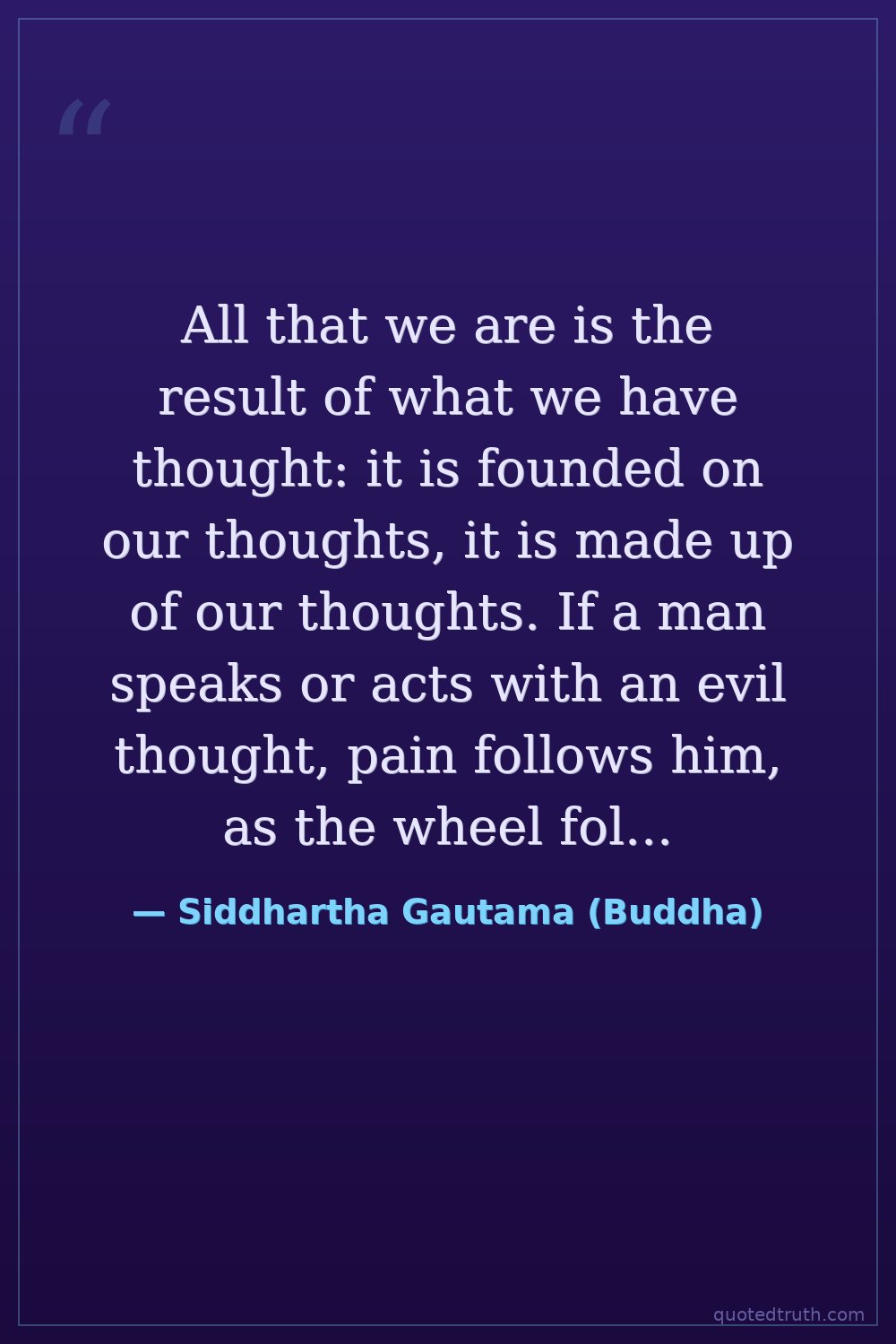
Your character and life are shaped by your habitual thoughts. What you repeatedly think becomes what you say and do, and those actions determine the consequences you experience. When someone speaks or acts from a harmful mindset, suffering trails them as inevitably as a cart wheel follows the ox pulling it. Thoughts are not private or harmless; they are the foundation of identity and the source of either pain or peace.
Relevance to Siddhartha Gautama (Buddha)
This opens the Dhammapada, the most cited collection of the Buddha's teachings, and captures the core of his awakening. After leaving his royal life, Siddhartha spent years studying how craving and mental habits generate suffering. His path centered on Right Thought and mindfulness as the root of ethical action. The ox-cart image reflects his gift for everyday analogies drawn from rural North Indian life, making liberation accessible to farmers and monks alike.
The era
Around the 5th century BCE in the Ganges plain, Brahmin priests controlled spiritual authority through ritual sacrifice and caste hierarchy. A wave of wandering ascetics, the shramanas, rejected this system and explored inner discipline instead. The Buddha emerged from this ferment, teaching that mental cultivation, not birth or ritual, determined one's fate. Oxen and carts were the backbone of agrarian village life, making his metaphor instantly vivid to listeners across social classes in that turbulent reform era.
AI-generated insights based on extensive research and information for context. Factual errors? Email [email protected].