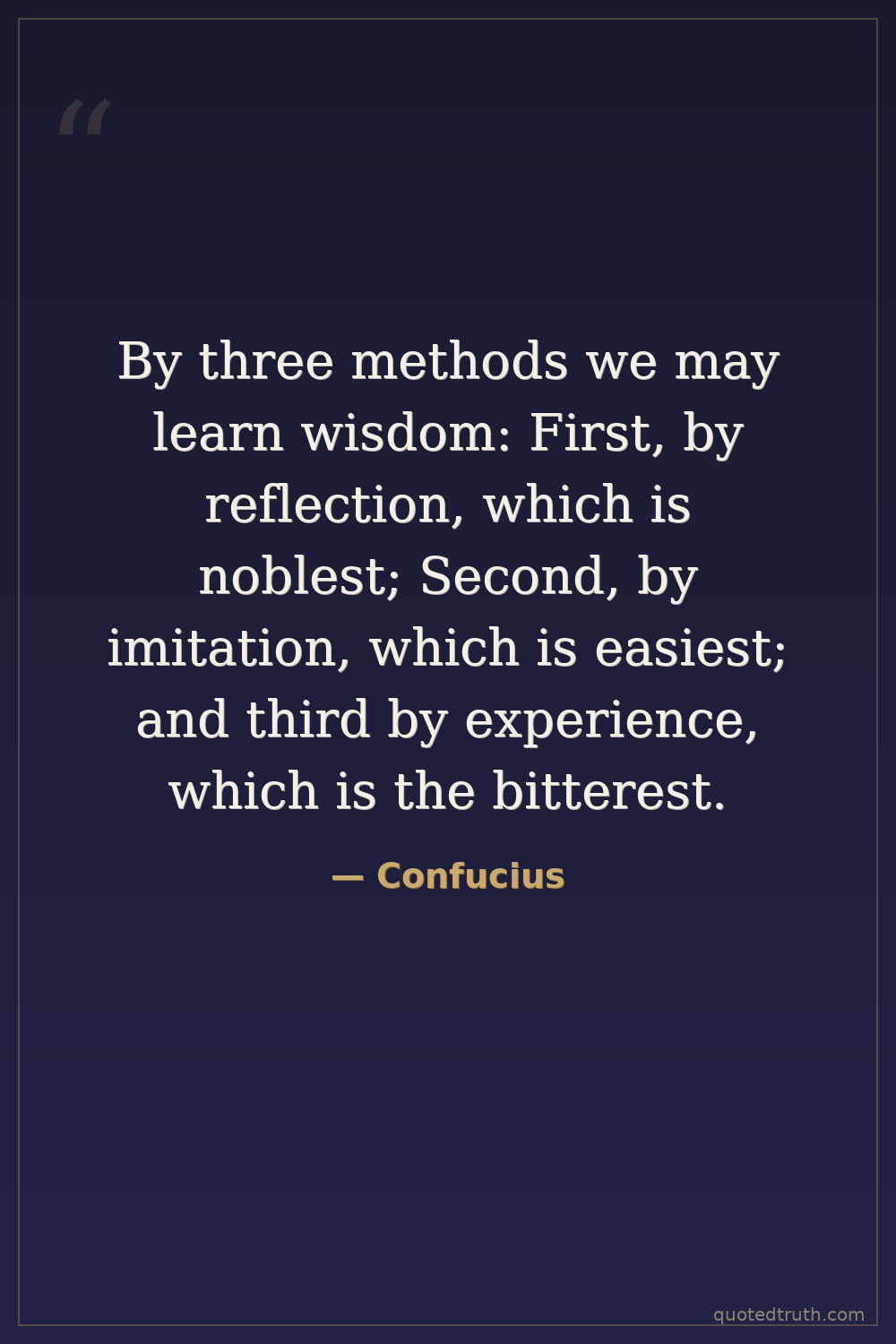
Confucius — "By three methods we may learn wisdom: First, by reflection, which is noblest; Se…"

By three methods we may learn wisdom: First, by reflection, which is noblest; Second, by imitation, which is easiest; and third by experience, which is the bitterest.
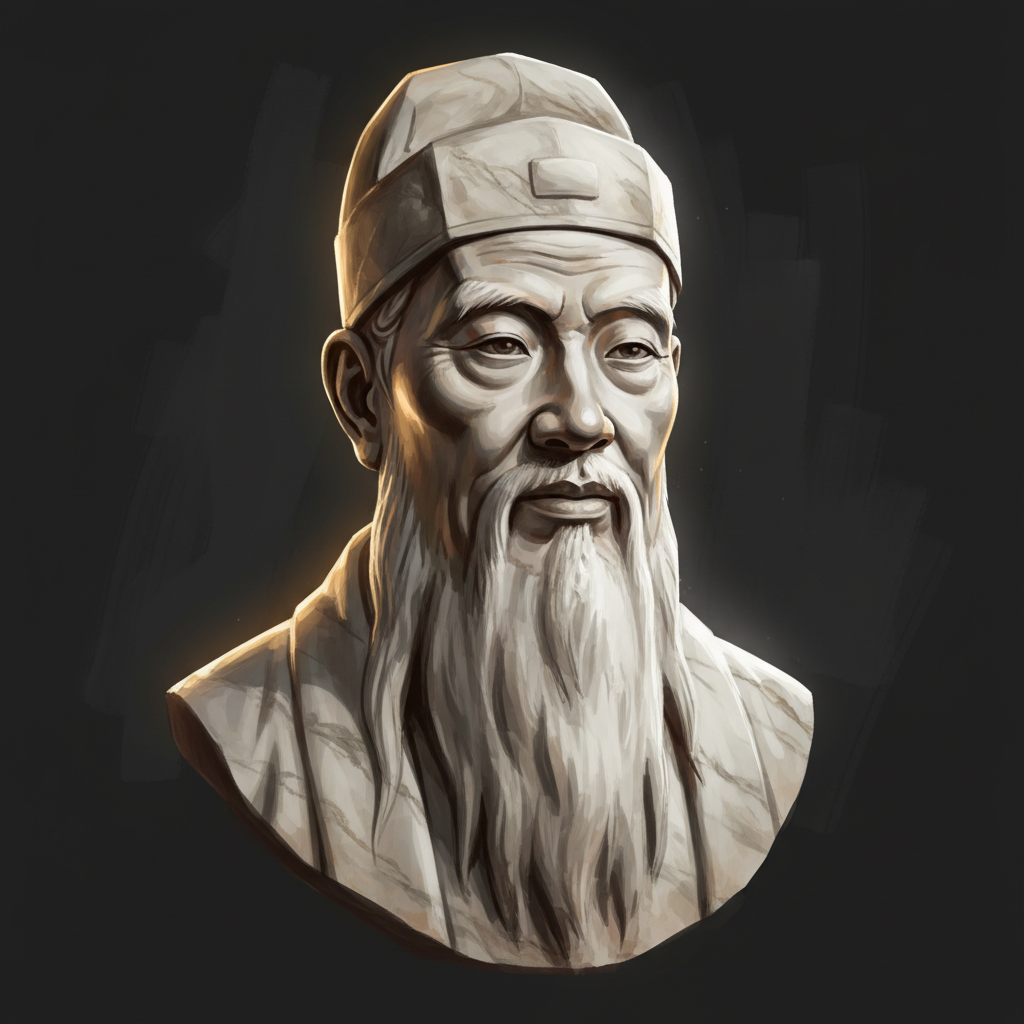
Confucius — Confucius Ancient · Chinese philosopher, founder of Confucianism

Get This Quote & Author's Image Illustrated On:

Click any product to generate a realistic preview. Up to 3 at a time.
* Initial load can take up to 90 seconds — revising the preview in another color is nearly instant.

Kitchen

Apparel

Other

About Confucius (551-479 BCE)

Chinese philosopher and teacher whose teachings (compiled by his students in the Analects) became the foundational ethical framework of East Asian civilization for 2,500 years. Closely associated with Mencius (his most-influential follower a century later). For an intellectual contrast, see Laozi, near-contemporary Chinese sage and Tao Te Ching author — Confucius systematized social order through ritual and family hierarchy; Laozi's Taoist effortless-action philosophy argued such systems were the disease, not the cure. The two founding poles of Chinese moral philosophy — every East Asian moral tradition since has positioned itself between them.

The standard scholarly entry points to Confucius's work: Philip J. Ivanhoe (Georgetown, Chinese philosophy) — Confucian Moral Self Cultivation (2000); Edward Slingerland (UBC, Asian Studies) — Effortless Action: Wu-wei as Conceptual Metaphor (2003); Tu Weiming (Harvard, Confucian scholar) — Confucian Thought: Selfhood as Creative Transformation (1985). These are the works graduate seminars cite when teaching Confucius.

Details

From a teaching on methods of learning

Date: c. 551-479 BCE

Philosophical

Verification

Unverifiable

Found in 1 providers: gemini

1 source checked

Understanding this quote

What it means

Wisdom comes through three distinct paths. Thinking deeply about life and examining your choices is the highest form of learning, because it requires genuine effort and self-awareness. Copying wise people around you is the simplest shortcut, since someone has already done the hard work. Learning from your own mistakes and hardships teaches the most lasting lessons, but the cost is pain, loss, and regret that could have been avoided.

Relevance to Confucius

Confucius spent his life teaching that self-cultivation was the foundation of a moral society. He urged students to examine themselves daily, study ancient sage-kings as models, and treat every hardship as instruction. This saying mirrors his classroom method: reflection through the Analects, imitation of figures like the Duke of Zhou, and hard experience gained while wandering states seeking a ruler who would apply his teachings.

The era

Confucius lived during the Spring and Autumn period (551-479 BCE), when the Zhou dynasty was fracturing into warring states and old rituals were collapsing. Scholars traveled between courts offering rulers advice on restoring order. In a culture without printing, wisdom passed through memorized teachings, imitation of elders, and brutal personal experience in an age of constant warfare, famine, and political betrayal, making Confucius's three paths deeply practical.

AI-generated insights based on extensive research and information for context. Factual errors? Email [email protected].
Your Cart

Your cart is empty