What it means
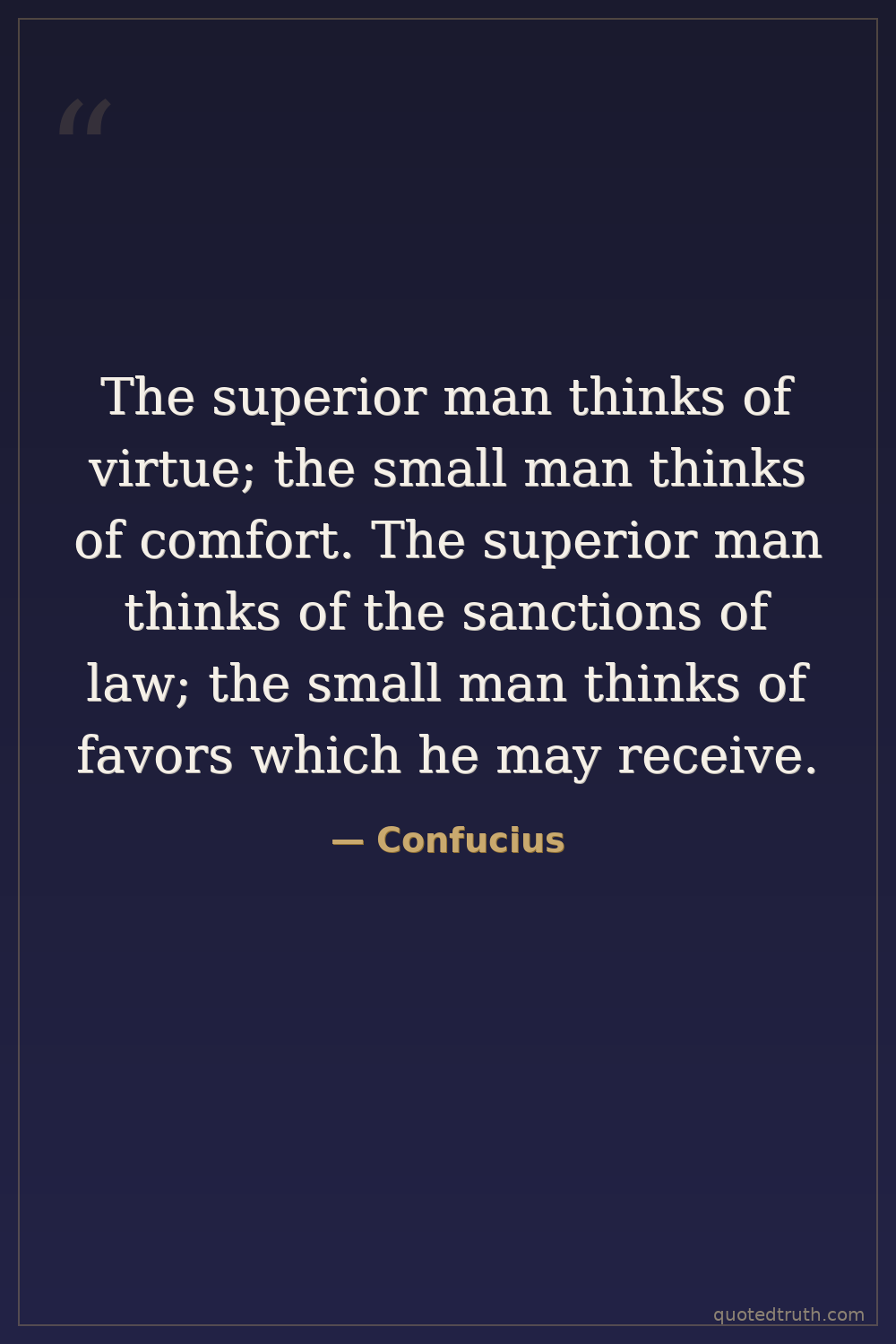
People of strong character focus on doing what is right and building good habits, while shallow people chase ease and personal gain. Noble individuals respect rules and principles that apply to everyone, but lesser minds look for loopholes, special treatment, or personal favors. The quote draws a sharp line between those motivated by integrity and those motivated by self-interest and convenience.
Relevance to Confucius
Confucius spent his life teaching that moral cultivation separates the junzi, or exemplary person, from the petty person. As a traveling teacher who refused corrupt official posts and valued ritual propriety over wealth, he repeatedly contrasted virtue-seekers with comfort-seekers. His emphasis on impartial law versus personal favoritism reflects his frustration with the nepotism and bribery rampant in the courts he advised during his political career.
The era
Confucius lived during the Spring and Autumn period of the Zhou dynasty around 500 BCE, when central authority was collapsing and rival states fought constantly. Aristocrats routinely bent rules through personal connections and gifts, while ordinary people suffered under unpredictable justice. Against this chaos, Confucius promoted a moral ruling class governed by ethics and consistent law rather than bribes, making his virtue-versus-favors distinction a pointed political critique of his age.
AI-generated insights based on extensive research and information for context. Factual errors? Email [email protected].