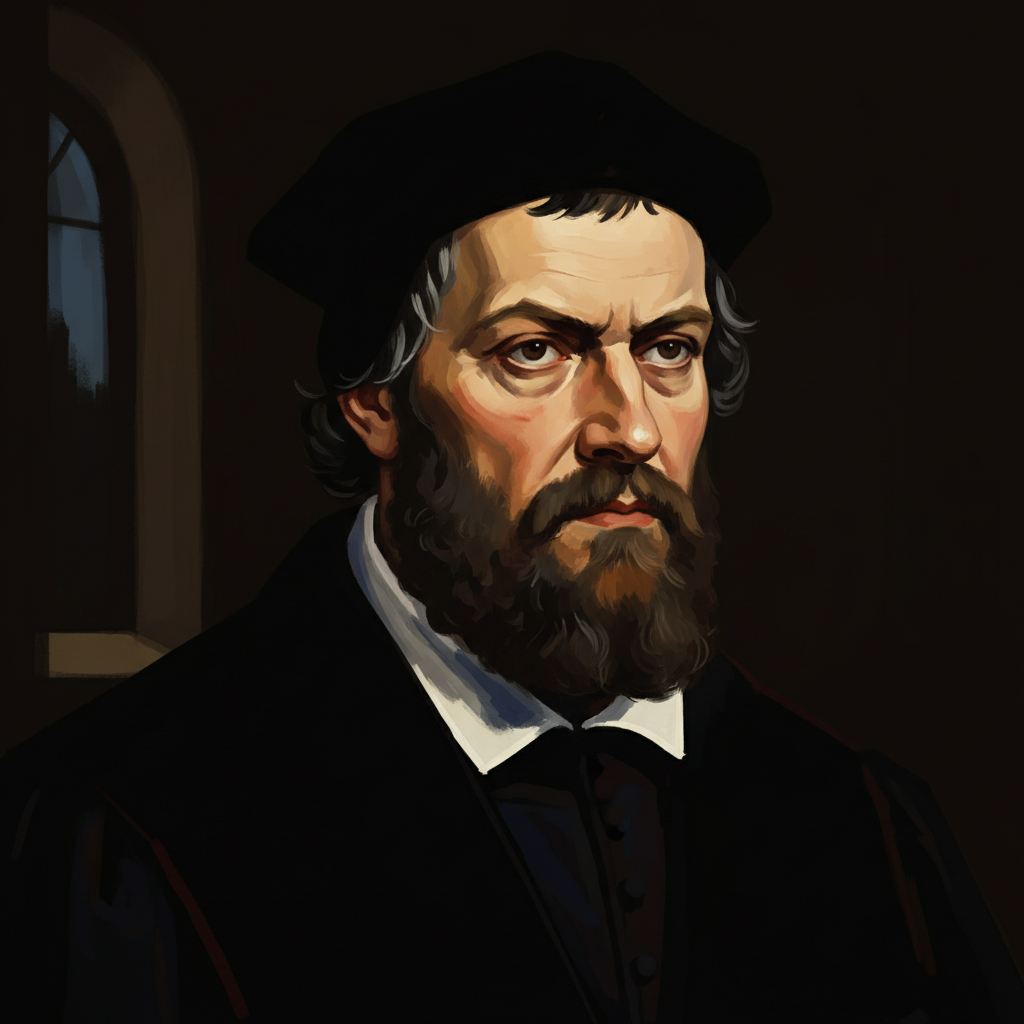
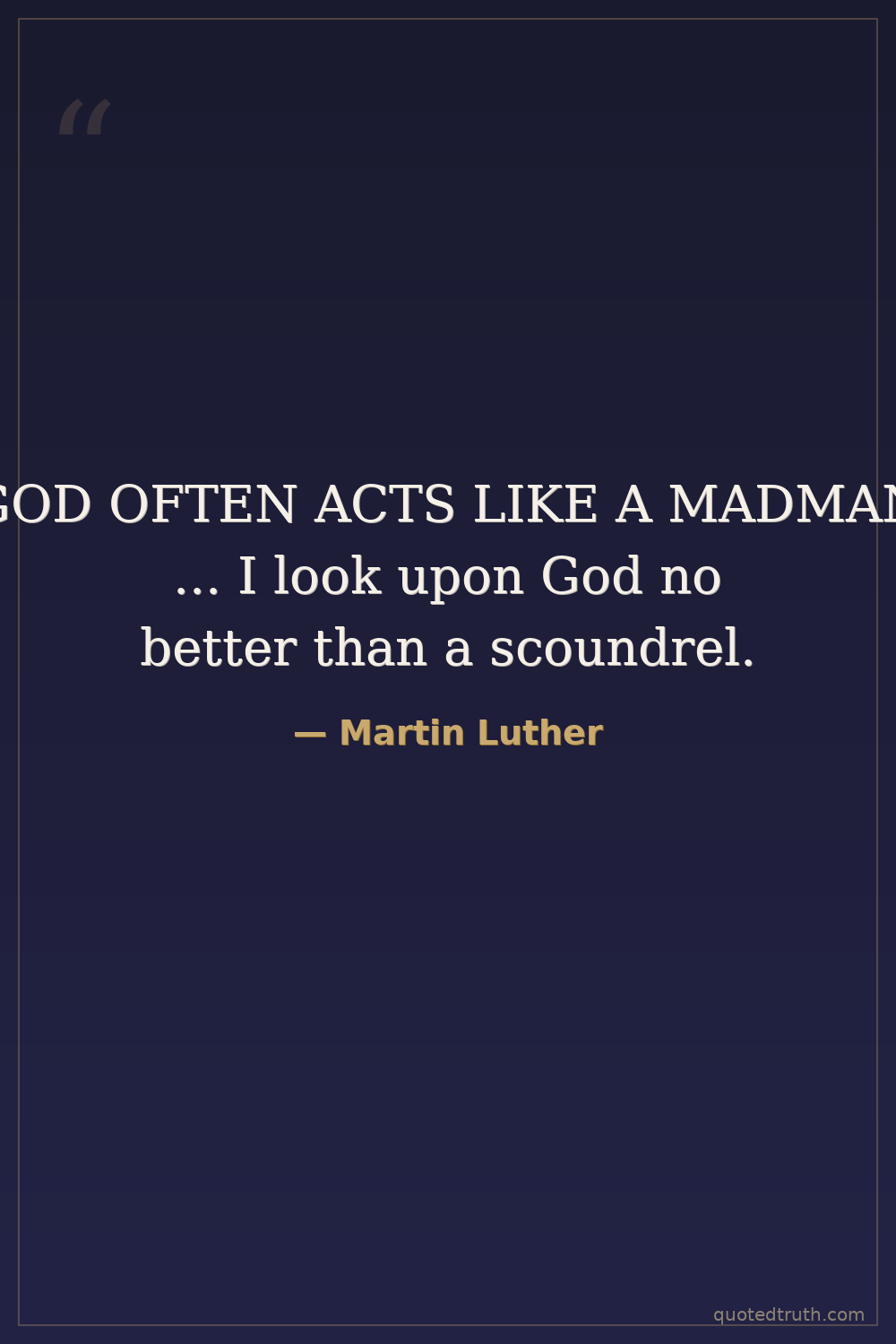
Martin Luther — "GOD OFTEN ACTS LIKE A MADMAN ... I look upon God no better than a scoundrel."
GOD OFTEN ACTS LIKE A MADMAN ... I look upon God no better than a scoundrel.
GOD OFTEN ACTS LIKE A MADMAN ... I look upon God no better than a scoundrel.
Click any product to generate a realistic preview. Up to 3 at a time.
* Initial load can take up to 90 seconds — revising the preview in another color is nearly instant.
"To be sure, I would not execute a Jew; I would not even allow him to be a farmer, but I would drive him out of the country."
"The woman is like a nail, driven into the wall. . . . She sits at home."
"Their rabbis should be forbidden to teach on pain of loss of life and limb."
"I have often tried to be angry with the devil, but I cannot; he is such a merry knave."
"If I am to be a Christian, I must be a Jew."
German theologian whose 95 Theses (1517) launched the Protestant Reformation and broke the Catholic Church's monopoly on Western Christianity. Closely associated with Philipp Melanchthon (Lutheran systematizer) and John Calvin (later Reformer who built on Luther's break). For an intellectual contrast, see Pope Leo X, Renaissance pope (1513-1521) — Leo X's indulgence sales triggered Luther's break and Leo excommunicated him in 1521 — Luther's entire Reformation is structured as a direct answer to the indulgence-funded Vatican Leo represented.
Found in 1 providers: gemini
1 source checked
Luther is voicing raw frustration with a God whose actions seem irrational, cruel, or incomprehensible. Rather than polite piety, he admits that from a human vantage point divine behavior can look reckless or even dishonorable. He is not denying God exists but confessing that faith means wrestling with a deity whose logic often offends our sense of fairness, mercy, or common sense.
Luther was famous for blunt, earthy speech and fierce inner struggles he called Anfechtungen, bouts of spiritual terror where God felt hostile. A monk turned reformer, he rejected sanitized theology and insisted believers meet God honestly, including in anger. This quote fits his Table Talk style: unfiltered, scandalous to pious ears, yet rooted in his conviction that authentic faith survives only by grappling with a hidden, often terrifying God.
Luther lived through plague, peasant wars, Ottoman invasions, and brutal religious persecution in the early 1500s. Medieval Catholicism offered saints, indulgences, and rituals to soften divine wrath, but Luther stripped those away, leaving believers alone before an inscrutable God. In an age of sudden death and apocalyptic anxiety, his willingness to call God a scoundrel captured the raw terror many felt but were forbidden to voice under Church authority.
AI-generated insights based on extensive research and information for context. Factual errors? Email [email protected].
Your cart is empty