Laozi — "Taking things lightly must lead to big difficulties. The sage regards things as …"
Taking things lightly must lead to big difficulties. The sage regards things as difficult, and thereby avoids difficulty.
Taking things lightly must lead to big difficulties. The sage regards things as difficult, and thereby avoids difficulty.
Click any product to generate a realistic preview. Up to 3 at a time.
* Initial load can take up to 90 seconds — revising the preview in another color is nearly instant.
"He who acts destroys; he who grasps loses."
"Do that which consists in taking no action; Pursue that which is not meddlesome; Savor that which has no flavor."
"The universe is a sacred vase. It should not be tampered with."
"The superior man, when he hears of the Tao, endeavors to observe it."
"The sage knows without traveling, perceives without looking, completes without acting."
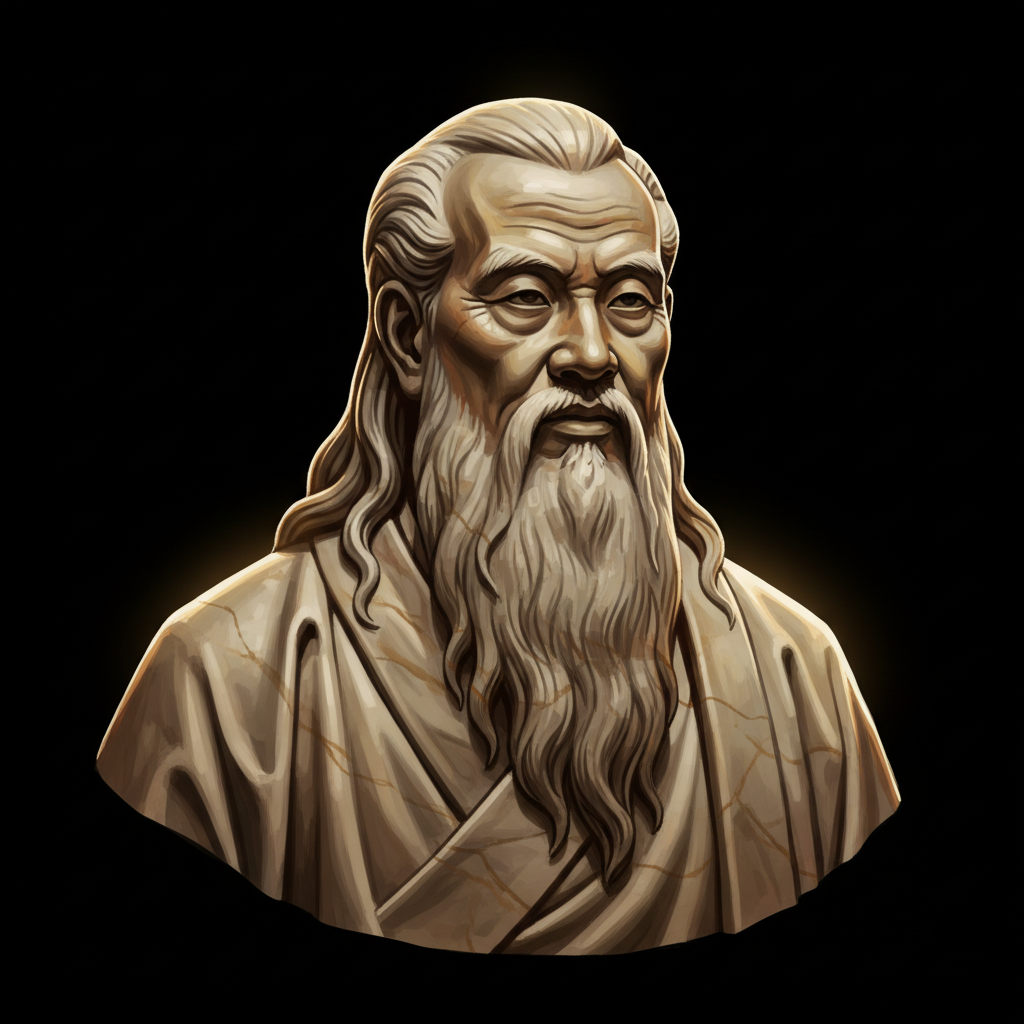
Reputed founder of Taoism and author of the Tao Te Ching, whose wu wei (effortless action) shaped East Asian philosophy. Closely associated with Zhuangzi (later Taoist who extended Laozi's framework). For an intellectual contrast, see Confucius, near-contemporary Chinese sage of social ritual and duty — Confucius systematized social order through ritual and hierarchy; Laozi argued that all such systems were the disease, not the cure — the two founding poles of Chinese moral philosophy.
Found in 1 providers: gemini
1 source checked
Treating serious matters casually guarantees trouble later. When you underestimate challenges, skip preparation, or assume things will work out, small issues compound into crises. The wise person does the opposite: they approach every task with full respect for what could go wrong, plan carefully, and refuse shortcuts. By taking difficulty seriously upfront, they actually prevent real difficulty from arriving. Caution at the start saves chaos at the end.
Laozi, the legendary founder of Taoism, served as a royal archivist in the Zhou court, steeped in records of dynasties that rose and fell through careless rulers. His Tao Te Ching repeatedly warns against force, haste, and overconfidence, teaching wu wei: acting in harmony with natural difficulty rather than bulldozing past it. This saying distills his core belief that humility before complexity, not bravado, is the path sages walk.
Laozi lived during the late Zhou dynasty, around the 6th century BCE, as China fractured into the Spring and Autumn period of warring states. Rulers were making rash military decisions, breaking alliances, and collapsing kingdoms through overconfidence. Against this backdrop of reckless ambition, Taoist and Confucian thinkers emerged offering competing prescriptions. Laozi's counsel to treat every undertaking as genuinely difficult spoke directly to princes whose light treatment of war, taxation, and succession was producing catastrophe across the realm.
AI-generated insights based on extensive research and information for context. Factual errors? Email [email protected].
Your cart is empty