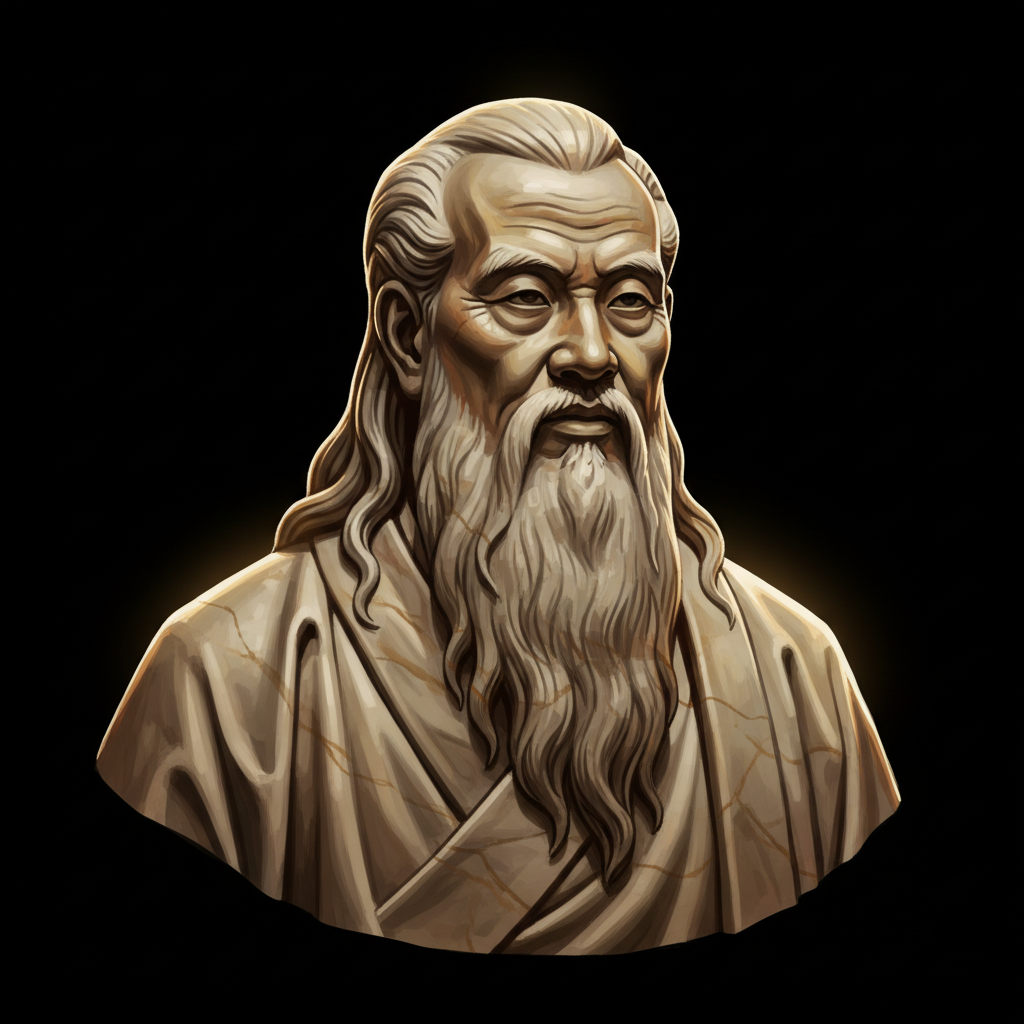
Laozi — "The universe is a sacred vase. It should not be tampered with."
The universe is a sacred vase. It should not be tampered with.
The universe is a sacred vase. It should not be tampered with.
Click any product to generate a realistic preview. Up to 3 at a time.
* Initial load can take up to 90 seconds — revising the preview in another color is nearly instant.
"Those who know when to halt are unharmed."
"The reason why the river and the sea are able to be the lords of the hundred valleys is that they excel in taking the lower position. That is why they are able to be the lords of the hundred valleys."
"The gentlest thing in the world can ride through the hardest thing in the world."
"The best rulers are those the people barely know exist. The next best are those the people praise and acclaim. The next best are those the people fear. The worst are those the people despise."
"When you realize there is nothing lacking, the whole world belongs to you."
Reputed founder of Taoism and author of the Tao Te Ching, whose wu wei (effortless action) shaped East Asian philosophy. Closely associated with Zhuangzi (later Taoist who extended Laozi's framework). For an intellectual contrast, see Confucius, near-contemporary Chinese sage of social ritual and duty — Confucius systematized social order through ritual and hierarchy; Laozi argued that all such systems were the disease, not the cure — the two founding poles of Chinese moral philosophy.
Found in 1 providers: grok
1 source checked
The world, life, and reality form something precious and delicate, like a fragile ceremonial vessel. Trying to force, control, or manipulate it usually damages what you were trying to improve. Heavy-handed intervention, whether in nature, society, or other people, breaks the subtle balance already at work. The wiser approach is restraint: step back, let things unfold according to their own nature, and resist the urge to impose your will on a system you only partly understand.
Laozi built Taoism around wu wei, effortless action, and warned rulers against meddling with their people. Legend casts him as a quiet archivist in the Zhou court who grew disgusted with political scheming and rode off west, leaving the Tao Te Ching behind. The sacred-vase image fits his conviction that the Dao runs the cosmos flawlessly, and human cleverness, ambition, and moral engineering only crack what was whole.
Laozi is placed in the late Zhou dynasty, around the 6th century BCE, as central authority dissolved into the Warring States chaos. Rival lords drafted peasants, raised taxes, and schemed endlessly for power, while Confucian reformers pushed elaborate rituals and social hierarchies as the cure. Laozi's warning against tampering was a direct rebuke of both: ambitious rulers forcing order and moralists engineering virtue were, he argued, the very hands shattering the sacred vase.
AI-generated insights based on extensive research and information for context. Factual errors? Email [email protected].
Your cart is empty