What it means
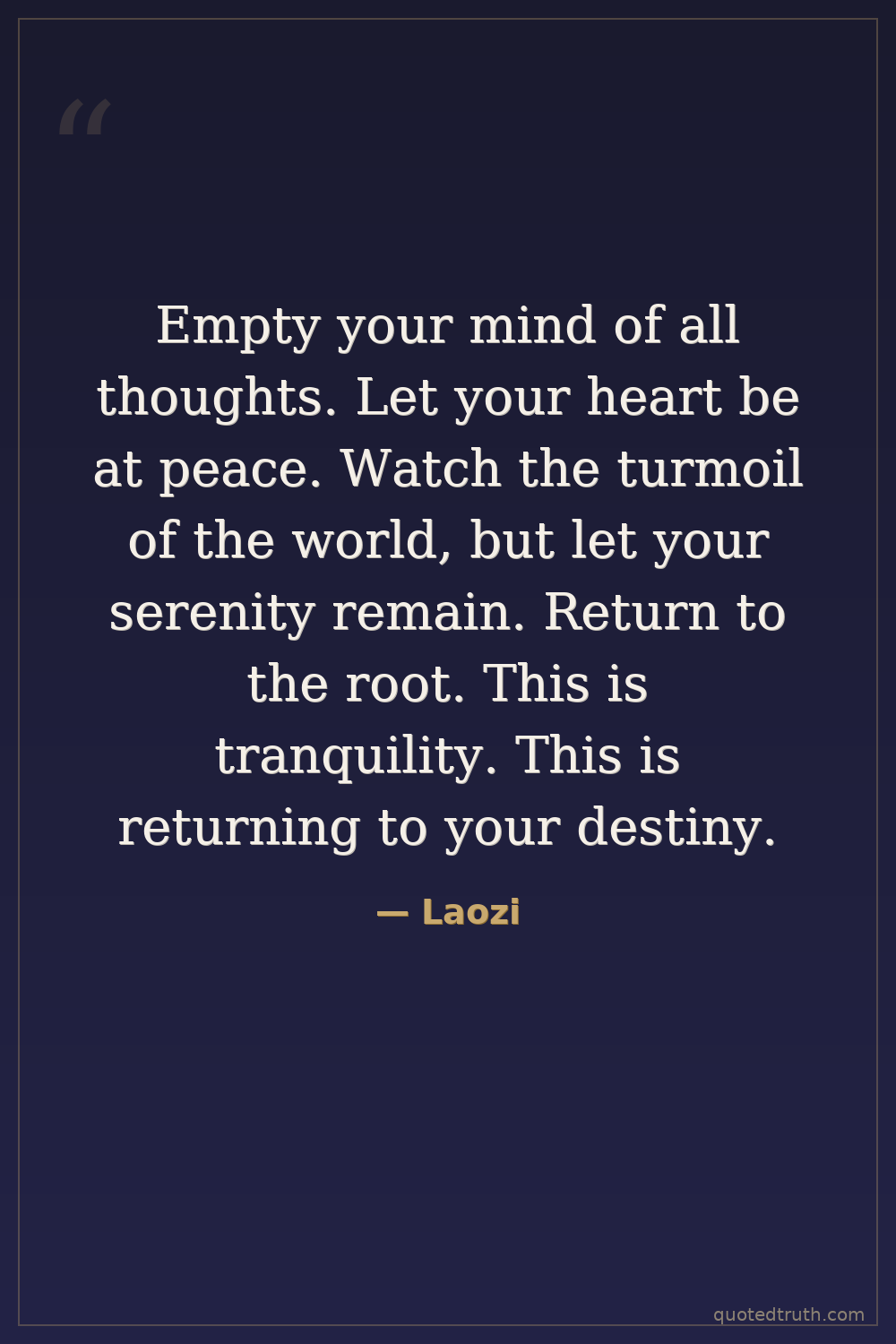
Clear your head of constant thinking and let your feelings settle into stillness. Observe the chaos around you without getting swept into it. Go back to your original, simple nature underneath all the noise. That quiet center is where real peace lives, and reconnecting with it is how you align with who you're truly meant to be rather than what circumstances push you toward.
Relevance to Laozi
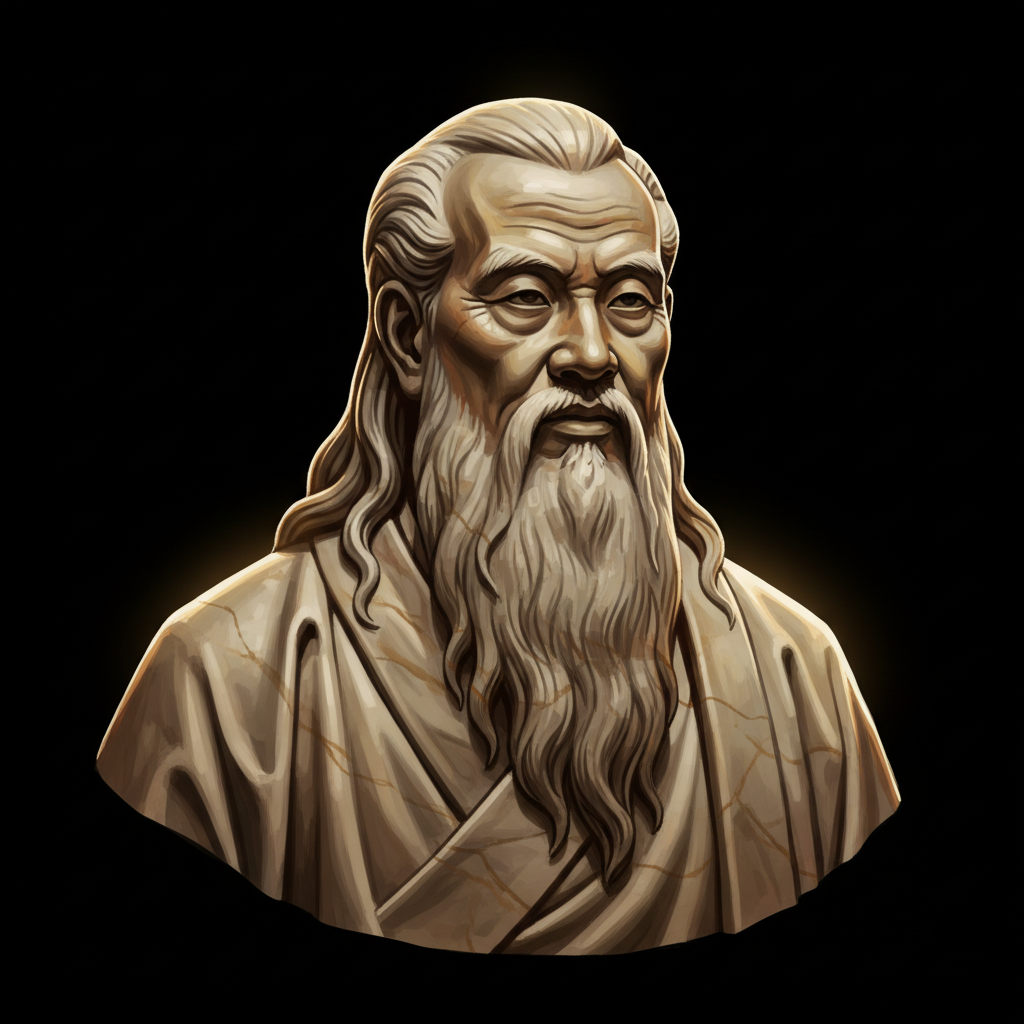
Laozi, the traditional founder of Taoism, taught wu wei (effortless action) and the return to the Tao as the source of all things. Legend says he served as a royal archivist before withdrawing from a corrupt court to live as a recluse, embodying detachment from worldly turmoil. This passage directly echoes the Tao Te Ching's emphasis on emptiness, stillness, and returning to one's root as the path to harmony with the Tao.
The era
Laozi is placed in the 6th century BCE during China's Spring and Autumn period, an era of collapsing Zhou authority, constant warfare between rival states, and social upheaval preceding the Warring States chaos. Thinkers scrambled to answer how to live amid disorder, producing the Hundred Schools of Thought. Against Confucian calls for stricter ritual and hierarchy, Laozi's counsel to empty the mind and return inward offered a radical alternative rooted in nature rather than political structure.
AI-generated insights based on extensive research and information for context. Factual errors? Email [email protected].