Zoroaster — "May we be granted the choice of good over evil, and the wisdom to discern the ri…"
May we be granted the choice of good over evil, and the wisdom to discern the right path.
May we be granted the choice of good over evil, and the wisdom to discern the right path.
Click any product to generate a realistic preview. Up to 3 at a time.
* Initial load can take up to 90 seconds — revising the preview in another color is nearly instant.
"Evil to the evil, good reward to the good."
"Who created light and darkness? Who created sleep and waking?"
"With an open mind, seek and listen to all the highest ideals. Consider the most enlightened thoughts. Then choose your path, person by person, each for oneself."
"Show me, O Mazda, through Good Mind, how to fulfill this teaching, for which I ask Thee, and through Thy Righteousness, to approach Thee, O Ahura, and to offer praise to Thee."
"May the Lie be cast down, and the Truth prevail."
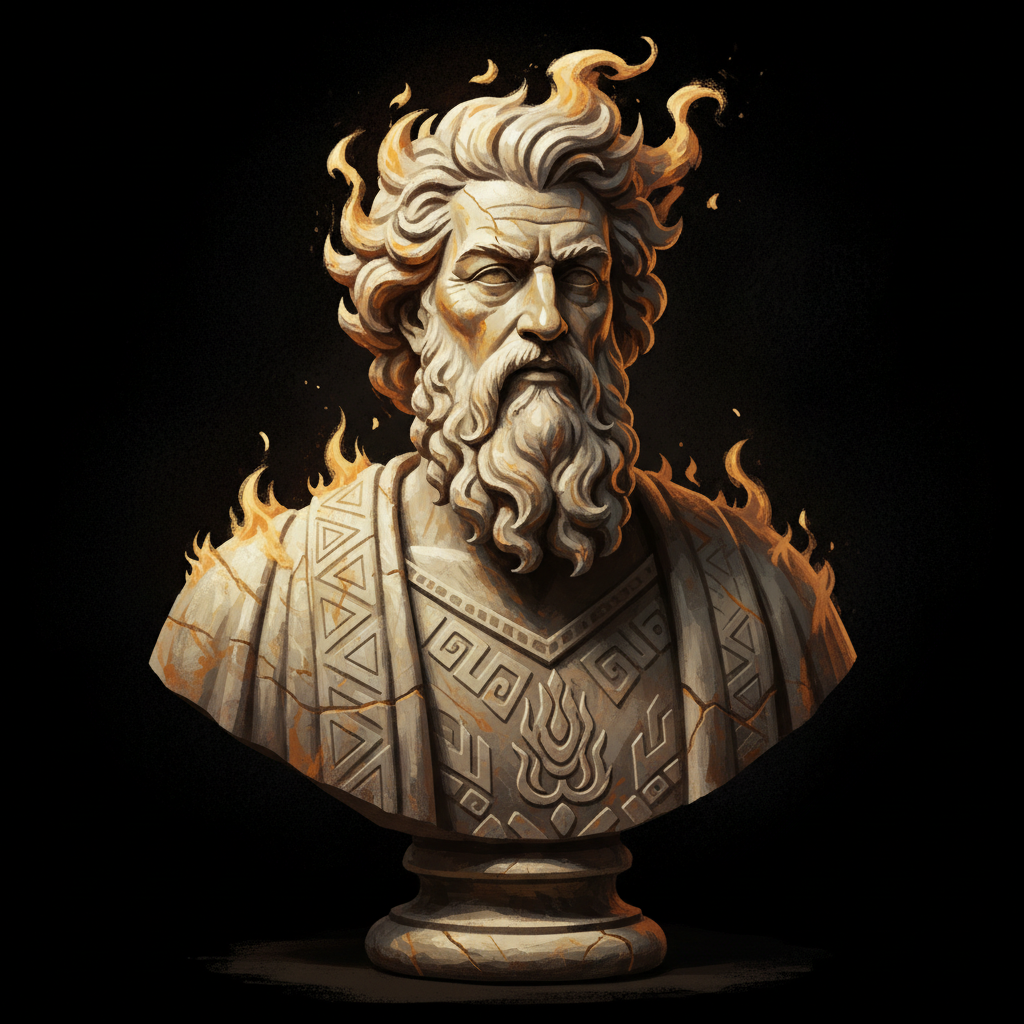
Iranian prophet who founded Zoroastrianism, the first major religion of cosmic dualism between good (Ahura Mazda) and evil (Angra Mainyu). Closely associated with The Buddha (near-contemporary Eastern moral-cosmological revolutionary). For an intellectual contrast, see Friedrich Nietzsche, German philosopher of 'beyond good and evil' — Nietzsche appropriated Zarathustra's name for Thus Spoke Zarathustra (1883) precisely to invert the original's moral cosmology — the historical Zoroaster founded the good-versus-evil framework Nietzsche's character announces the end of.
Found in 1 providers: gemini
1 source checked
This is a request for two linked gifts: the strength to pick good when evil is also on the table, and the clarity of mind to tell which path is actually right. It assumes life constantly forces real choices, that people can be fooled about which option is good, and that both moral will and accurate judgment have to be cultivated rather than assumed. Without discernment, good intentions go the wrong way.
Zoroaster built his entire religion around exactly this choice. He taught that every person stands between Ahura Mazda, the wise lord of truth and good, and Angra Mainyu, the spirit of the lie, and must personally pick a side through thoughts, words, and deeds. As a priest-reformer who rejected the old Iranian cults, he framed salvation not as ritual compliance but as moral decision guided by Vohu Manah, the Good Mind.
Zoroaster lived in Bronze Age eastern Iran, roughly 1500-1000 BCE, among pastoral tribes whose religion centered on animal sacrifice, warrior gods, and intoxicating haoma rites. Ethics was tribal loyalty, not personal conscience. Into that world he introduced something radical for the ancient Near East: one supreme good god, a cosmic battle between truth and lie, individual moral responsibility, and a final judgment. These ideas later seeded Judaism, Christianity, and Islam.
AI-generated insights based on extensive research and information for context. Factual errors? Email [email protected].
Your cart is empty