What it means
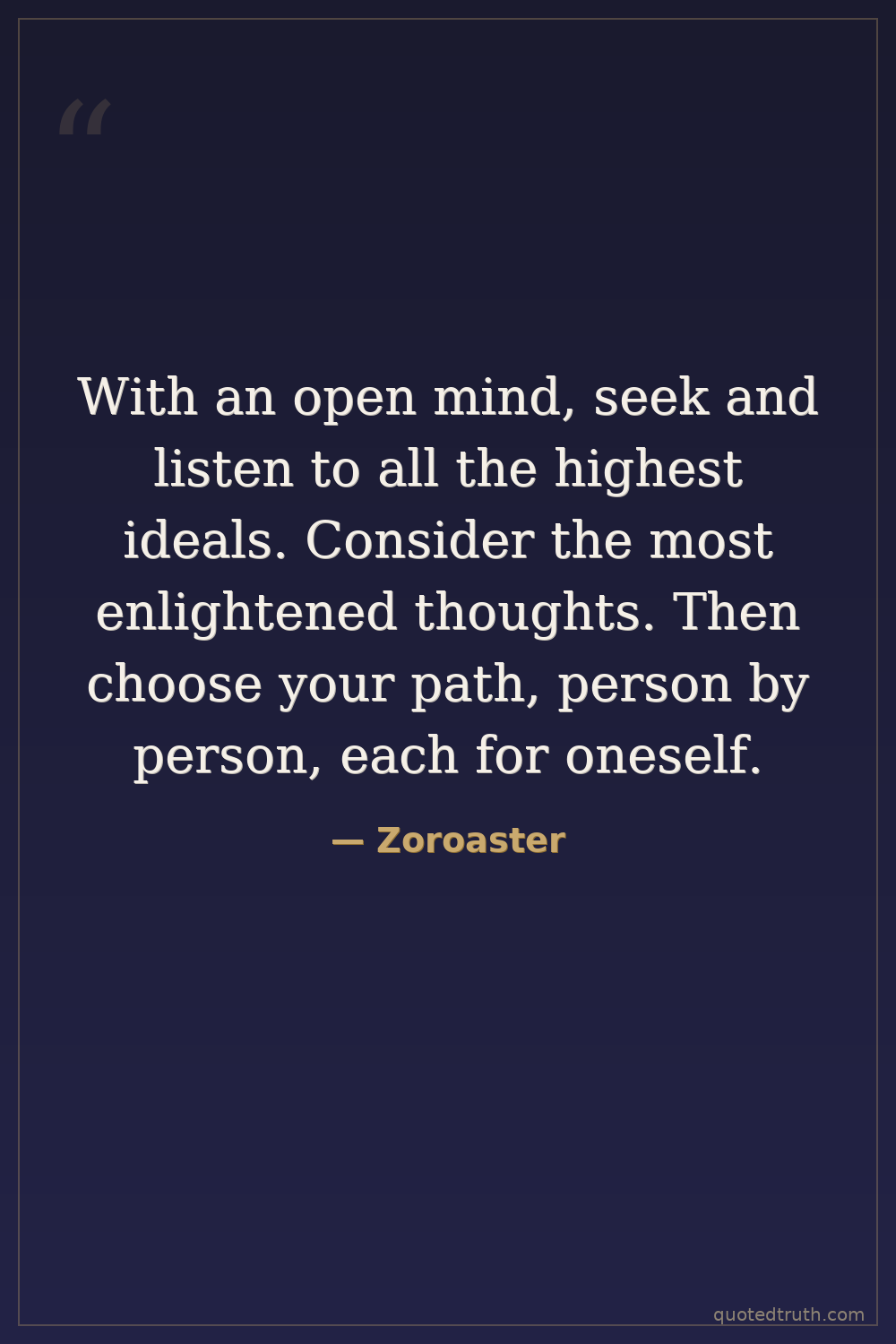
Approach life without prejudice and actively seek out the best ideas from every source available. Weigh the most thoughtful and illuminating perspectives carefully before deciding how to live. Don't inherit your beliefs or let a crowd decide for you. Each person must investigate for themselves and make a deliberate, individual choice about the direction their life will take, owning that decision fully.
Relevance to Zoroaster
Zoroaster built his entire theology around personal moral choice between truth (asha) and the lie (druj), rejecting the tribal polytheism he was raised in after a vision at age thirty. As a reforming priest, he preached that salvation came through individual conscience, not ritual conformity. His signature teaching of Good Thoughts, Good Words, Good Deeds demanded exactly this kind of reasoned, self-directed commitment.
The era
Living around 1500-1000 BCE on the Iranian steppes, Zoroaster confronted a world of hereditary priesthoods, animal-sacrifice cults, and rigid tribal customs where religion was inherited, not chosen. Bronze Age Indo-Iranian society demanded conformity to clan gods. Urging open inquiry and personal selection of belief was radical, foreshadowing later axial-age philosophies in Greece, India, and China that similarly elevated individual reason over inherited ritual.
AI-generated insights based on extensive research and information for context. Factual errors? Email [email protected].