Zoroaster — "He who chooses the good mind, he who chooses righteousness, he who chooses the s…"
He who chooses the good mind, he who chooses righteousness, he who chooses the spirit of devotion, he shall attain immortality.
He who chooses the good mind, he who chooses righteousness, he who chooses the spirit of devotion, he shall attain immortality.
Click any product to generate a realistic preview. Up to 3 at a time.
* Initial load can take up to 90 seconds — revising the preview in another color is nearly instant.
"O Fashioner of the World! O Creator of the waters and plants! Grant Thou to me Thy blessings of Perfection and Immortality!"
"The universe is a battleground between the forces of good and evil, and each human being must choose a side."
"Who made the moon, and the sun, and the stars, which show the path to the believer?"
"When, O Mazda, shall the dawn of the days of existence rise, when shall the world be restored to its purity?"
"He who takes delight in the cattle and in the pasture, he is the one who serves Mazda."
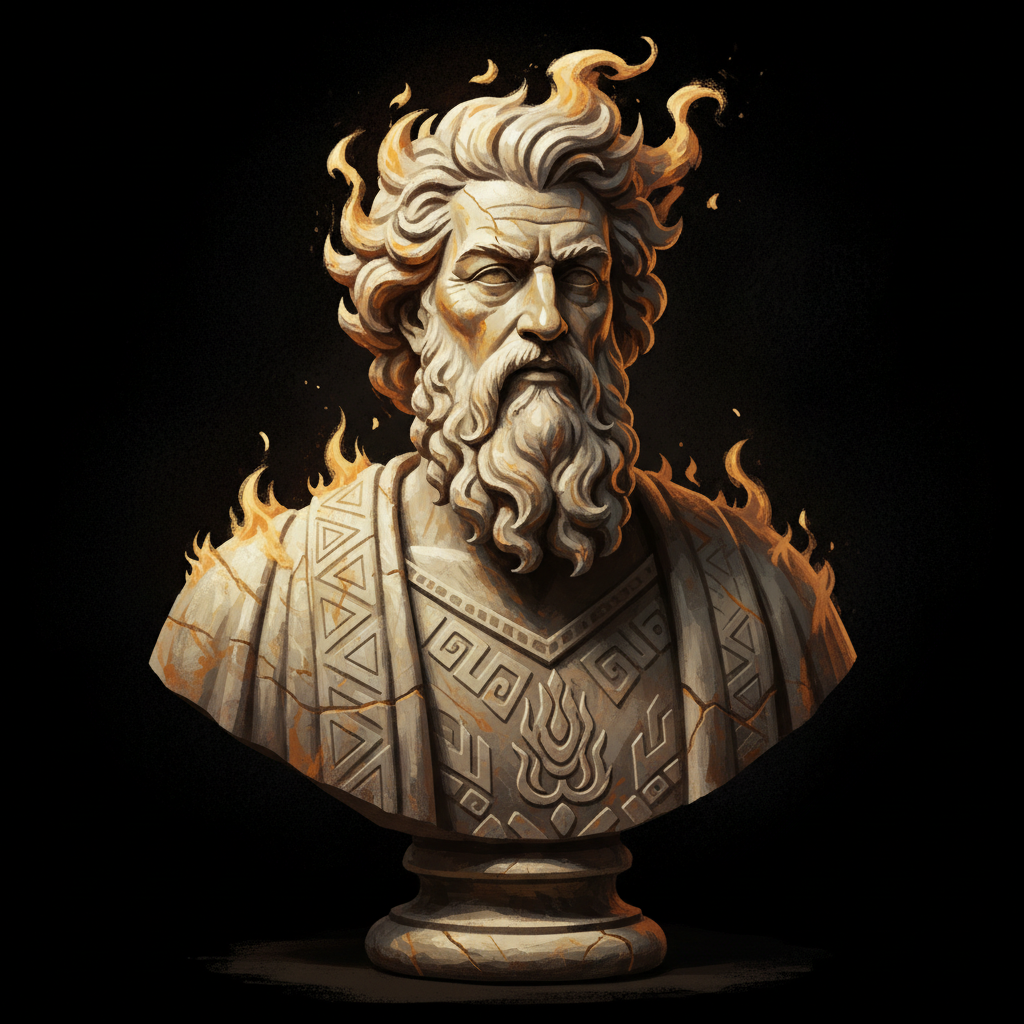
Iranian prophet who founded Zoroastrianism, the first major religion of cosmic dualism between good (Ahura Mazda) and evil (Angra Mainyu). Closely associated with The Buddha (near-contemporary Eastern moral-cosmological revolutionary). For an intellectual contrast, see Friedrich Nietzsche, German philosopher of 'beyond good and evil' — Nietzsche appropriated Zarathustra's name for Thus Spoke Zarathustra (1883) precisely to invert the original's moral cosmology — the historical Zoroaster founded the good-versus-evil framework Nietzsche's character announces the end of.
Found in 1 providers: gemini
1 source checked
Making the right ethical choices leads to lasting spiritual reward. The saying names three specific choices: thinking with a good mind, acting with righteousness, and cultivating a devoted inner spirit. A person who consistently picks these over their opposites gains immortality, meaning a soul preserved beyond death. Morality is framed as an active decision each person must make, not a passive inheritance or ritual obligation.
Zoroaster built his entire religion around the doctrine of moral choice between good and evil, making this line a compact summary of his teaching. He preached Good Thoughts, Good Words, Good Deeds as the path to union with Ahura Mazda, and the three choices here mirror the Amesha Spentas he revered. As a reforming priest, he rejected ritual appeasement and insisted salvation came through personal ethical commitment.
Zoroaster lived in Bronze Age Iran, likely between 1500 and 1000 BCE, among polytheistic Indo-Iranian tribes who worshipped many gods through blood sacrifice and intoxicant rituals. Warrior culture glorified raids, and priests controlled access to the divine through ceremony. Proclaiming that ordinary individuals could earn immortality through their own ethical choices, bypassing the priestly caste, was radical. His dualistic framework later shaped Judaism, Christianity, and Islam on judgment and afterlife.
AI-generated insights based on extensive research and information for context. Factual errors? Email [email protected].
Your cart is empty