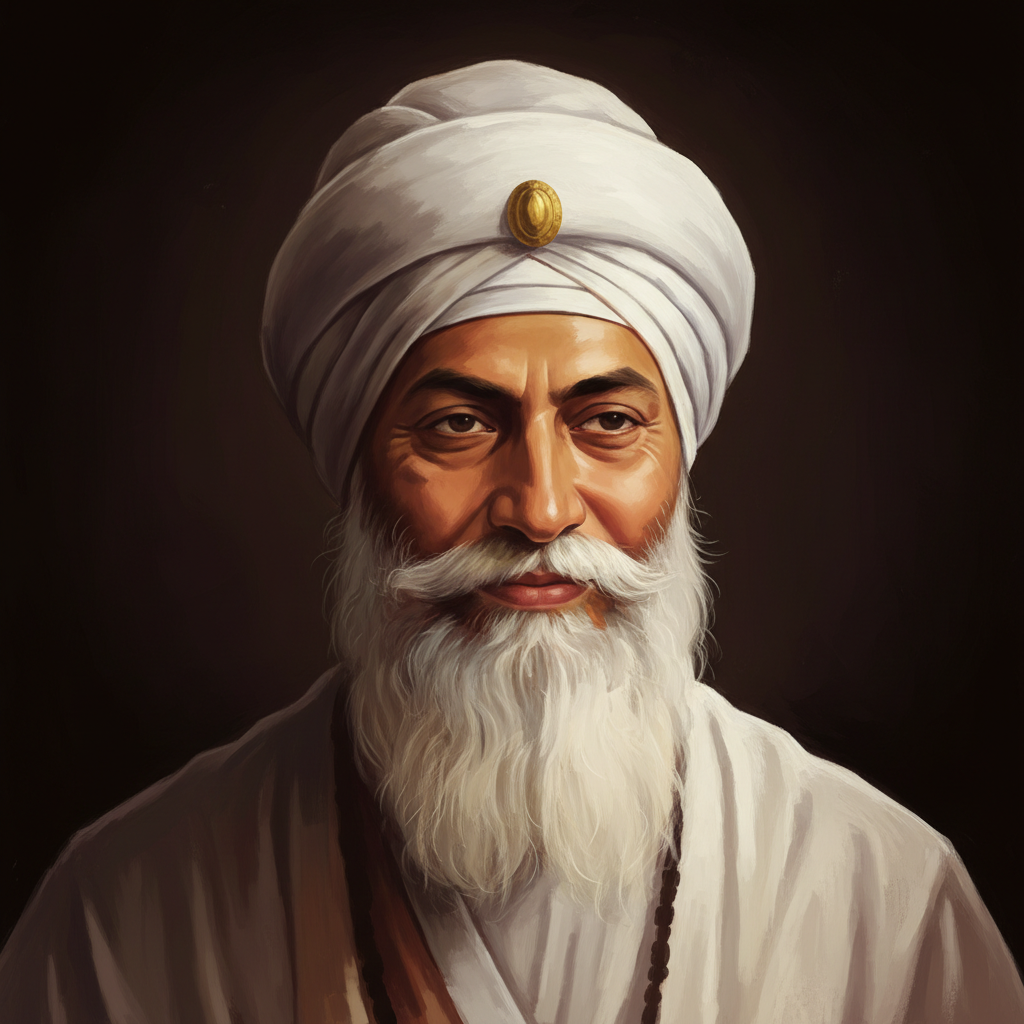
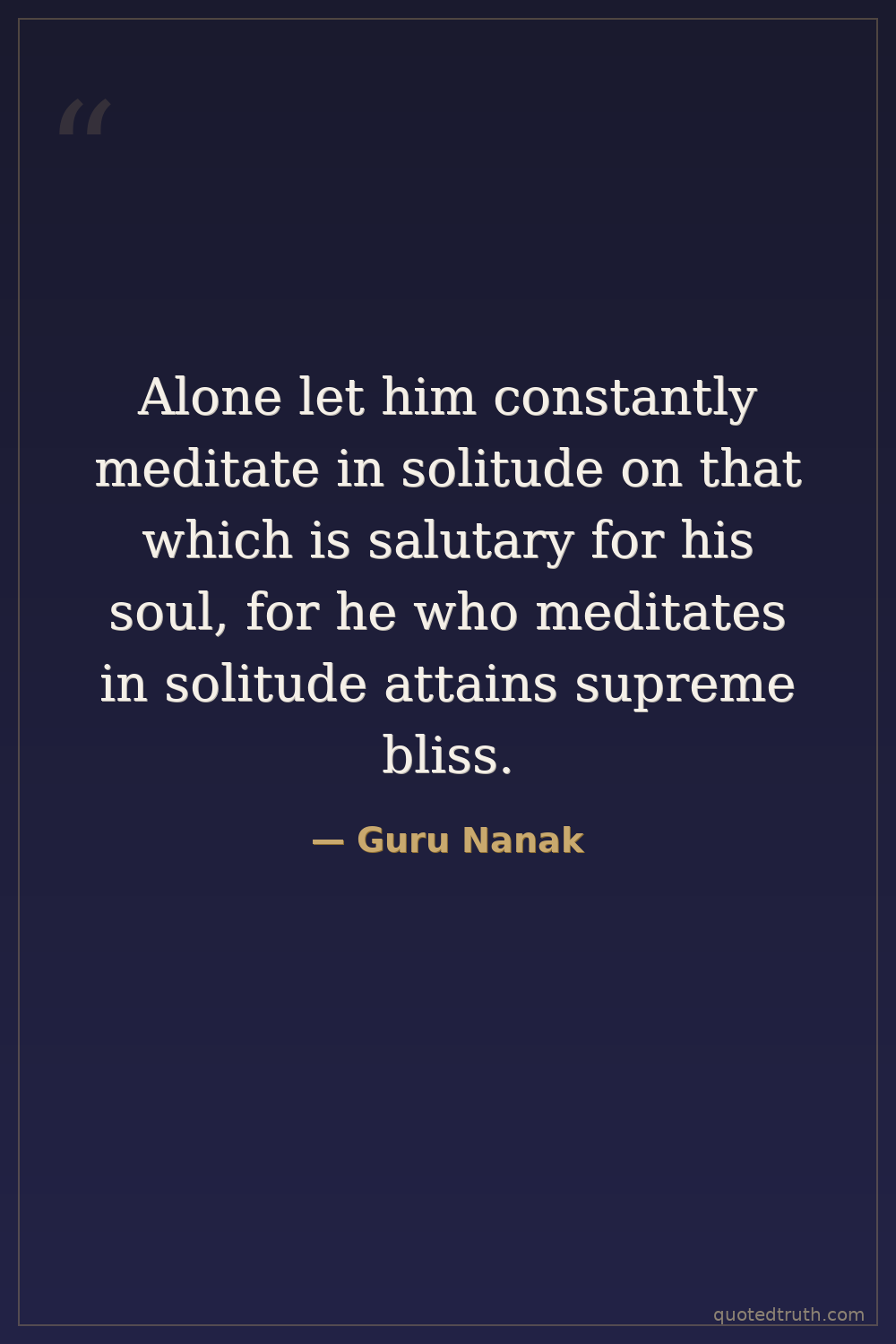
Guru Nanak — "Alone let him constantly meditate in solitude on that which is salutary for his …"
Alone let him constantly meditate in solitude on that which is salutary for his soul, for he who meditates in solitude attains supreme bliss.
Alone let him constantly meditate in solitude on that which is salutary for his soul, for he who meditates in solitude attains supreme bliss.
Click any product to generate a realistic preview. Up to 3 at a time.
* Initial load can take up to 90 seconds — revising the preview in another color is nearly instant.
"I am neither a child, a young man, nor an ancient; nor am I of any caste."
"The greatest wisdom is to know God. The second greatest is to know where you left your reading glasses."
"Those who have loved are those that have found God."
"If there are hundreds of moons and thousands of suns, without the Guru, there is only utter darkness."
"False is the body that leads to lust and anger, and false are the clothes that lead to pride."
Founder of Sikhism and the first of the Ten Sikh Gurus, whose teachings of one universal God and rejection of caste shaped Punjab. Closely associated with Kabir (mystical poet whose verses appear in the Sikh Guru Granth Sahib). For an intellectual contrast, see Brahmanical orthodoxy, the Hindu caste-and-ritual establishment of his era — Sikhism was founded as a deliberate alternative to both Hindu ritual hierarchy and Islamic exclusivism — Nanak's universalism was a structural rejection of caste and priestly mediation.
Found in 1 providers: gemini
1 source checked
Withdraw from distraction and turn inward: the soul grows strongest in stillness. Regular solitary meditation on what is genuinely good for you—not pleasure-seeking or social performance—leads to the deepest contentment a person can reach. The idea is that clarity and lasting peace cannot be borrowed from crowds or rituals; they must be cultivated alone, through disciplined, honest attention to one's inner life.
Guru Nanak (1469–1539) built Sikhism on Naam Simran—ceaseless inward repetition of God's name. He undertook four major Udasis, long solitary journeys across Asia, seeking direct spiritual experience beyond institutional religion. His early life included a formative period of silent withdrawal near the Bein River, after which he declared 'There is no Hindu, no Muslim.' That transformative solitude shaped his entire teaching ministry.
In early-16th-century Punjab, the Lodi Sultanate was collapsing before Babur's Mughal invasion (1526), bringing violent political upheaval. Simultaneously, the Bhakti and Sufi movements were challenging caste-bound, priest-mediated religion by insisting ordinary people could reach God directly. Guru Nanak's emphasis on personal meditation was a radical counter to both corrupt religious institutions and the chaos of war—offering an interior refuge no empire could destroy.
AI-generated insights based on extensive research and information for context. Factual errors? Email [email protected].
Your cart is empty