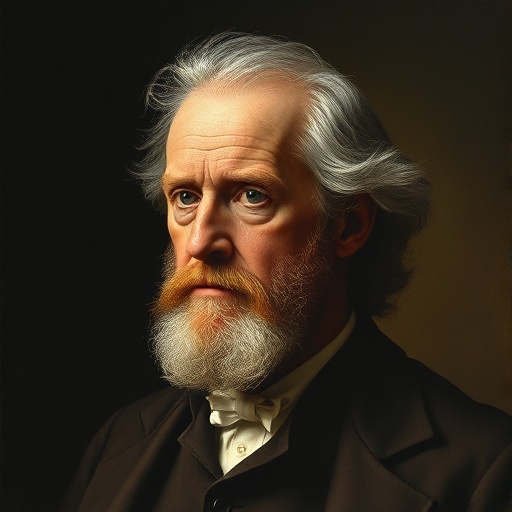
James Watt — "I know grief has its period; but I have much to suffer..."
I know grief has its period; but I have much to suffer...
I know grief has its period; but I have much to suffer...
Click any product to generate a realistic preview. Up to 3 at a time.
* Initial load can take up to 90 seconds — revising the preview in another color is nearly instant.
"In the mean time do all you can to cure him of Bashfullness which will ruin him in this impudent age; but beware he be not led into the opposite vice of self conceit or arrogance which is 1000 times w…"
"groped in the dark, misled by many an ignis fatuus, but nature has a weak side, if we can only find it out."
"I would rather face a loaded cannon than settle a disputed account or make a bargain."
"Nature can be conquered if we can but find her weak side."
"The people in London are all steam engine mad."
From a letter during a difficult period in his life (around the time of his wife's death and financial struggles).
Date: c. 1769
PhilosophicalFound in 1 providers: gemini
1 source checked
The speaker acknowledges that grief doesn't last forever—it has a natural end—yet admits they still face a long road of suffering ahead. It's a quietly stoic statement: understanding intellectually that pain fades doesn't make present anguish easier to bear. The quote captures the tension between knowing something is temporary and still living through its full weight, refusing to pretend the hardest part is already behind them.
Watt was famously melancholic, prone to depression despite his transformative engineering achievements. He lost his first wife, Margaret Miller, in 1773 during childbirth—a devastating blow. Several of his children also died young. His Lunar Society circle, including Joseph Black, were emotional anchors. His letters reveal a man who intellectualized suffering while fully feeling it: consistent with someone who could rationally accept grief's finite nature while still being consumed by it.
In 18th-century Britain, death was inescapable: infant mortality was high, childbirth regularly fatal, and disease swept through families without warning. The Enlightenment encouraged rational frameworks for processing emotion, yet no medicine addressed depression or grief directly. The Industrial Revolution Watt helped ignite was transforming society while ordinary people still died from easily preventable causes. Grief was expected, frequent, and largely private—stoic endurance was the cultural norm, not therapeutic expression.
AI-generated insights based on extensive research and information for context. Factual errors? Email [email protected].
Your cart is empty