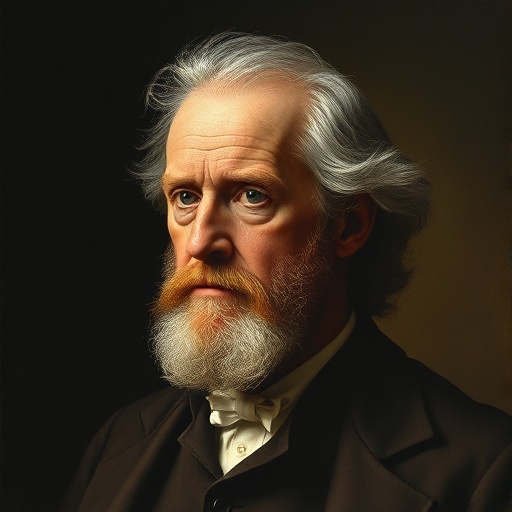
James Watt — "My great success in life has been owing to my having paid attention to every det…"
My great success in life has been owing to my having paid attention to every detail.
My great success in life has been owing to my having paid attention to every detail.
Click any product to generate a realistic preview. Up to 3 at a time.
* Initial load can take up to 90 seconds — revising the preview in another color is nearly instant.
"Nature can be conquered if we can but find her weak side."
"groped in the dark, misled by many an ignis fatuus, but nature has a weak side, if we can only find it out."
"He says that he got the idea from a lobster's tail."
"I would rather face a loaded cannon than settle a disputed account or make a bargain."
"In the mean time do all you can to cure him of Bashfullness which will ruin him in this impudent age; but beware he be not led into the opposite vice of self conceit or arrogance which is 1000 times w…"
Widely attributed, reflecting his meticulous engineering approach. Specific primary source hard to pinpoint.
Date: Undated
PhilosophicalFound in 1 providers: gemini
1 source checked
Meticulous attention to detail is the foundation of real achievement. Success isn't born from grand vision alone—it emerges from disciplined focus on every small, specific element that makes a system work. Overlooking minor details invites failure; mastering them produces reliable results. The message is empirical and practical: lasting success is earned through sustained, granular observation and care across the entire span of one's work.
Watt's defining contribution—his 1769 separate condenser—required obsessive precision in measuring steam pressure, heat loss, and cylinder geometry without standardized instruments. His notebooks reveal relentless micro-level experimentation. His partnership with Matthew Boulton succeeded because Watt's engineering exactness produced commercially dependable engines. Even his unit of power, the horsepower, reflected his habit of quantifying details others ignored. Attention to detail wasn't a philosophy for Watt—it was his engineering method.
Watt operated during Britain's Industrial Revolution ignition (1760s–1800s), when craft intuition was yielding to systematic engineering. Precision manufacturing was newly critical as machines replaced hand labor; John Wilkinson's boring mill in 1775 made Watt's cylinder commercially feasible. Enlightenment empiricism—the belief that careful observation reveals truth—shaped intellectual culture through institutions like the Lunar Society. In this climate, mastery of fine detail separated commercially viable inventions from workshop experiments that never scaled.
AI-generated insights based on extensive research and information for context. Factual errors? Email [email protected].
Your cart is empty