Carl Linnaeus — "Human beings, having, above all creatures, received the power of reason... need …"

Human beings, having, above all creatures, received the power of reason... need to be aware where nature is unaware. Nature reaches its culmination in humans, but human consciousness has not its essence in itself or nature.
Carl Linnaeus — Carl Linnaeus Early Modern · Biological taxonomy

Get This Quote & Author's Image Illustrated On:

Click any product to generate a realistic preview. Up to 3 at a time.
* Initial load can take up to 90 seconds — revising the preview in another color is nearly instant.

Kitchen

Apparel

Other

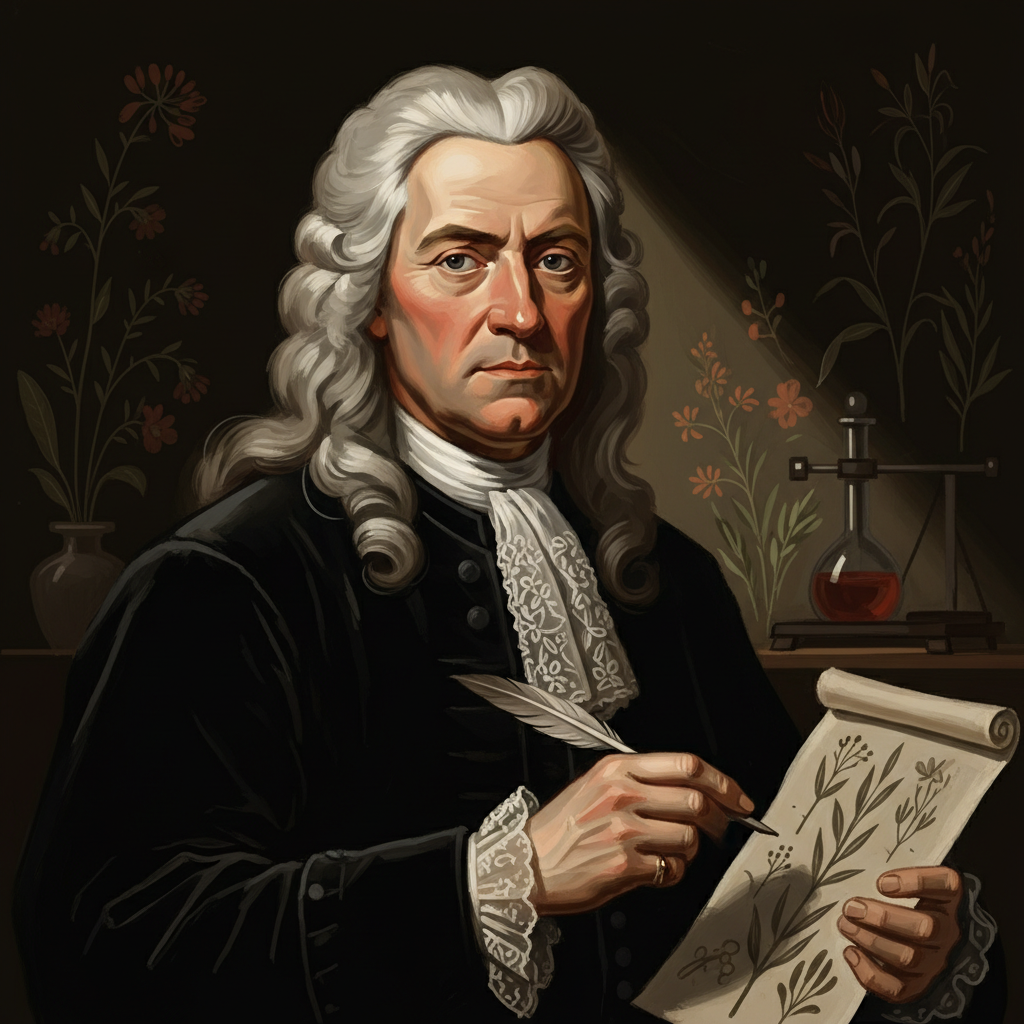
About Carl Linnaeus (1707-1778)

Swedish botanist and the father of modern taxonomy whose Systema Naturae (1735) introduced binomial nomenclature for naming all species. Closely associated with Joseph Banks (British naturalist who carried Linnaean classification on Cook's voyages). For an intellectual contrast, see Comte de Buffon, French naturalist and Histoire Naturelle author (1749-1788) — Buffon explicitly attacked Linnaean fixed-categories taxonomy as artificial and rejected the binomial system; his gradualist, environment-shaped natural history was the explicit alternative. Anticipates the fixed-species-vs-evolution debate Darwin would later resolve.

Details

A deep reflection on humanity's unique place in nature and the nature of consciousness.

Date: 18th Century

Philosophical

Verification

Unverifiable

Found in 1 providers: gemini

1 source checked

Understanding this quote

What it means

Humans uniquely possess reason, setting them apart from all other creatures. Unlike animals that act on instinct alone, humans must consciously recognize what nature operates without awareness of. Human consciousness transcends the natural world rather than being fully explained by it, placing humans at nature's peak while simultaneously standing outside pure nature through self-aware thought.

Relevance to Carl Linnaeus

Linnaeus spent his life cataloguing all living things, placing humans within the animal kingdom as Homo sapiens in his Systema Naturae. Yet this quote reveals his deeper conviction that classifying humans biologically was incomplete. The man who invented biological taxonomy believed human rationality fundamentally exceeded what taxonomy could capture, reflecting his Lutheran faith alongside his scientific rigor.

The era

The early modern period saw fierce debate over humanity's place in a newly systematized natural world. Linnaeus worked during the Enlightenment's rise, when reason was celebrated but also when religious frameworks still anchored human identity. His era grappled with whether science could fully explain humanity, making this tension between natural classification and transcendent consciousness culturally urgent.

AI-generated insights based on extensive research and information for context. Factual errors? Email [email protected].
Your Cart

Your cart is empty