What it means
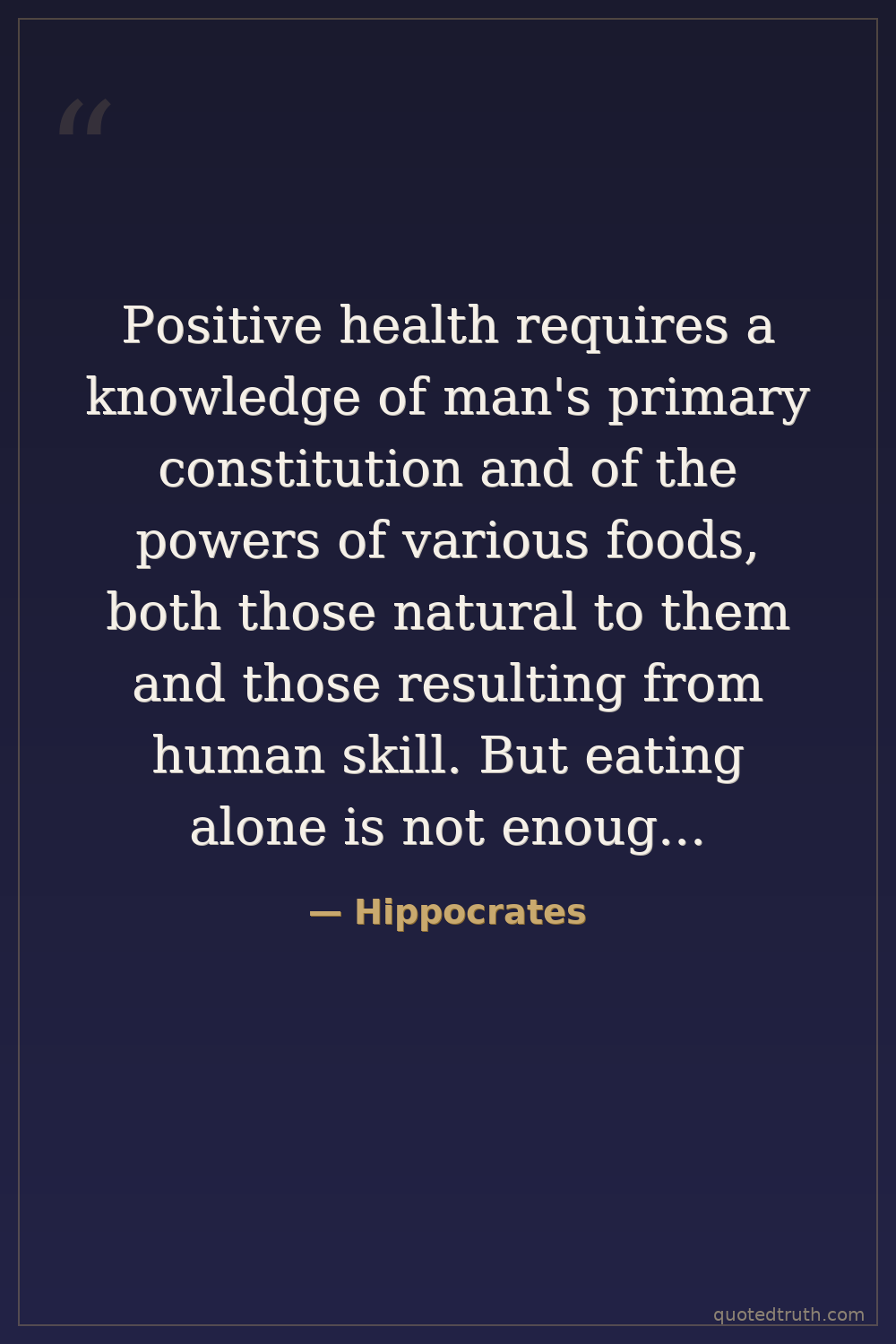
Good health demands understanding both the human body and the nutritional value of foods, natural and processed alike. Diet alone cannot sustain wellness; regular physical exercise is equally essential. True health regimen requires combining both, while accounting for seasonal changes, climate, a person's age, and their living environment. Health is an active, personalized practice requiring ongoing knowledge and adjustment.
Relevance to Hippocrates
Hippocrates founded systematic medicine by rejecting supernatural explanations for disease. This quote embodies his empirical, whole-person approach: he wrote extensively on diet, exercise, and environment in works like Regimen and Airs, Waters, Places. His insistence on individualized treatment based on observable factors like age and climate directly mirrors this holistic framework he championed throughout his life.
The era
In 5th-century BCE Greece, disease was commonly attributed to divine punishment or spiritual imbalance. Hippocrates practiced during the height of Classical Athens, when philosophers like Socrates were questioning inherited assumptions. His contemporaries lacked germ theory, yet Greek athletic culture valued physical training deeply. This quote bridges medicine and gymnasium culture, asserting that structured regimen, not prayer or superstition, governed human health.
AI-generated insights based on extensive research and information for context. Factual errors? Email [email protected].