What it means
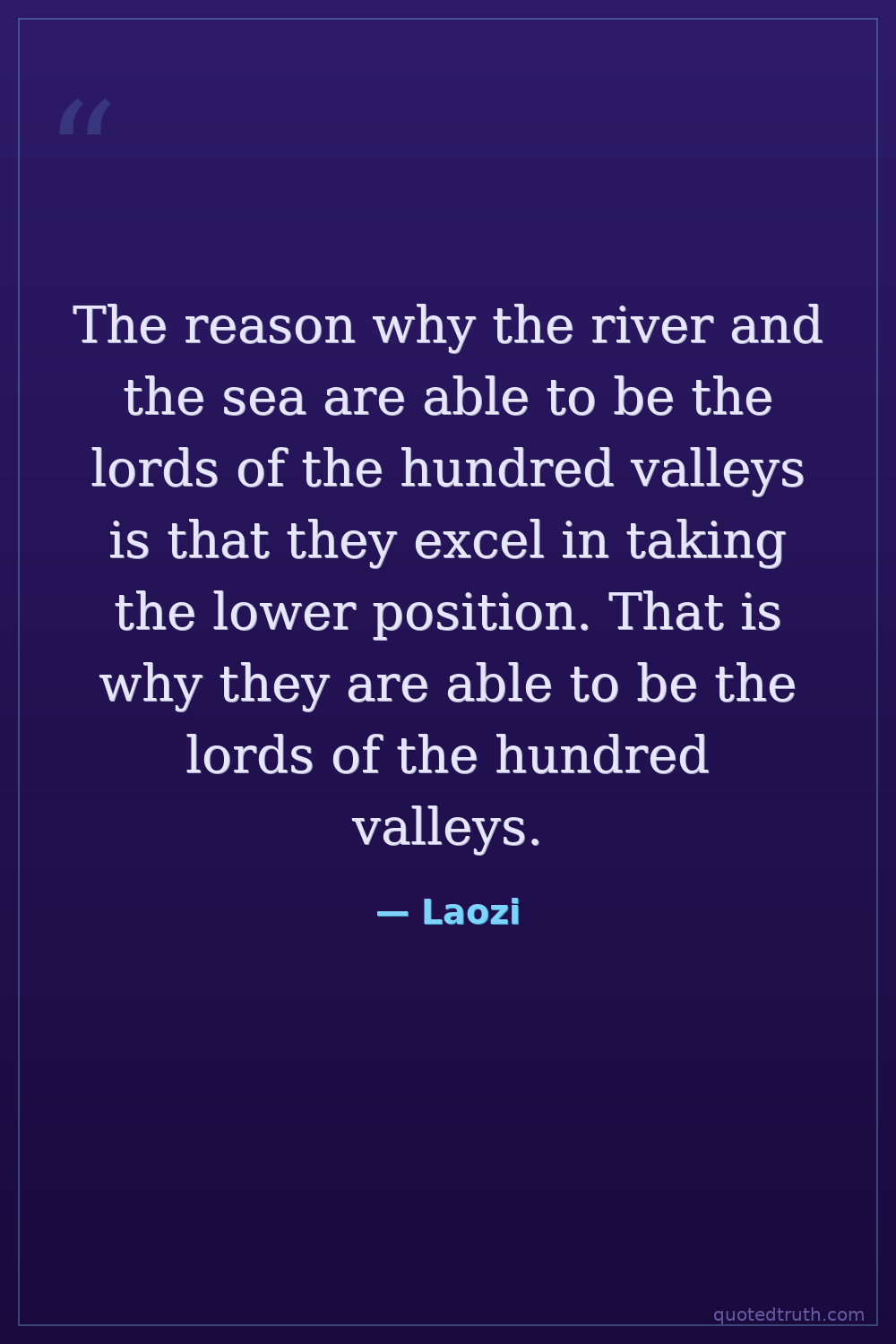
Rivers and seas become powerful because they sit below everything else, letting water naturally flow into them. The quote argues that true authority and influence come from humility, not dominance. If you want people to rally around you or ideas to gather, position yourself beneath them rather than above. Lowness attracts; height repels. Leadership works the same way as geography: the lowest point collects the most.
Relevance to Laozi
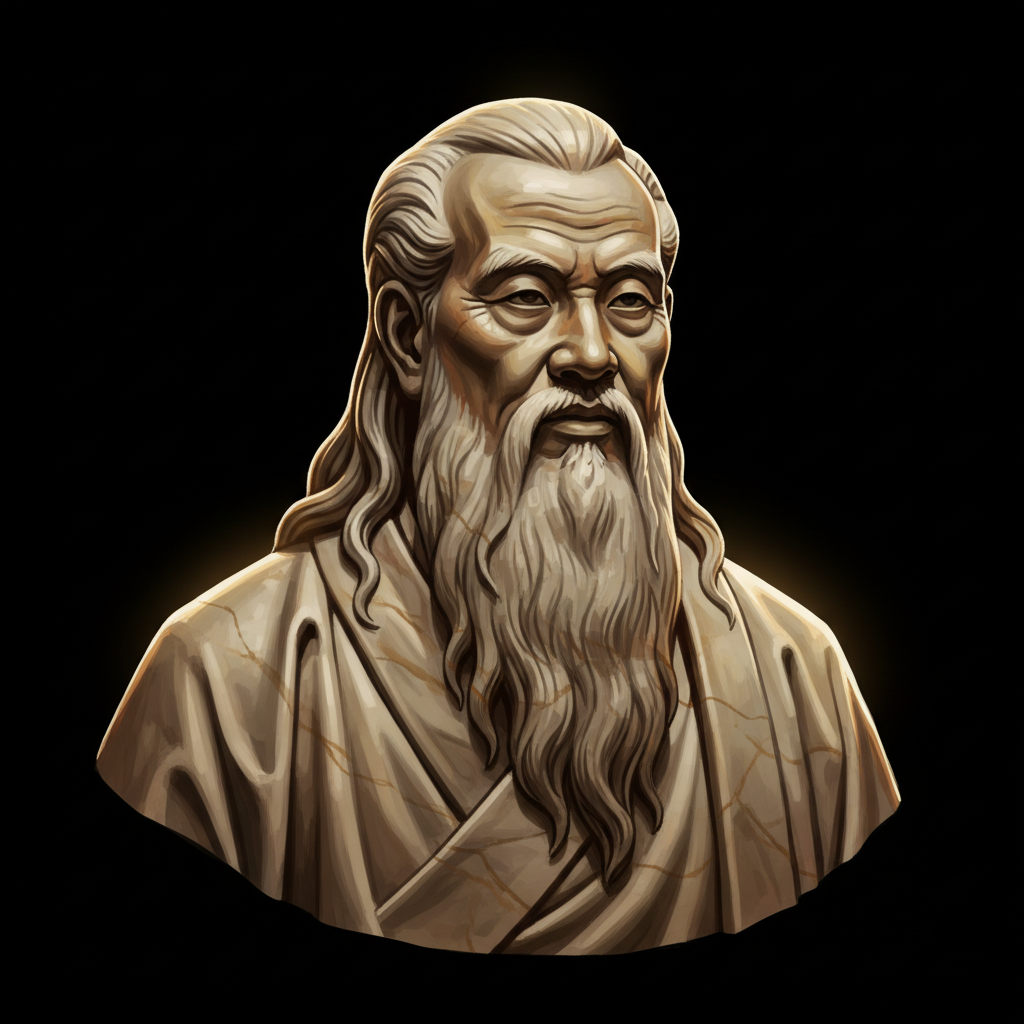
Laozi built Taoism around wu wei, effortless action that follows nature's grain rather than forcing outcomes. Legend casts him as a reclusive archivist who refused court prestige and rode west into obscurity rather than chase status. This river metaphor distills his worldview: the sage yields, softens, and stays low, gaining influence precisely by declining to grasp for it. Water imagery runs through the Tao Te Ching as his signature teaching device.
The era
Laozi lived during the Zhou dynasty's decline, an era of warring states where rulers competed through armies, taxes, and rigid Confucian hierarchy. Philosophers wandered between courts pitching governance schemes built on control and ritual. Against that backdrop, advising kings to take the lowest position was radical counter-programming. It rejected the dominant assumption that power flows from height, force, and ceremony, offering instead a nature-based model aimed at rulers exhausted by constant war.
AI-generated insights based on extensive research and information for context. Factual errors? Email [email protected].