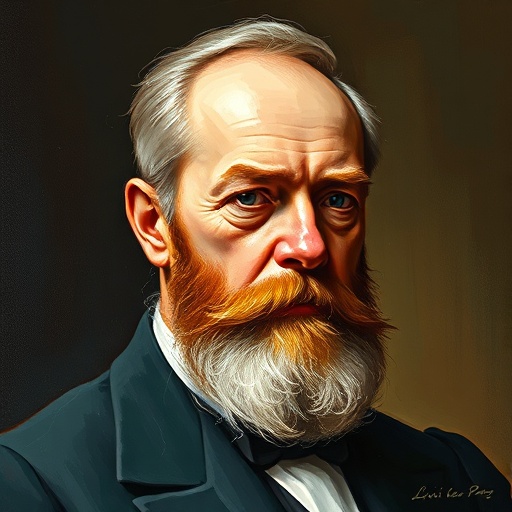
Louis Pasteur — "A bottle of wine contains more philosophy than all the books in the world."
A bottle of wine contains more philosophy than all the books in the world.
A bottle of wine contains more philosophy than all the books in the world.
Click any product to generate a realistic preview. Up to 3 at a time.
* Initial load can take up to 90 seconds — revising the preview in another color is nearly instant.
"The Greeks understood the mysterious power of the hidden side of things. They bequeathed to us one of the most beautiful words in our language—the word 'enthusiasm'—en theos—a god within."
"Without laboratories, men of science are soldiers without arms."
"I have been for the past three years studying a disease which is called hydrophobia, or rabies. It is a disease which I believe to be caused by a microbe."
"The Greeks understood the mysterious power of the hidden side of things."
"I am convinced that I have found the cause of fermentation."
Attributed, reflecting his work on fermentation and appreciation for wine.
Date: Late 19th Century (approx.)
WisdomFound in 2 providers: grok,gemini
2 sources checked
Pasteur is saying that a single bottle of wine carries more real wisdom about life, nature, and human experience than any library of written theory. Sharing wine loosens conversation, reveals character, and connects people to centuries of craft, soil, and fermentation. Books describe the world in abstractions, but a bottle delivers tangible lessons about patience, chemistry, culture, and pleasure in one sip.
Pasteur spent years studying fermentation in French wines and beers, and his work saving the wine industry from spoilage led directly to pasteurization and germ theory. He literally found microscopic life inside wine bottles, so for him a bottle was a working laboratory. As a Frenchman who loved his country's vineyards, the line blends scientific reverence with cultural pride in wine as a teacher.
In 1860s France, wine was collapsing commercially because batches mysteriously soured, threatening a pillar of the economy. Napoleon III personally asked Pasteur to investigate. The era was also wrestling with the tension between old philosophical traditions and a new experimental science revealing invisible microbes. Saying a bottle held more philosophy than books playfully elevated empirical, sensory knowledge over armchair theorizing during a moment when science was rewriting how Europeans understood life itself.
AI-generated insights based on extensive research and information for context. Factual errors? Email [email protected].
Your cart is empty