What it means
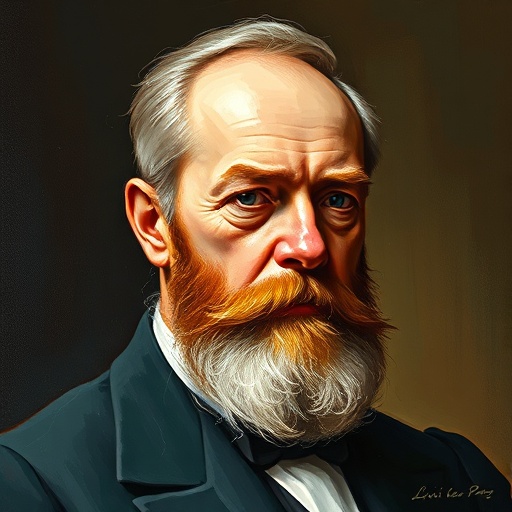
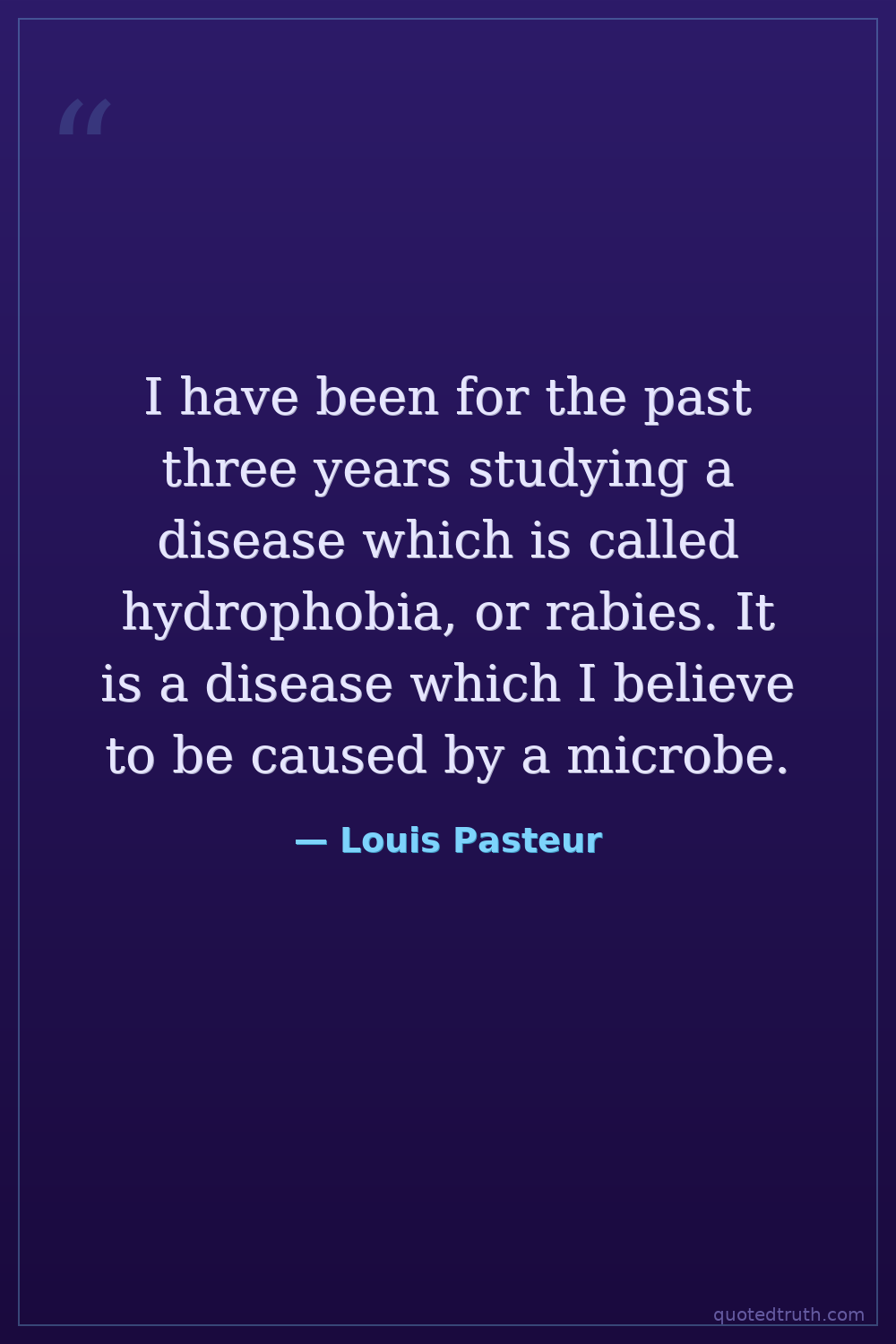
Pasteur announces he has spent three years investigating rabies, a terrifying disease historically known as hydrophobia because victims feared water. He proposes that, like other infections he studied, rabies is caused by a tiny living organism, a microbe, rather than bad air, spiritual causes, or spontaneous generation. He is publicly declaring that even this mysterious nerve disease fits the germ theory framework and is worth attacking scientifically.
Relevance to Louis Pasteur
This statement captures Pasteur at his boldest. After proving germs caused fermentation, silkworm disease, and anthrax, he applied the same logic to rabies, even though the rabies agent is actually a virus too small to see in his microscopes. Undeterred, he cultured it in rabbit spinal cords and in 1885 saved nine-year-old Joseph Meister with the first post-exposure vaccine, founding the Pasteur Institute and cementing his identity as a relentless microbe hunter.
The era
In the 1880s, rabies was a death sentence and a public nightmare, with mad-dog bites widely reported in European newspapers. Germ theory was still fiercely contested by miasma supporters and surgeons who refused antiseptics. Koch had just identified the tuberculosis and cholera bacilli, and Europe was racing to link specific microbes to specific diseases. Pasteur's France, rebuilding scientific prestige after the Franco-Prussian War, lavishly funded his lab, making such audacious microbial claims both newsworthy and nationally celebrated.
AI-generated insights based on extensive research and information for context. Factual errors? Email [email protected].