What it means
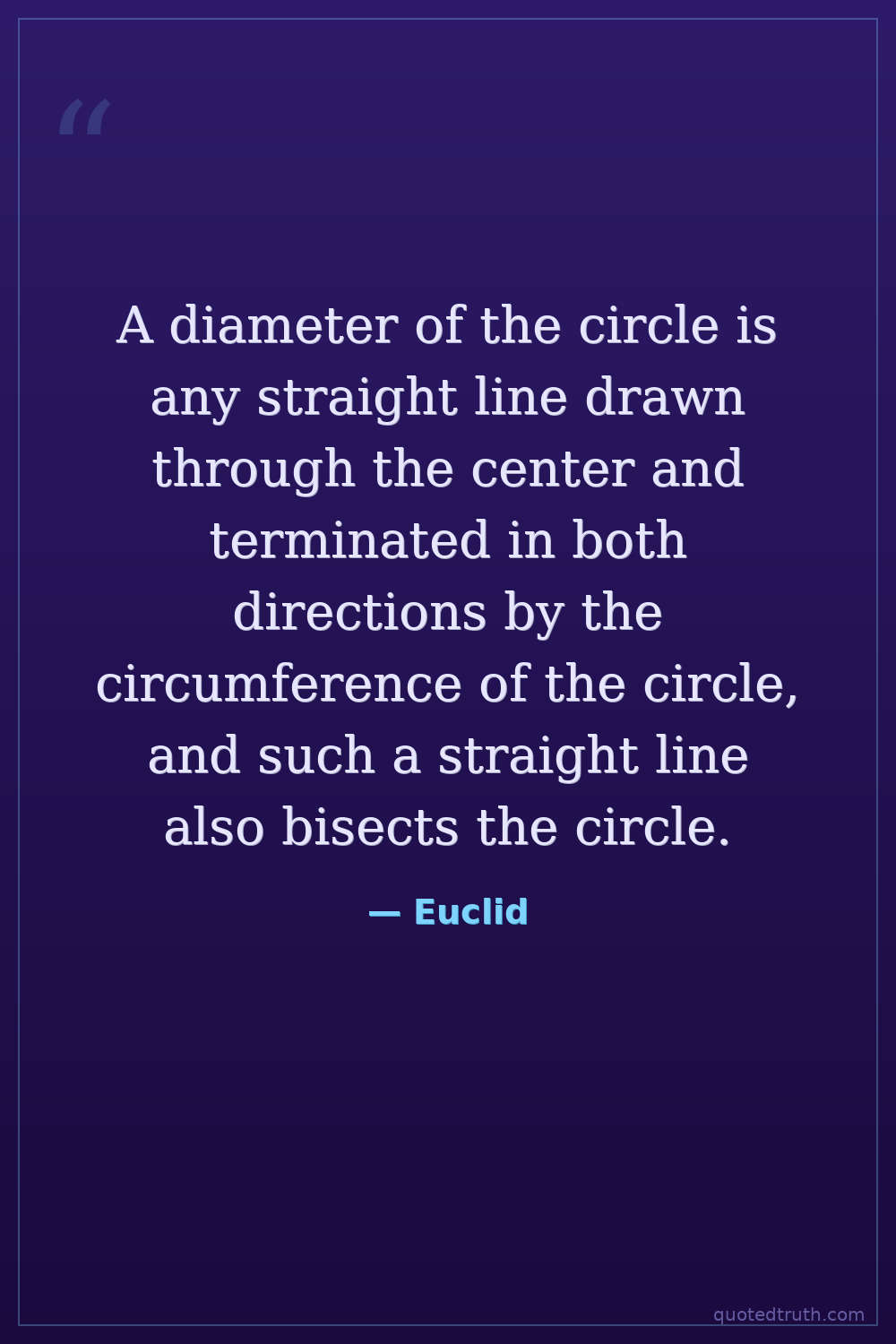
A circle's diameter is any straight line passing through its center, with both endpoints touching the boundary. Critically, this line divides the circle into two perfectly equal halves. The statement does double duty: it defines a term precisely and asserts a geometric truth simultaneously. This style—definition plus consequence in one breath—is the backbone of how formal mathematics still operates today: every concept nailed down before any reasoning can proceed.
Relevance to Euclid
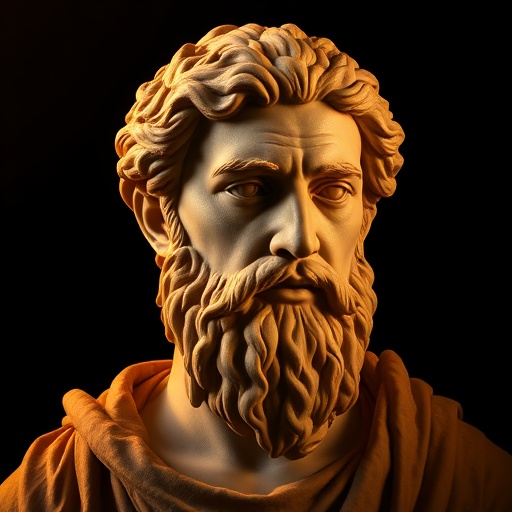
Euclid taught in Alexandria around 300 BCE and compiled the Elements—thirteen books organizing all known Greek mathematics into an airtight axiomatic system. His defining trait was precision: no term used before it was defined, no claim made before it was proved. His famous reply to King Ptolemy I, that there is no royal road to geometry, reveals the same conviction: rigor is non-negotiable, even for rulers. This definition exemplifies that uncompromising standard.
The era
Alexandria in 300 BCE was the intellectual center of the Hellenistic world, drawing scholars from across the Mediterranean to its great Library. Greek philosophers had elevated logical proof above all other forms of knowledge, yet no standardized mathematical vocabulary existed. Without agreed definitions, theorems built in Athens could not be verified in Carthage or Babylon. Euclid's methodical vocabulary—defining every term before using it—created the shared language that let mathematical knowledge accumulate reliably across generations and civilizations.
AI-generated insights based on extensive research and information for context. Factual errors? Email [email protected].