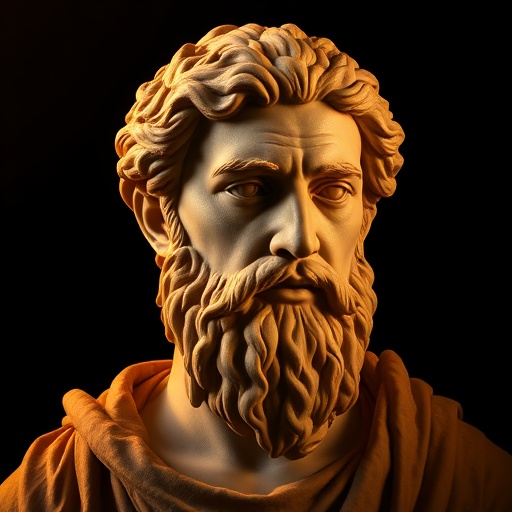
Euclid — "An obtuse angle is an angle greater than a right angle."
An obtuse angle is an angle greater than a right angle.
An obtuse angle is an angle greater than a right angle.
Click any product to generate a realistic preview. Up to 3 at a time.
* Initial load can take up to 90 seconds — revising the preview in another color is nearly instant.
"For the things of the world cannot be made manifest without the knowledge of mathematics."
"To produce a finite straight line continuously in a straight line."
"The only purpose of the 'Elements' is to demonstrate mathematically certain fundamental propositions."
"A prime number is that which is measured by a unit alone."
"A plane angle is the inclination to one another of two lines in a plane which meet one another and do not lie in a straight line."
Found in 2 providers: deepseek,grok
2 sources checked
An obtuse angle is any angle wider than 90 degrees but less than a straight 180-degree line. Think of scissors opened past a perfect square corner. The statement is a precise geometric definition, distinguishing one class of angles from acute (smaller than 90°) and right angles exactly. It gives geometry a shared, unambiguous vocabulary so that reasoning built on top of it cannot slip into vagueness or disagreement.
This line appears nearly verbatim in Book I of Euclid's Elements, his foundational treatise written around 300 BCE. Euclid structured all of geometry on definitions first, then postulates, then proofs — nothing was assumed until named. This reflects his core conviction that rigorous mathematics requires airtight, shared language before a single theorem can stand. His character was methodical and relentlessly precise; he reportedly told Ptolemy I there is no royal road to geometry.
Euclid worked in Alexandria around 300 BCE during the Hellenistic period, when Ptolemy I built the Library of Alexandria to systematize Greek knowledge. Plato's Academy had elevated mathematics as the purest form of reasoning, but geometry still lacked a single, logically ordered reference. Competing definitions created confusion across city-states. Euclid's precise vocabulary unified the discipline, giving scholars from Egypt to Rome a common mathematical language that dominated education for over two thousand years.
AI-generated insights based on extensive research and information for context. Factual errors? Email [email protected].
Your cart is empty