What it means
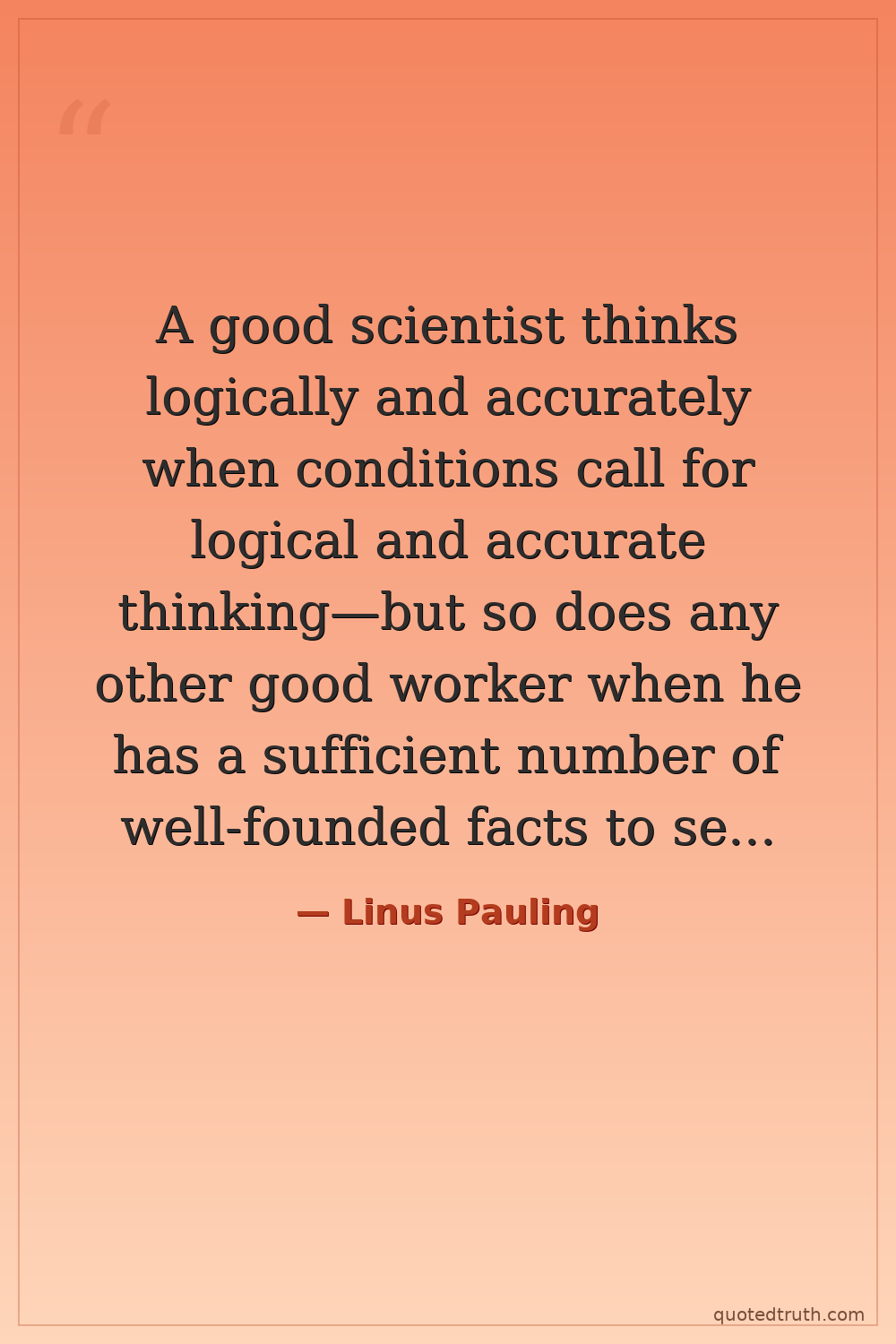
Good scientific thinking isn't magic—it's disciplined logic applied to solid evidence. Any skilled professional does the same: gather enough reliable facts, draw careful generalizations from them, then work out what logically follows. The scientist has no monopoly on rigorous reasoning; the method is universal. What distinguishes good work across all fields is the combination of sufficient factual grounding and honest, systematic inference.
Relevance to Linus Pauling
Pauling won Nobel Prizes in both Chemistry and Peace—proof he applied rigorous logic beyond the lab. His work on chemical bonds required precisely this inductive leap from experimental data to sweeping structural theory. His anti-nuclear activism followed the same pattern: marshal the facts about radiation damage, generalize to human risk, deduce policy consequences. He lived this epistemology across radically different domains.
The era
Pauling's career spanned the mid-20th century, when science's cultural authority was peaking post-Manhattan Project. Society debated whether scientists held special rational powers, or were merely citizens with expertise. Cold War anxiety made scientific credibility politically charged—Pauling's peace activism was attacked partly by questioning his right to reason beyond chemistry. This quote asserts democratic rationalism: clear thinking belongs to everyone with the facts.
AI-generated insights based on extensive research and information for context. Factual errors? Email [email protected].