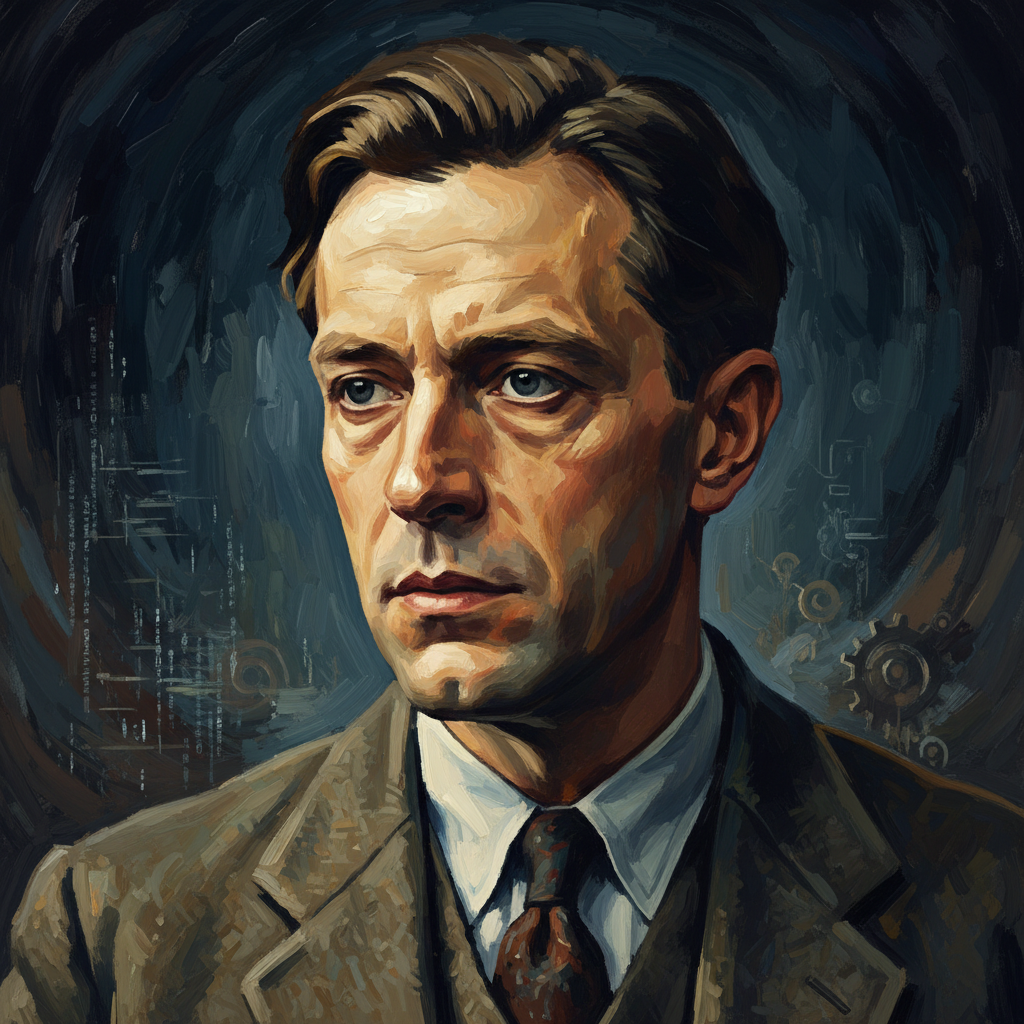
Alan Turing — "A machine does not have to be conscious to be intelligent."
A machine does not have to be conscious to be intelligent.
A machine does not have to be conscious to be intelligent.
Click any product to generate a realistic preview. Up to 3 at a time.
* Initial load can take up to 90 seconds — revising the preview in another color is nearly instant.
"The digital computer is a universal machine, capable of simulating any other machine."
"We are trying to make a brain."
"The development of artificial intelligence will have a profound impact on society."
"The computer is a new medium for human expression."
"It is not possible to produce a set of rules purporting to describe what a man should do in every conceivable set of circumstances."
Attributed, general implication from his writings, but exact quote is elusive.
Date: Approx. 1950
ShockingFound in 1 providers: grok
1 source checked
Intelligence is about capability and behavior, not inner awareness. A system that solves problems, recognizes patterns, and adapts to new challenges is intelligent whether or not it experiences anything subjectively. This separates two concepts people routinely conflate: consciousness, meaning subjective inner experience, and intelligence, meaning effective problem-solving. Function is what defines intelligence. Whether something feels or is self-aware is an entirely separate question.
Turing's 1950 paper 'Computing Machinery and Intelligence' proposed the imitation game, judging machine intelligence by behavioral output alone, deliberately bypassing consciousness as a criterion. His Bombe machine at Bletchley Park cracked Enigma codes with zero self-awareness. Persecuted by Britain for homosexuality and chemically castrated, Turing understood that external performance, not inner life, was how society measured beings. He consistently argued intelligence could be fully separated from biology and subjective experience.
Post-WWII Britain saw computers transition from wartime codebreaking tools into research machines, raising urgent questions about cognition and automation. Philosophy was split between behaviorism and mentalism. Religious and cultural consensus held consciousness as uniquely human and divinely granted, making machine intelligence claims controversial. The Cold War was accelerating demand for computational power. Society was only beginning to reckon with machines displacing human mental labor, not just physical work.
AI-generated insights based on extensive research and information for context. Factual errors? Email [email protected].
Your cart is empty