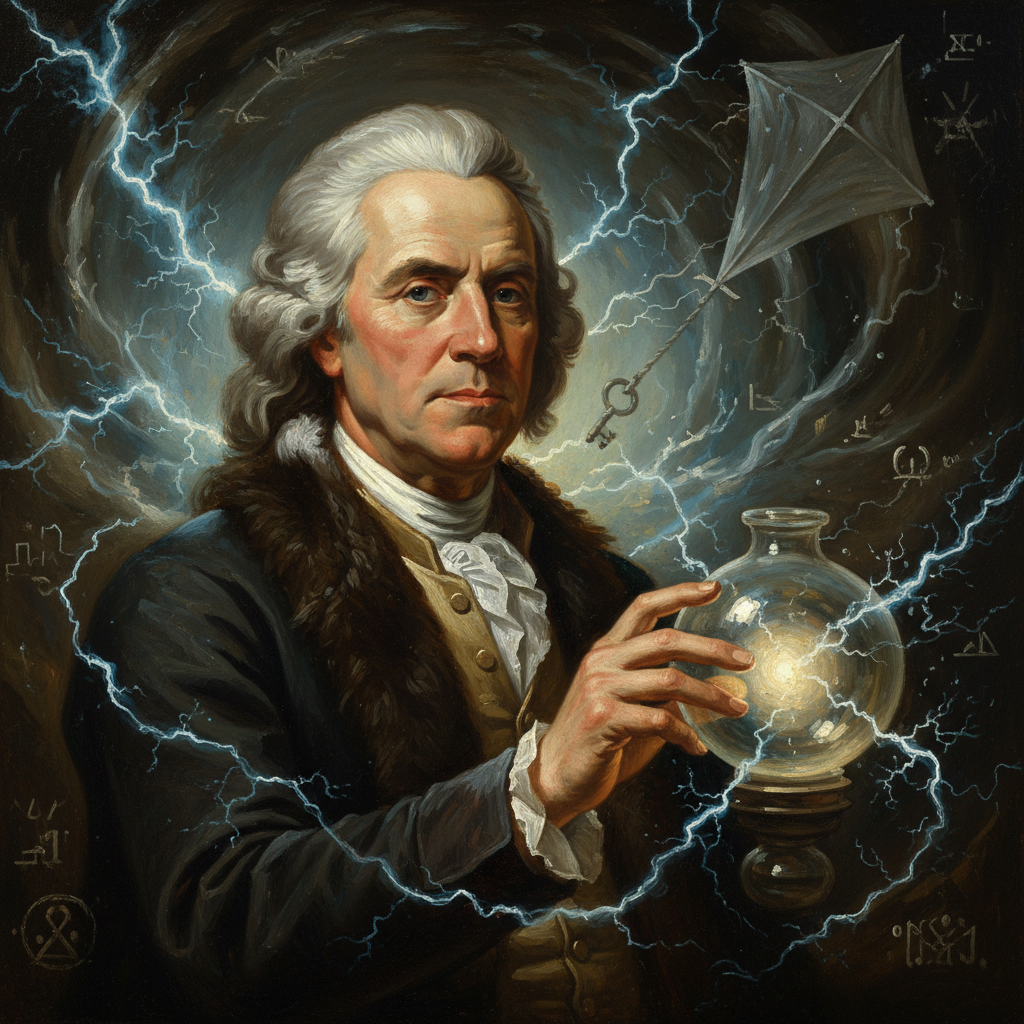
Benjamin Franklin — "A man's own manner of living is a perpetual sermon."
A man's own manner of living is a perpetual sermon.
A man's own manner of living is a perpetual sermon.
Click any product to generate a realistic preview. Up to 3 at a time.
* Initial load can take up to 90 seconds — revising the preview in another color is nearly instant.
"He that has a Trade, has an Office of Profit and Pleasure."
"If you would have your business done, go; if not, send."
"The great secret of succeeding in conversation is to admire little, to hear much, to contradict seldom, and to use all the good manners one can."
"We must all hang together, or assuredly we shall all hang separately."
"Many a man thinks he is buying pleasure, when he is only buying himself trouble."
Polymath Founding Father, diplomat, and Poor Richard's Almanack author who helped draft the Declaration of Independence and the Constitution. Closely associated with John Adams (fellow Founder, Massachusetts statesman) and Thomas Jefferson (fellow Declaration drafter). For an intellectual contrast, see Thomas Hutchinson, last royal governor of colonial Massachusetts — Franklin leaked Hutchinson's loyalist correspondence to Boston in 1772 to inflame revolutionary sentiment — Hutchinson represented the colonial-aristocrat crown-loyalty that Franklin's revolution was organized to dismantle.
Found in 1 providers: grok
1 source checked
Your daily behavior preaches louder than any words you could speak. How you actually live—your habits, choices, and conduct—constantly broadcasts your values to everyone around you. Actions are an ongoing demonstration of what you believe, more convincing than any speech or lecture. True character is revealed not in what someone professes to stand for, but in the cumulative evidence of how they spend their time and treat others.
Franklin embodied this maxim personally. A self-made printer, scientist, diplomat, and civic organizer, he built his reputation through observable achievement rather than inherited status. His Autobiography detailed his famous thirteen virtues—a systematic program of behavioral self-improvement he practiced publicly. He founded libraries, fire companies, and insurance cooperatives. His inventions were practical demonstrations of useful living. Franklin understood that in a republic, public trust depended entirely on visible conduct, not mere proclamations.
In colonial and early American society, church sermons were the primary vehicle for public moral instruction. But the Enlightenment was shifting moral authority from clergy to demonstrated civic virtue. Franklin lived through an era when a new republic required citizens who governed themselves by observable ethics rather than divine hierarchy. In tight-knit communities where reputation was built slowly and lost quickly, how a man conducted himself daily was indeed his most persuasive and lasting moral argument.
AI-generated insights based on extensive research and information for context. Factual errors? Email [email protected].
Your cart is empty