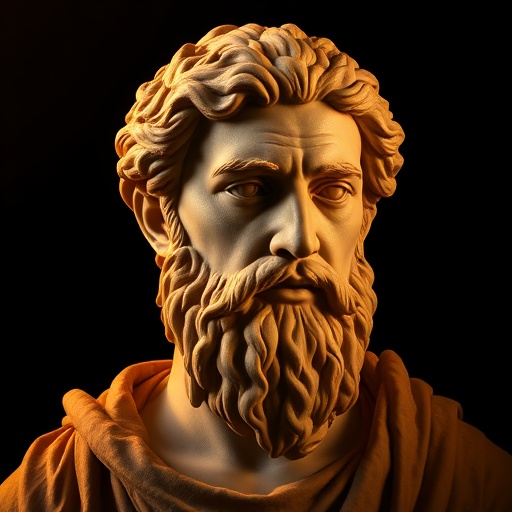
Euclid — "A number is a multitude composed of units."
A number is a multitude composed of units.
A number is a multitude composed of units.
Click any product to generate a realistic preview. Up to 3 at a time.
* Initial load can take up to 90 seconds — revising the preview in another color is nearly instant.
"The elements of geometry are derived from a small set of axioms and postulates."
"If a straight line fall on two parallel straight lines, it makes the alternate angles equal to one another, the exterior angle equal to the interior and opposite angle, and the interior angles on the …"
"The square on the side subtending the right angle in right-angled triangles is equal to the squares on the sides containing the right angle."
"The postulates are not self-evident, but they are necessary for the development of geometry."
"Rectilinear figures are those which are contained by straight lines, trilateral figures being those contained by three, quadrilateral those contained by four, and multilateral those contained by more …"
Found in 1 providers: grok
1 source checked
Numbers are not mysterious abstractions—they are simply groups of individual counting units stacked together. Three is three ones; twelve is twelve ones. This definition builds all of arithmetic from a single irreducible starting point: the unit. It makes the infinite landscape of numbers feel grounded and concrete, treating mathematics not as magic but as careful, repeatable accumulation of the most basic thing we can count.
Euclid's genius lay in systematic rigor: never assume what can be defined, never define what can be proven. This opening definition of Book VII of his Elements reflects his lifelong commitment to axiomatic precision. As a mathematician working in Alexandria around 300 BCE, he inherited Greek mathematical tradition and transformed it into a deductive system where every theorem traces back to explicit definitions like this one.
Around 300 BCE in Alexandria, Egypt, the newly founded Library was becoming the world's intellectual center under Ptolemy I. Greek mathematicians were pioneering the idea that the universe could be understood through pure reason and rigorous definition. The Pythagoreans had declared numbers sacred; Plato argued mathematics reveals eternal truth. Euclid's careful definition of number was part of a broader civilizational project: replacing myth with proof.
AI-generated insights based on extensive research and information for context. Factual errors? Email [email protected].
Your cart is empty