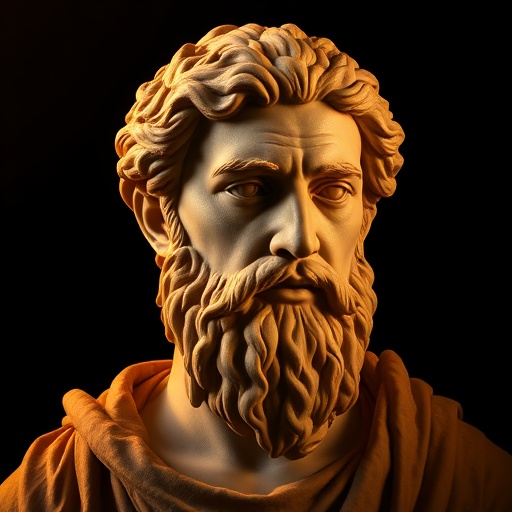
Euclid — "The elements of geometry are derived from a small set of axioms and postulates."
The elements of geometry are derived from a small set of axioms and postulates.
The elements of geometry are derived from a small set of axioms and postulates.
Click any product to generate a realistic preview. Up to 3 at a time.
* Initial load can take up to 90 seconds — revising the preview in another color is nearly instant.
"There are infinitely many prime numbers."
"The extremities of a surface are lines."
"Magnitudes which can be made to coincide are equal."
"Things which coincide with one another are equal to one another."
"A number is a multitude composed of units."
Found in 1 providers: grok
1 source checked
All of geometry's complex truths — theorems about triangles, circles, and parallel lines — can be built from just a handful of foundational rules accepted without proof. Through pure deductive reasoning, starting with minimal assumptions and applying logical steps, an entire system of knowledge emerges. Complexity grows from simplicity. A vast intellectual structure resting on a few bedrock principles defines rigorous mathematical thinking to this day.
Euclid's masterwork, Elements, written around 300 BCE in Alexandria, did exactly this: he organized all known geometry into 13 books beginning with just five postulates and five common notions. This methodical axiomatic approach — building complex proofs from simple, self-evident truths — defined his intellectual identity. He reportedly told Ptolemy I there is no royal road to geometry, reflecting his conviction that rigorous step-by-step logic was the only valid path to mathematical truth.
Euclid worked in Alexandria around 300 BCE during the early Hellenistic period, when Alexander's conquests spread Greek culture across the Mediterranean and Near East. Alexandria's Great Library made it the world's intellectual hub. Greek thinkers were systematizing knowledge across philosophy, medicine, and astronomy, and axiomatic reasoning was revolutionary. Plato's Academy had championed logical argument, and Euclid's Elements represented its pinnacle: proof-based, universal, culture-independent knowledge accessible to any reasoning mind.
AI-generated insights based on extensive research and information for context. Factual errors? Email [email protected].
Your cart is empty