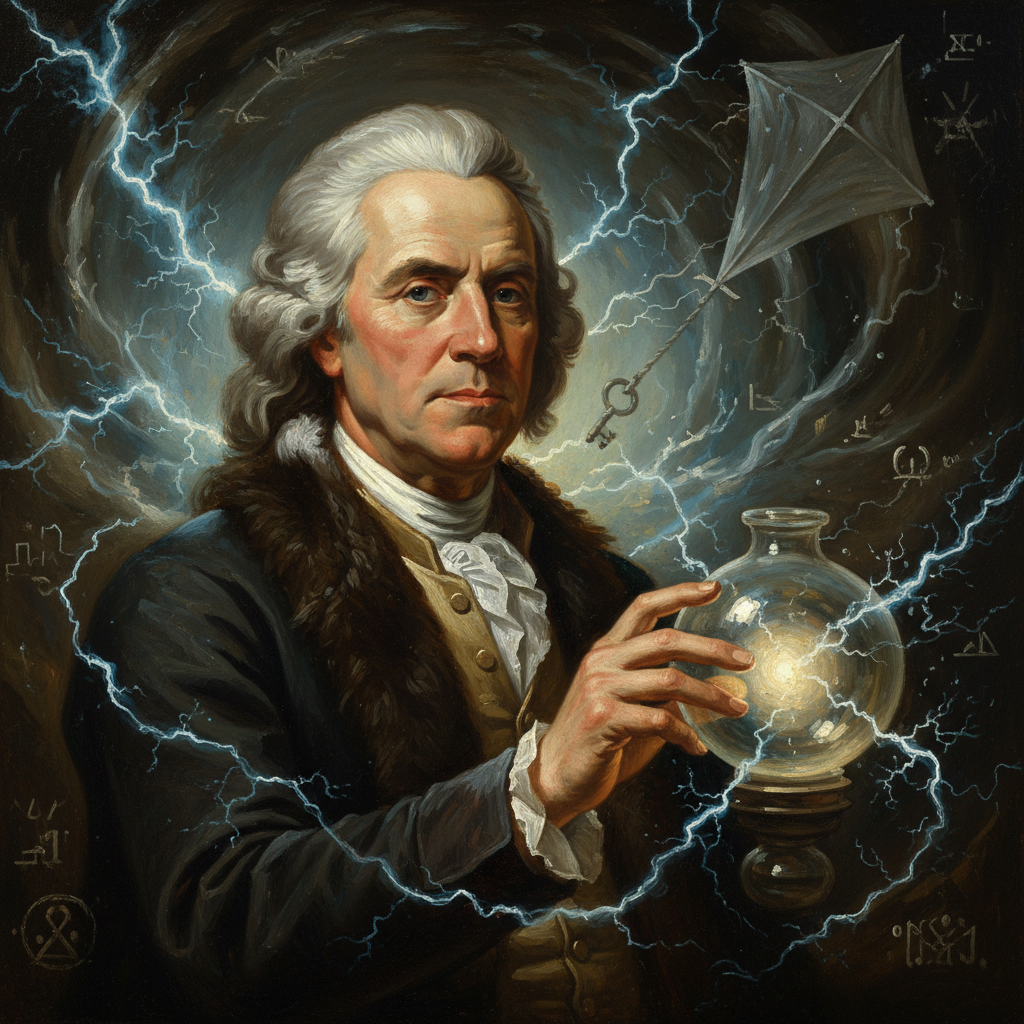
Benjamin Franklin — "Three things are men most apt to be cheated in, a horse, a wig, and a wife."
Three things are men most apt to be cheated in, a horse, a wig, and a wife.
Three things are men most apt to be cheated in, a horse, a wig, and a wife.
Click any product to generate a realistic preview. Up to 3 at a time.
* Initial load can take up to 90 seconds — revising the preview in another color is nearly instant.
"A small leak will sink a great ship."
"Some are weatherwise, some are otherwise."
"For want of a nail the shoe was lost; for want of a shoe the horse was lost; for want of a horse the rider was lost; for want of a rider the battle was lost; for want of a battle the kingdom was lost;…"
"When the well's dry, we know the worth of water."
"I shall rise to apologize for not getting up."
Polymath Founding Father, diplomat, and Poor Richard's Almanack author who helped draft the Declaration of Independence and the Constitution. Closely associated with John Adams (fellow Founder, Massachusetts statesman) and Thomas Jefferson (fellow Declaration drafter). For an intellectual contrast, see Thomas Hutchinson, last royal governor of colonial Massachusetts — Franklin leaked Hutchinson's loyalist correspondence to Boston in 1772 to inflame revolutionary sentiment — Hutchinson represented the colonial-aristocrat crown-loyalty that Franklin's revolution was organized to dismantle.
Found in 1 providers: grok
1 source checked
Men most easily fool themselves — or get fooled — when desire, vanity, or need override clear thinking. A horse represented a major practical investment requiring expertise to evaluate. A wig signaled status and appearance. A wife meant a lifelong commitment made on thin information. The point: precisely where men want something most, their judgment fails worst. Emotion and ego defeat reason when the stakes are highest.
Franklin's entire career as printer, inventor, and statesman depended on clear-eyed practical judgment. His Poor Richard's Almanack was built on witty dissections of human self-deception. He had a complex personal life — a common-law marriage to Deborah Read while pursuing well-documented flirtations in Paris salons. This quote reflects his lifelong conviction that vanity and desire are the greatest saboteurs of sound reasoning, a theme woven through decades of his writing.
In 18th-century colonial America and Britain, horses were the costliest practical asset most men owned — selling lame or diseased animals was a classic fraud. Men's wigs were expensive status symbols; counterfeits and low-quality hairpieces were routine deceptions. Marriage carried enormous legal and financial consequences yet was entered based on limited courtship. Consumer protections didn't exist; caveat emptor ruled commerce, making fraud in all three categories commonplace and largely without legal remedy.
AI-generated insights based on extensive research and information for context. Factual errors? Email [email protected].
Your cart is empty