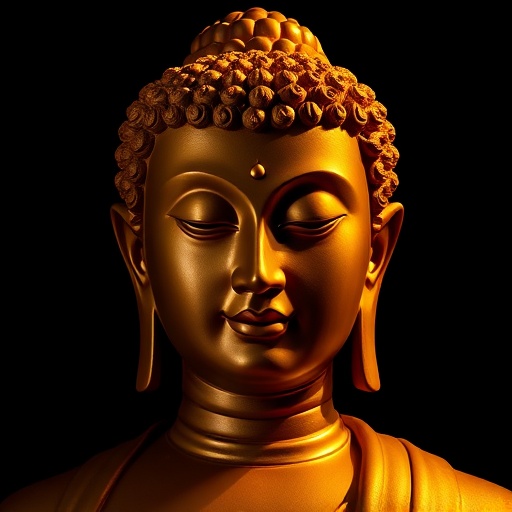
Siddhartha Gautama (Buddha) — "All conditioned things have the nature of vanishing."
All conditioned things have the nature of vanishing.
All conditioned things have the nature of vanishing.
Click any product to generate a realistic preview. Up to 3 at a time.
* Initial load can take up to 90 seconds — revising the preview in another color is nearly instant.
"Holding on to anger is like grasping a hot coal with the intent of throwing it at someone else; you are the one who gets burned."
"One day, in the morning, having put on his undergarment and taken his outer robe and bowl, the Blessed One entered Sāvatthī for alms."
"When watching after yourself, you watch after others. When watching after others, you watch after yourself."
"Nothing can harm you as much as your own thoughts unguarded."
"Happiness does not depend on what you have or who you are. It solely relies on how you think."
Found in 1 providers: gemini
1 source checked
Everything that comes into being through causes and conditions will eventually fall apart. Nothing assembled lasts forever, whether a body, a relationship, an empire, a feeling, or a thought. If something was built, it will unbuild. Recognizing this isn't pessimism; it's a practical observation that softens our grip on what we cannot keep and frees us to meet each moment without the weight of demanding permanence from it.
These were reportedly among the Buddha's final words before his death around 483 BCE, spoken to his grieving disciples. After leaving his palace at twenty-nine and seeking awakening for six years, he built his entire teaching around impermanence, suffering, and non-self. Dying himself, he refused to contradict his own doctrine by clinging to life or offering consolation through denial. His final instruction was to practice diligently because even the teacher vanishes.
In the 5th century BCE Ganges plain, Brahmanical religion promised an eternal self (atman) reuniting with an eternal absolute (Brahman) through ritual and caste duty. The Buddha taught during a time of urbanization, new kingdoms, and competing wandering ascetics debating the soul's fate. His claim that even sacred, cosmic things dissolve challenged priestly authority and the ritual economy, offering liberation through direct insight rather than inheritance, sacrifice, or metaphysical permanence.
AI-generated insights based on extensive research and information for context. Factual errors? Email [email protected].
Your cart is empty