What it means
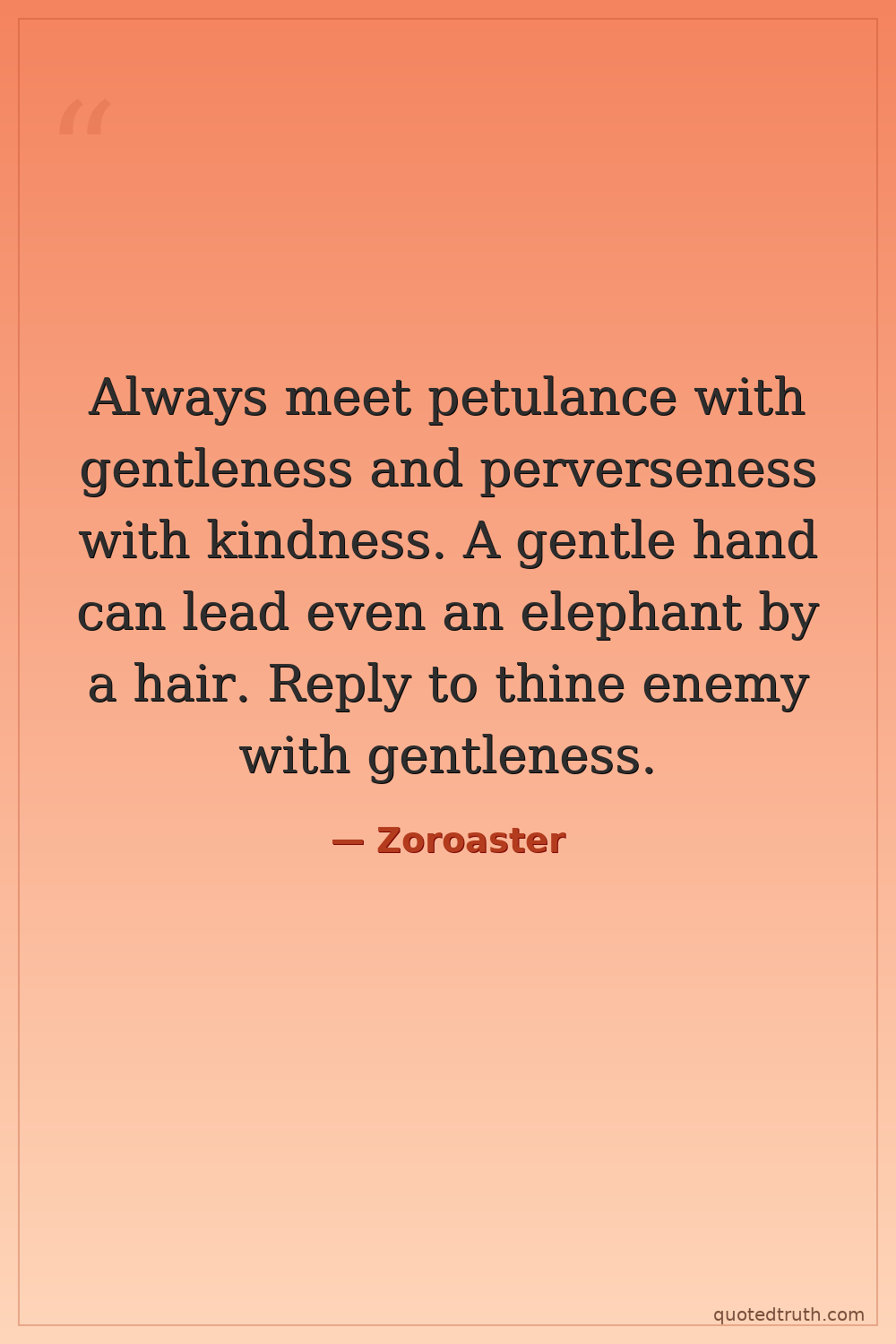
Respond to hostility and stubbornness with calm kindness rather than matching their aggression. Soft, patient responses have disproportionate power: even something as massive as an elephant can be guided by the lightest touch if applied skillfully. When someone attacks you, the strongest reply is not counter-attack but measured gentleness, which disarms the opponent and keeps you in control of the exchange rather than being dragged into their emotional state.
Relevance to Zoroaster
Zoroaster founded a religion built on the personal choice between asha (truth, order) and druj (lies, chaos), and taught that good thoughts, good words, and good deeds were each person's weapons against evil. As a prophet who reportedly faced rejection for years before gaining a royal patron, he lived the discipline of answering hostility without abandoning his message, making non-retaliation a practical creed rather than an abstract ideal.
The era
Zoroaster lived in ancient Iran, likely around 1500–1000 BCE, among tribal Indo-Iranian societies where blood feuds, cattle raiding, and warrior-honor codes normalized swift, violent retaliation. Priestly classes emphasized ritual sacrifice over ethics. Against that backdrop, urging gentleness toward enemies was radical: it reframed morality as internal choice rather than tribal loyalty, centuries before similar teachings appeared in Buddhism, Stoicism, or the Sermon on the Mount, influencing later Persian, Jewish, and Christian thought.
AI-generated insights based on extensive research and information for context. Factual errors? Email [email protected].