What it means
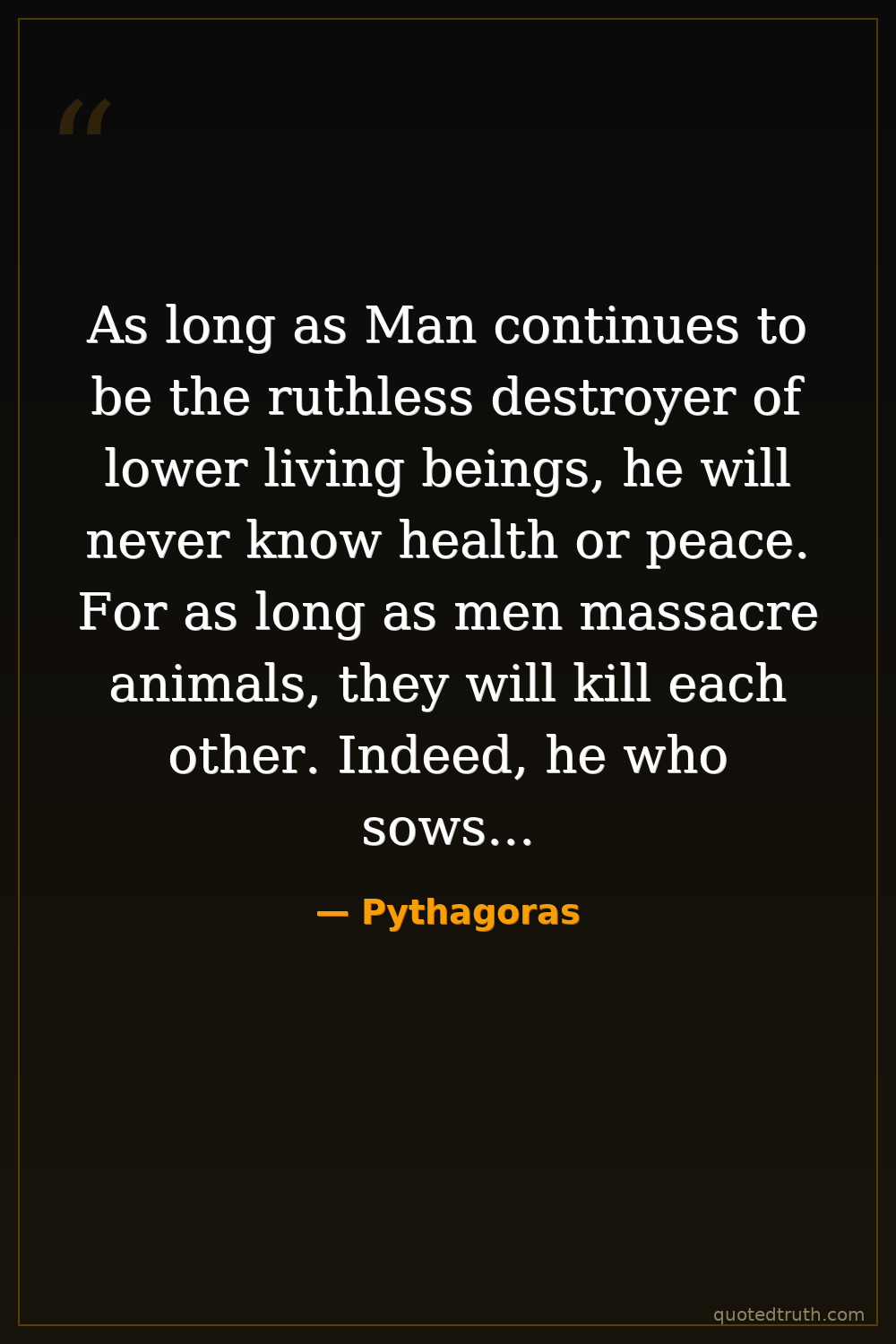
This quote argues that human violence toward animals is inseparable from violence toward other humans. Cruelty cannot coexist with peace — those who normalize killing lower creatures build habits and moral callousness that extend to people. The closing lines frame it as a cosmic principle of cause and effect: inflicting suffering produces suffering in return. True health, joy, and love require choosing nonviolence at every level of life.
Relevance to Pythagoras
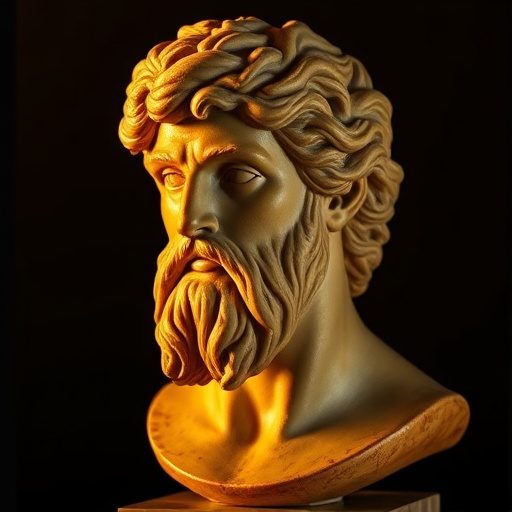
Pythagoras founded a strict vegetarian brotherhood in Croton, Greece, with dietary rules rooted in his belief in metempsychosis — the soul's transmigration between humans and animals. He saw animals as kin, potentially housing former human souls. This quote embodies his core ethical teaching: that reverence for all living beings is the foundation of justice and inner peace. His community practiced these principles as daily discipline, not mere philosophy.
The era
In 6th-century BCE Greece, animal sacrifice dominated religious practice — offering animals to gods was mandatory at festivals, temples, and civic events. Meat-eating was universal, and Pythagoras's vegetarianism was deeply radical and socially disruptive. Mediterranean city-states also warred constantly. His claim that animal slaughter and human warfare share a moral root challenged both religious orthodoxy and military culture simultaneously, making this statement genuinely subversive for its time.
AI-generated insights based on extensive research and information for context. Factual errors? Email [email protected].