What it means
Atoms randomly drift through space and occasionally collide by chance, and from these accidental meetings all of existence emerges. The bonds they form look stable and create what we call objects or communities, but eventually every connection breaks apart and the particles fly off again into the void. Nothing physical is permanent; matter is just a temporary gathering of pieces that will inevitably scatter.
Relevance to James Clerk Maxwell
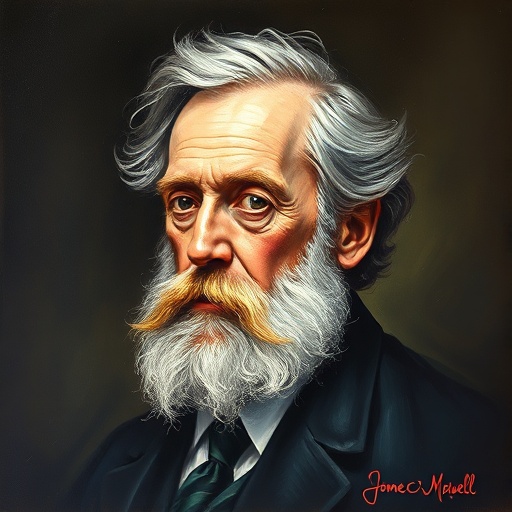
Maxwell was a devout Christian who playfully mocked the materialist atomism fashionable among Victorian scientists. As the founder of statistical mechanics and kinetic theory, he knew atomic behavior better than almost anyone, yet he wrote verse like this to satirize colleagues who believed mindless particles alone explained existence. The poem reflects his wit, his literary gifts, and his conviction that physics described mechanism without exhausting meaning.
The era
Victorian Britain was gripped by debates between scientific materialism and religious belief, intensified by Darwin's 1859 Origin of Species and Tyndall's 1874 Belfast Address declaring matter sufficient to explain life. Lucretius was being retranslated, atomism was fashionable, and Maxwell's 1870s Cambridge circle argued fiercely over whether physics dissolved theology. This light verse belongs to that cultural moment when even leading physicists wrote satirical poetry to joust over the soul of science.
AI-generated insights based on extensive research and information for context. Factual errors? Email [email protected].