Martin Luther — "Be a sinner and sin boldly, but believe and rejoice in Christ even more boldly, …"
Be a sinner and sin boldly, but believe and rejoice in Christ even more boldly, for he is victorious over sin, death, and the world.
Be a sinner and sin boldly, but believe and rejoice in Christ even more boldly, for he is victorious over sin, death, and the world.
Click any product to generate a realistic preview. Up to 3 at a time.
* Initial load can take up to 90 seconds — revising the preview in another color is nearly instant.
"The Christian's life is not a bed of roses, but a cross."
"What devilish unchristian thing would you not undertake?"
"Faith is a living, daring confidence in God's grace, so sure and certain that a man could stake his life on it a thousand times."
"The best way to worship God is to do your duty."
"It was I, Martin Luther, who slew all the peasants in the insurrection, for I commanded them to be slaughtered. All their blood is upon my shoulders. But I cast it on our Lord God who commanded me to …"
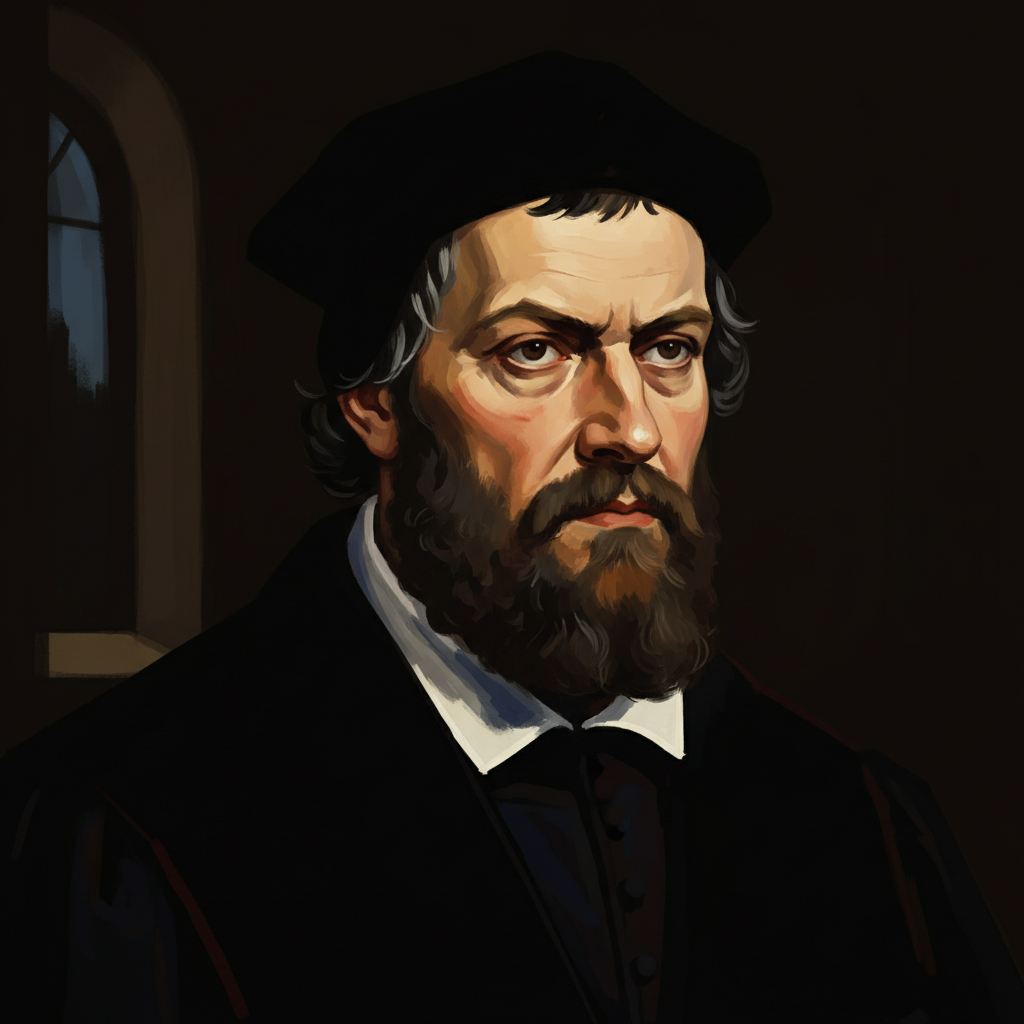
German theologian whose 95 Theses (1517) launched the Protestant Reformation and broke the Catholic Church's monopoly on Western Christianity. Closely associated with Philipp Melanchthon (Lutheran systematizer) and John Calvin (later Reformer who built on Luther's break). For an intellectual contrast, see Pope Leo X, Renaissance pope (1513-1521) — Leo X's indulgence sales triggered Luther's break and Leo excommunicated him in 1521 — Luther's entire Reformation is structured as a direct answer to the indulgence-funded Vatican Leo represented.
Found in 1 providers: gemini
1 source checked
Don't paralyze yourself trying to live perfectly or avoid every mistake. You will fail morally, that's a given part of being human. What matters more is trusting completely in Christ's redemption. Act decisively, take risks, live fully, and when you stumble, lean even harder into faith rather than despair. Confidence in grace should outweigh fear of personal failure.
Luther wrote this in a 1521 letter to Philipp Melanchthon, capturing his signature doctrine of justification by faith alone. A former Augustinian monk tormented by scrupulosity, Luther rejected the Catholic system of penance and indulgences, arguing salvation comes through faith in Christ's work, not human merit. The line encapsulates his pastoral boldness and his belief that obsessive rule-keeping actually denies Christ's sufficiency.
In early sixteenth-century Europe, the Catholic Church sold indulgences promising reduced purgatory time, and laypeople lived under constant anxiety about sin, confession, and damnation. Luther's 95 Theses in 1517 ignited the Reformation, fracturing Western Christianity. When he wrote this in 1521, he was hiding at Wartburg Castle after being excommunicated and declared an outlaw at the Diet of Worms, translating the New Testament into German.
AI-generated insights based on extensive research and information for context. Factual errors? Email [email protected].
Your cart is empty