What it means
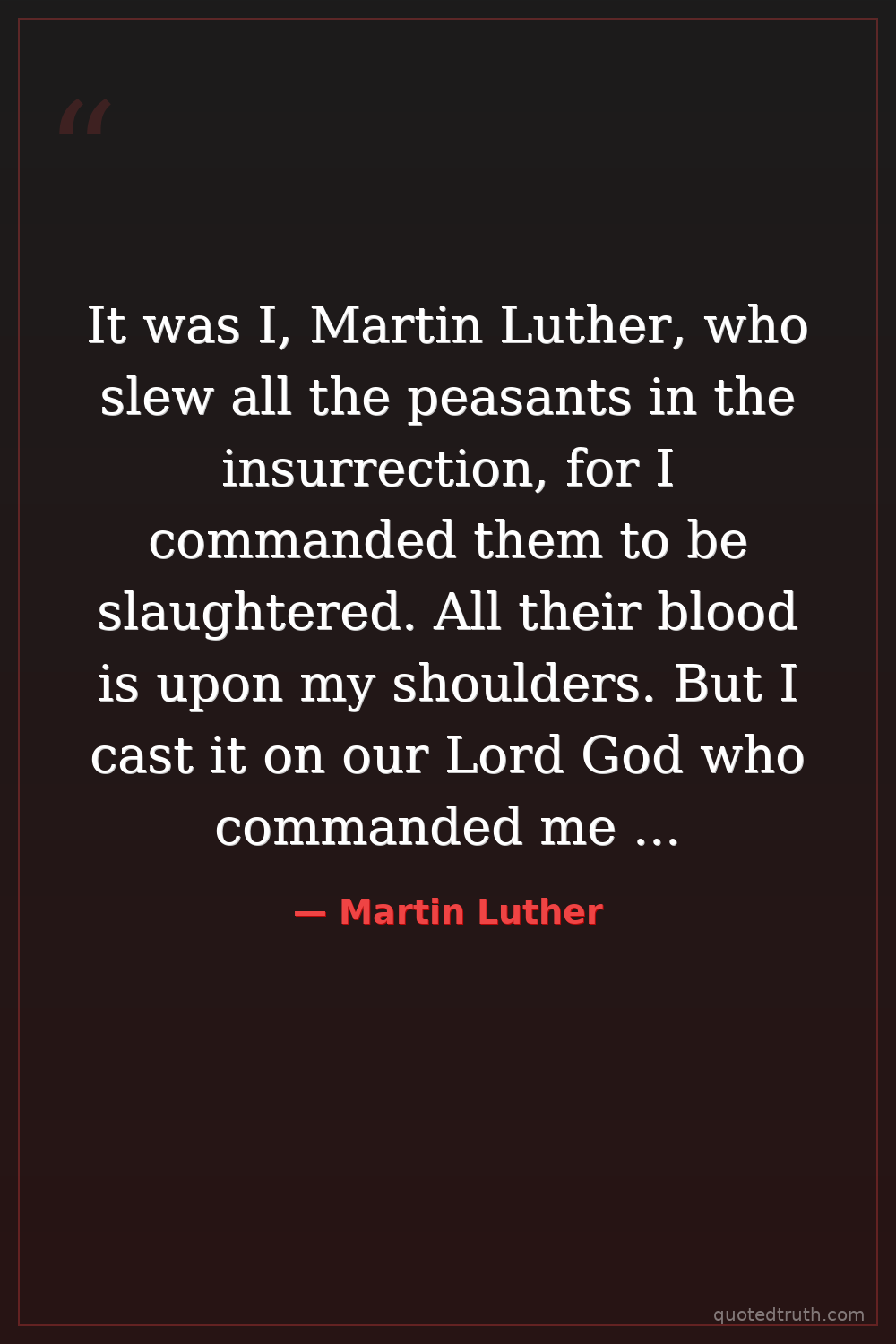
Luther openly accepts personal responsibility for the massacre of peasants during an uprising, admitting he gave the order that led to their deaths. Yet in the same breath, he shifts the moral weight onto God, claiming divine instruction compelled his harsh words. It is a stark confession paired with self-justification: owning the bloodshed while insisting a higher authority demanded it, leaving the guilt technically on God rather than himself.
Relevance to Martin Luther
This reflects Luther's ferocious 1525 pamphlet 'Against the Murderous, Thieving Hordes of Peasants,' in which he urged princes to crush the German Peasants' War. Though he inspired reform through scripture, Luther sharply distinguished spiritual liberty from social revolt and sided with ruling authorities. His willingness to invoke divine command to justify violent suppression reveals the authoritarian streak beneath his theological rebellion and his lifelong conviction that earthly order was God-ordained.
The era
In 1524-1525, roughly 100,000 German peasants rose against feudal lords, partly inspired by Reformation ideas of Christian freedom. Early modern Europe was convulsing as Luther's 1517 theses shattered Catholic unity, and princes were choosing sides. Luther needed noble protection for his reform movement, so aligning with rulers against rebels was politically essential. The era blurred religion and statecraft, and appeals to divine will routinely legitimized brutal repression of commoners.
AI-generated insights based on extensive research and information for context. Factual errors? Email [email protected].