What it means
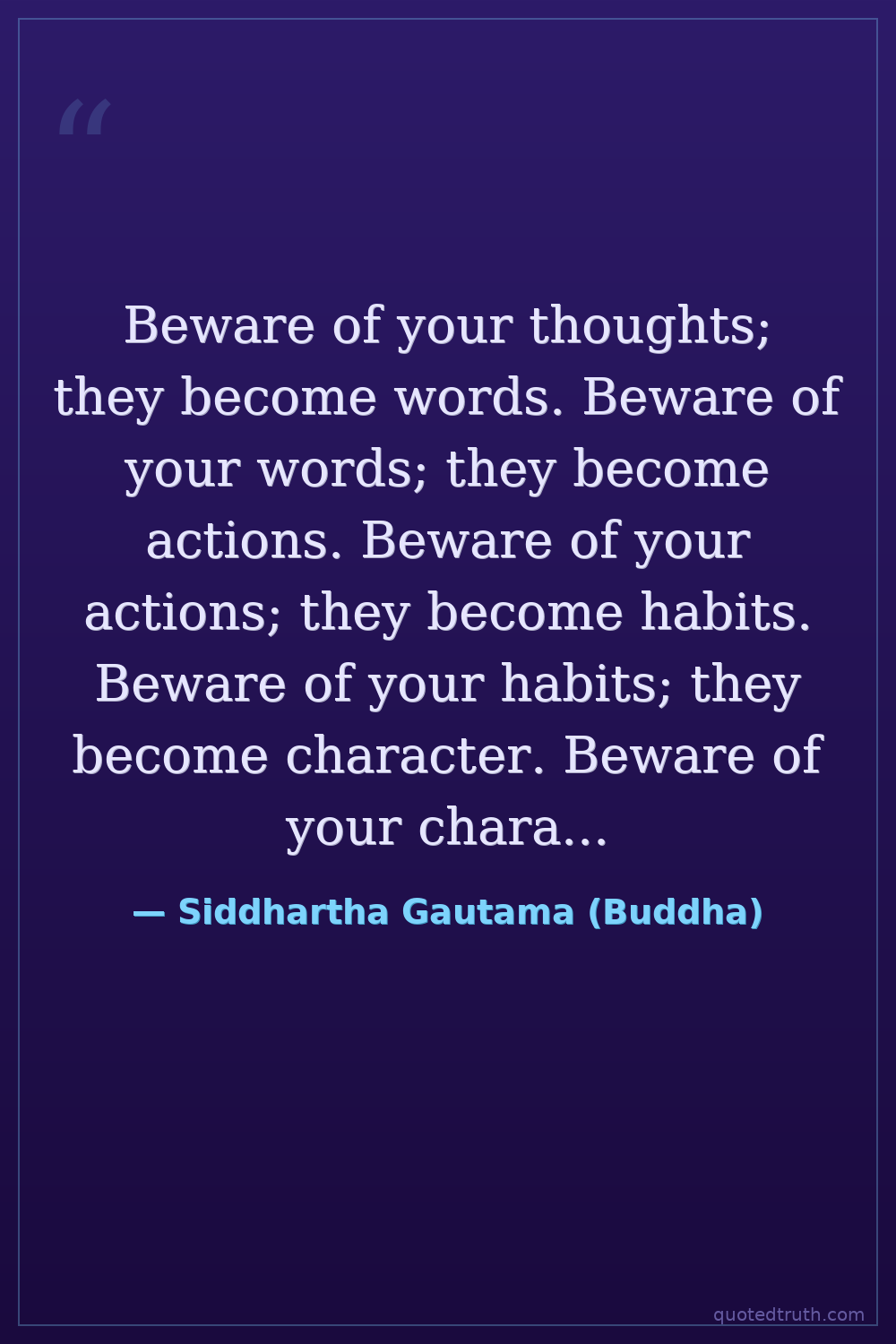
Small inner events snowball into a life. A stray thought, repeated, becomes something you say; words you keep saying turn into things you do; repeated actions harden into habits; habits stack into the person you actually are; and that person determines where you end up. The warning is that destiny is not handed to you from outside, it is quietly assembled from the mental moments you tolerate today.
Relevance to Siddhartha Gautama (Buddha)
Siddhartha renounced a Shakya prince's life to investigate how suffering is constructed, and his answer centered on the mind. Core Buddhist teaching holds that intention (cetana) is karma, that right thought precedes right speech and right action in the Eightfold Path, and that mental cultivation through mindfulness reshapes character. This chain from thought to destiny mirrors the causal logic of dependent origination he taught for forty-five years after his awakening under the Bodhi tree.
The era
In 5th-century-BCE northern India, Brahmanical orthodoxy tied a person's fate to birth caste and ritual sacrifice performed by priests. Siddhartha taught during the shramana movement, when wandering ascetics openly challenged that model across the Gangetic kingdoms of Magadha and Kosala. Insisting that destiny grew from one's own disciplined thoughts and deeds, not heredity or sacrificial offerings, was a radical ethical relocation of power from the altar to the individual mind.
AI-generated insights based on extensive research and information for context. Factual errors? Email [email protected].