Siddhartha Gautama (Buddha) — "Drop by drop is the water pot filled. Likewise, the wise man, gathering it littl…"
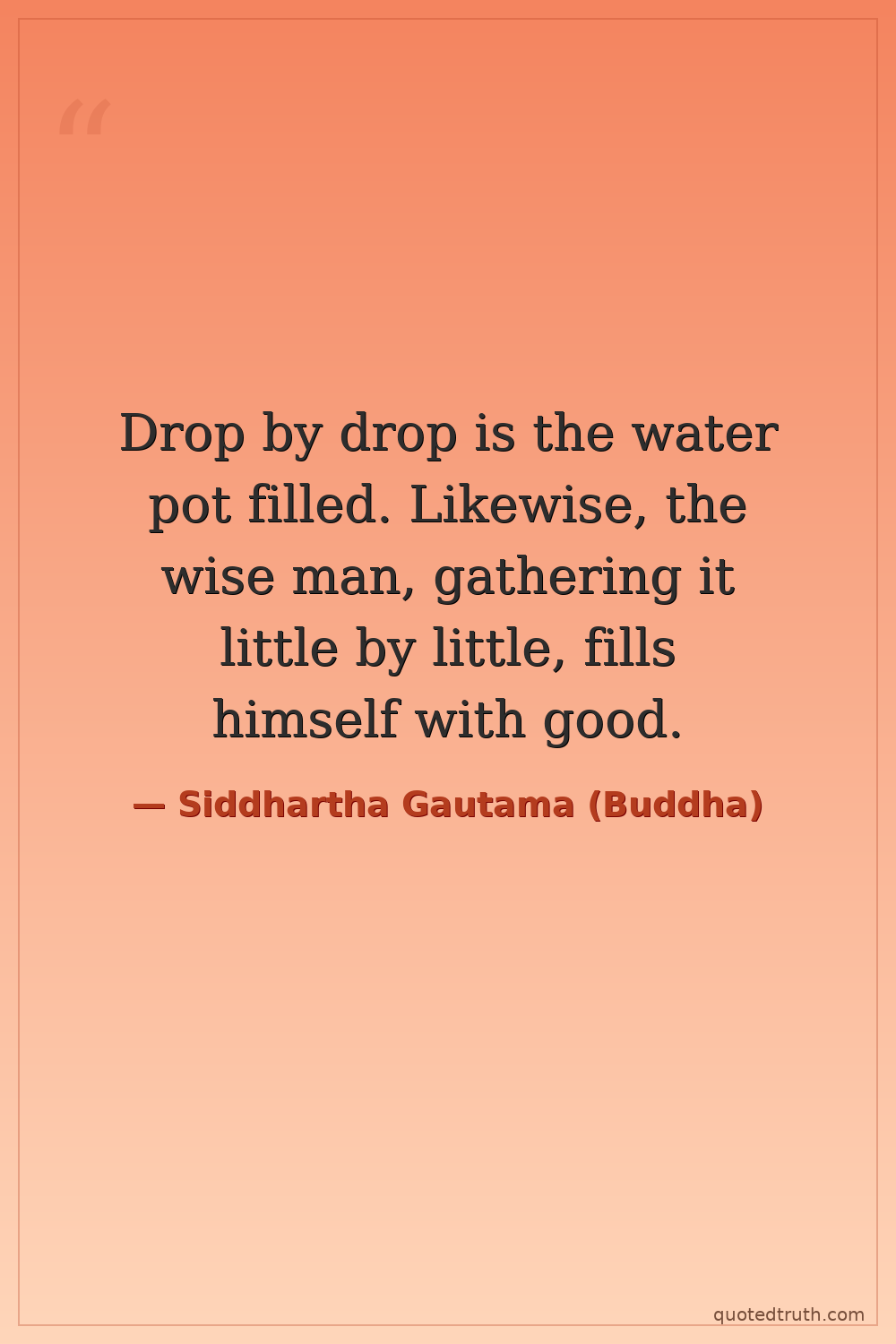
Drop by drop is the water pot filled. Likewise, the wise man, gathering it little by little, fills himself with good.
Drop by drop is the water pot filled. Likewise, the wise man, gathering it little by little, fills himself with good.
Click any product to generate a realistic preview. Up to 3 at a time.
* Initial load can take up to 90 seconds — revising the preview in another color is nearly instant.
"The thoughtless man, even if he can recite a large portion of the law, but is not a doer of it, has no share in the priesthood, but is like a cowherd counting the cows of others."
"Just as a mother would protect her only child with her life, even so let one cultivate a boundless love towards all beings."
"If you find no one to support you on the spiritual path, walk alone. There is no companionship with the immature."
"Give, even if you only have a little."
"A mind unruffled by the vagaries of fortune, from sorrow freed, from defilements cleansed, from fear liberated — this is the greatest blessing."
Found in 1 providers: grok
1 source checked
Real improvement happens incrementally, not in one dramatic leap. Just as a pot collects water one drop at a time until full, a person builds wisdom, virtue, and goodness through countless small actions repeated over time. Each modest choice seems insignificant on its own, but they accumulate. The message is to stay patient and consistent, trusting that steady effort compounds into lasting character rather than waiting for a single transformative moment.
Buddha taught a gradual path to enlightenment rather than sudden salvation, structured through the Eightfold Path and daily disciplines of mindfulness, ethical conduct, and meditation. Having abandoned both palace luxury and extreme asceticism, he embraced the Middle Way, which depends on sustained practice. This drop-by-drop metaphor mirrors his core pedagogy: liberation is cultivated through repeated mental training, small acts of compassion, and continuous awareness, not bestowed in a flash.
In 5th-century BCE northern India, Brahminical religion emphasized elaborate rituals and caste-bound sacrifices performed by priests as the route to spiritual merit. Wandering ascetics, meanwhile, pursued harsh self-mortification seeking instant breakthroughs. Buddha's era was marked by urbanization along the Ganges and intense philosophical ferment among the sramana movements. Against both priestly ceremony and extreme austerity, his teaching that ordinary people could accumulate goodness through steady daily effort was radically democratizing and accessible.
AI-generated insights based on extensive research and information for context. Factual errors? Email [email protected].
Your cart is empty