John Wesley — "By Methodists, I mean such as profess to pursue a Christian life by Scriptural r…"
By Methodists, I mean such as profess to pursue a Christian life by Scriptural rules and methods.
By Methodists, I mean such as profess to pursue a Christian life by Scriptural rules and methods.
Click any product to generate a realistic preview. Up to 3 at a time.
* Initial load can take up to 90 seconds — revising the preview in another color is nearly instant.
"I have often thought, that if I were to choose a place of abode, it should be in a country where there were no rich people."
"I am not afraid of the devil himself."
"I cannot but observe, that the Methodists are not a people who are fond of novelties."
"I am a creature of a day, passing through life as an arrow through the air. I am a spirit come from God, and returning to God; just hovering a few moments over a great gulf, till, on a sudden, I drop …"
"I set myself on fire, and people come to watch me burn."
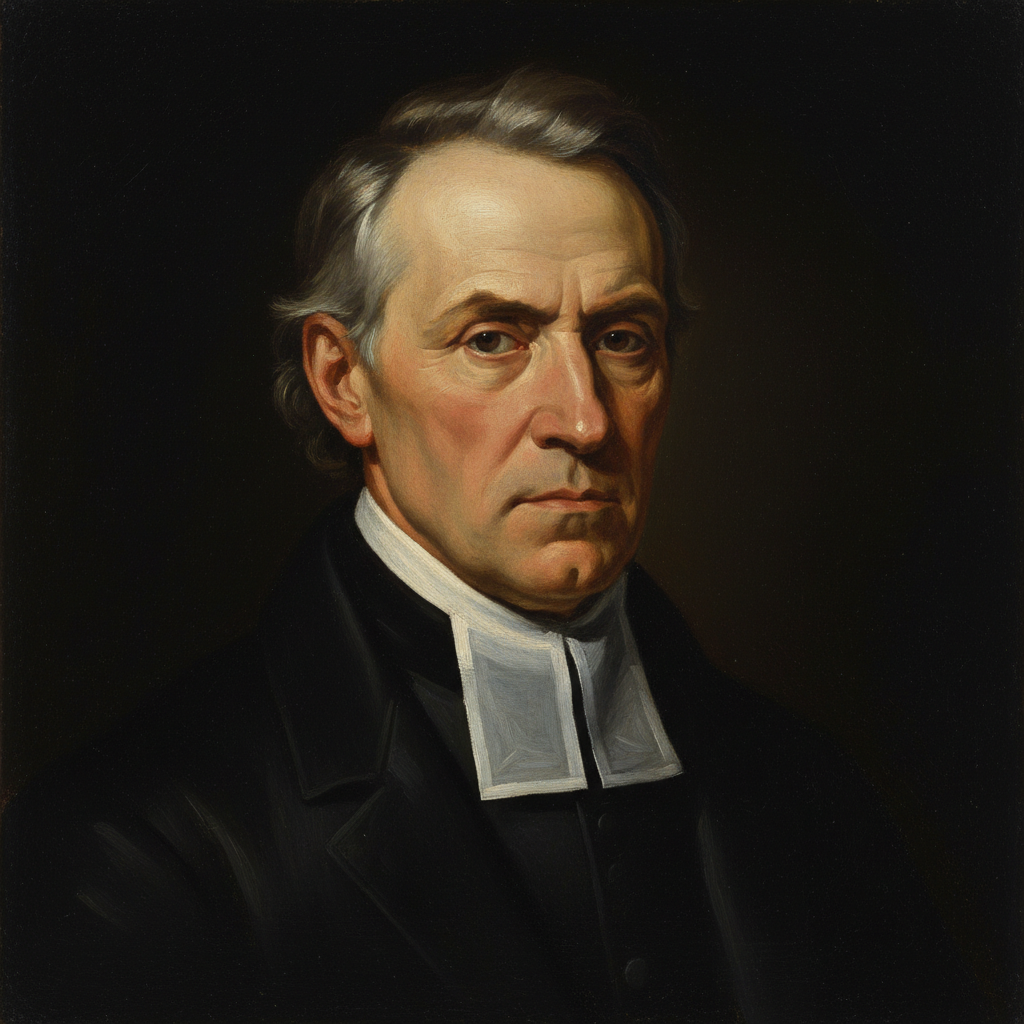
English Anglican cleric and founder of Methodism, whose open-air preaching and class-meeting structure created the largest 18th-century evangelical revival. Closely associated with Charles Wesley (his hymn-writing brother) and George Whitefield (early co-revivalist, later doctrinal opponent). For an intellectual contrast, see George Whitefield, Calvinist evangelical revivalist — Whitefield's predestinarian Calvinism vs Wesley's free-grace Arminian theology split the early Methodist movement permanently in the 1739-41 break. The founding evangelical Calvinist-Arminian schism — the two parallel evangelical traditions American Christianity descends from.
Found in 1 providers: grok
1 source checked
Wesley defines 'Methodist' not as a church label but as a descriptor for anyone who deliberately follows a Christian life using Scripture as their specific guide and framework. The emphasis is on method and intentionality—disciplined, Bible-anchored practice over nominal belief. He reclaims a term originally used as mockery, reframing it as a mark of serious, structured devotion rather than casual church attendance or inherited religious identity.
Wesley co-founded the 'Holy Club' at Oxford, where members followed strict schedules of prayer, fasting, Bible reading, and charitable visits—earning 'Methodist' as a taunt. He preached to miners and factory workers, traveled 250,000 miles on horseback, and organized small accountability groups. His entire ministry rested on the conviction that Christianity demanded structured, Scripture-driven practice over passive belief, making this quote a precise self-definition of his life's work.
The 18th-century Church of England was widely criticized as spiritually lifeless, serving the wealthy while ignoring the poor. Industrial growth displaced rural communities, and Enlightenment rationalism challenged traditional faith. Wesley preached amid this upheaval, reaching coal miners and the urban poor through open-air sermons. His insistence on Scripture as the sole rule of Christian living was both a theological anchor and a counter-cultural assertion against religious formalism and growing secular skepticism.
AI-generated insights based on extensive research and information for context. Factual errors? Email [email protected].
Your cart is empty