What it means
This saying describes using a sacred fire test as a moral judgment tool. The speaker calls on the supreme god Ahura Mazda and the principle of truth, asking that the fire's light, glow, and heat reveal who is honest and who is corrupt. It expresses the belief that divine truth, symbolized by fire, can expose moral character and separate good people from evil ones.
Relevance to Zoroaster
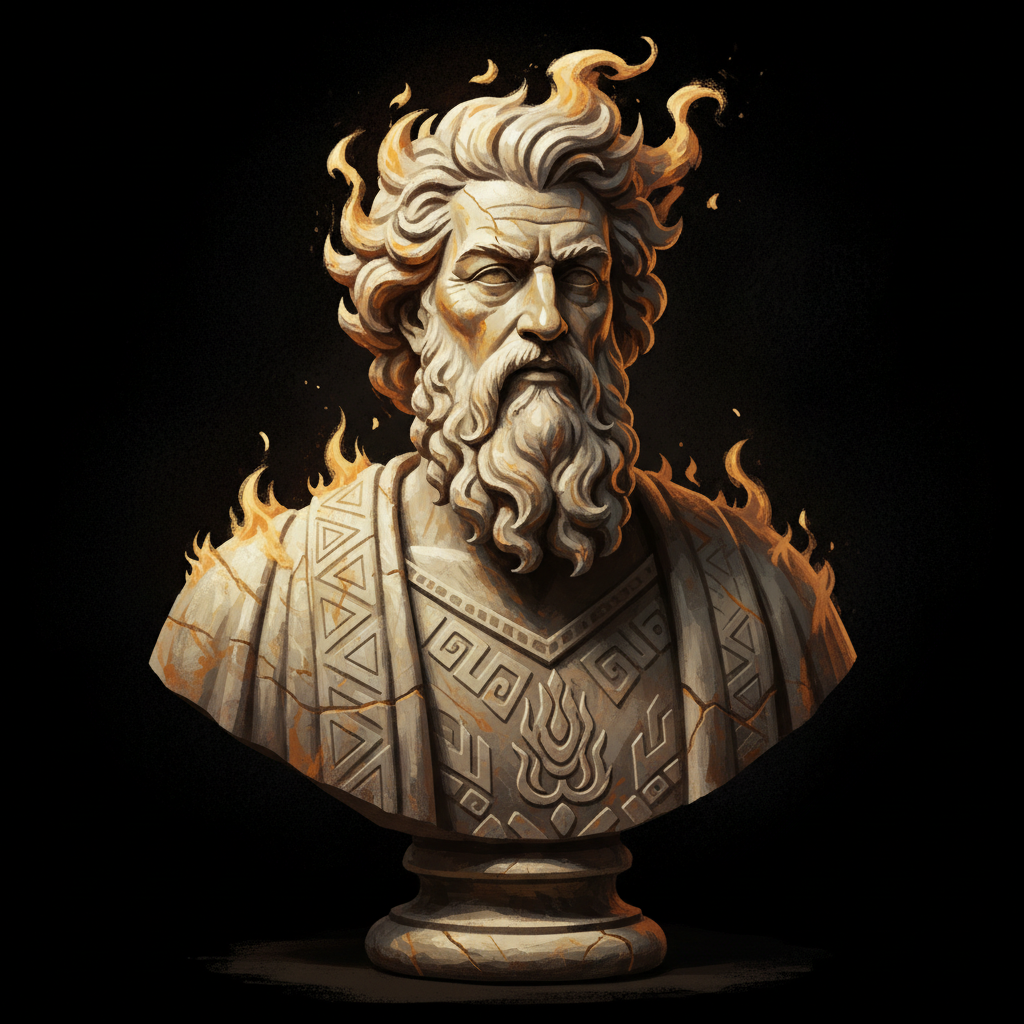
Zoroaster founded a religion centered on Ahura Mazda as the one supreme god and truth (asha) versus the lie (druj) as the core moral divide. Fire was his central ritual symbol, representing divine purity and cosmic order. As a priest-prophet reforming older Indo-Iranian practices, he taught that every person must actively choose righteousness, and ordeals by fire were used to verify honesty in disputes.
The era
Zoroaster lived in ancient eastern Iran, likely between 1500 and 1000 BCE, among tribal Indo-Iranian peoples practicing polytheistic rituals with fire altars and animal sacrifice. Disputes were often settled by oaths and physical ordeals since written law was limited. His teachings emerged as settled pastoral communities needed shared ethical standards, and his elevation of one god plus a strict good-versus-evil framework later shaped Persian imperial religion and influenced Judaism, Christianity, and Islam.
AI-generated insights based on extensive research and information for context. Factual errors? Email [email protected].