Guru Nanak — "Caste has no power in the hereafter; the only judge is truth."
Caste has no power in the hereafter; the only judge is truth.
Caste has no power in the hereafter; the only judge is truth.
Click any product to generate a realistic preview. Up to 3 at a time.
* Initial load can take up to 90 seconds — revising the preview in another color is nearly instant.
"Emotional attachment to Maya is totally painful, this is a bad bargain."
"Those who call themselves kings are butchers of the people."
"O Lord, You bless all with Your bountiful blessings."
"Na Ham Hindu Na Musalmaan - I am not a Hindu, nor am I a Muslim."
"The greatest gift is to share. Especially if it's your last piece of samosa."
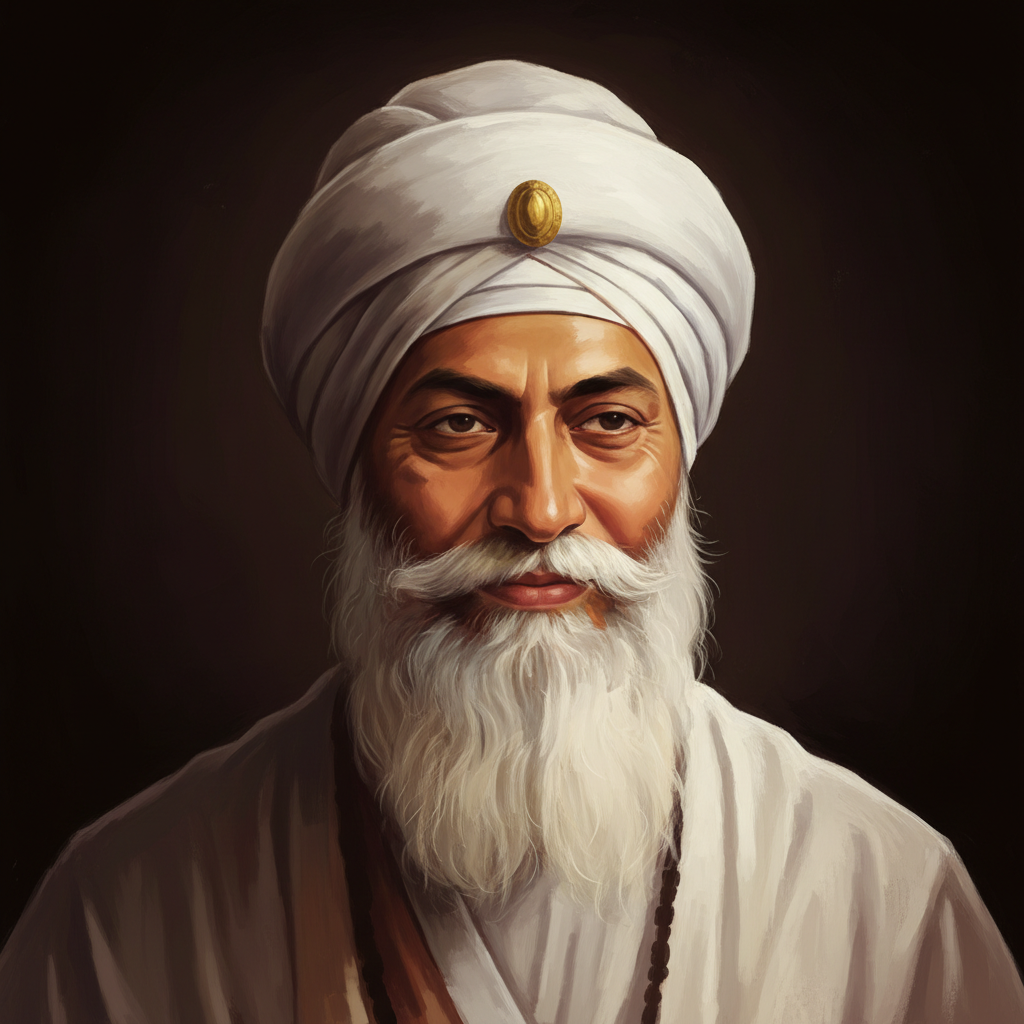
Founder of Sikhism and the first of the Ten Sikh Gurus, whose teachings of one universal God and rejection of caste shaped Punjab. Closely associated with Kabir (mystical poet whose verses appear in the Sikh Guru Granth Sahib). For an intellectual contrast, see Brahmanical orthodoxy, the Hindu caste-and-ritual establishment of his era — Sikhism was founded as a deliberate alternative to both Hindu ritual hierarchy and Islamic exclusivism — Nanak's universalism was a structural rejection of caste and priestly mediation.
Found in 1 providers: grok
1 source checked
After death, your social rank, family lineage, or the caste you were born into counts for nothing. Divine judgment operates on a single criterion: truth — how honestly and righteously you actually lived. No priest, no nobleman, no untouchable is treated differently before God. The afterlife strips away every human-made hierarchy and evaluates solely the authenticity of one's character and conduct.
Guru Nanak (1469–1539) spent his life dismantling caste barriers that pervaded both Hindu and Muslim society in Punjab. He traveled over 28,000 kilometers across Asia preaching equality, publicly sharing meals with low-caste laborers, and composing hymns attacking Brahmin privilege. His defining act — choosing to eat with poor carpenter Bhai Lalo over the wealthy high-caste Malik Bhago — embodied this belief. Equality before God was Sikhism's founding axiom, not a later addition.
In 15th–16th century Punjab, the Hindu caste system rigidly determined birth, occupation, marriage, and social worth. Brahmins monopolized religious authority while untouchables faced dehumanizing exclusion. Muslim rulers added their own hierarchy of believers and infidels. The Bhakti movement — with poets like Kabir — was already questioning caste from within Hinduism, but institutional religion reinforced stratification. Nanak's insistence that God judged all souls equally was genuinely radical, directly threatening establishments that derived power from caste legitimacy.
AI-generated insights based on extensive research and information for context. Factual errors? Email [email protected].
Your cart is empty