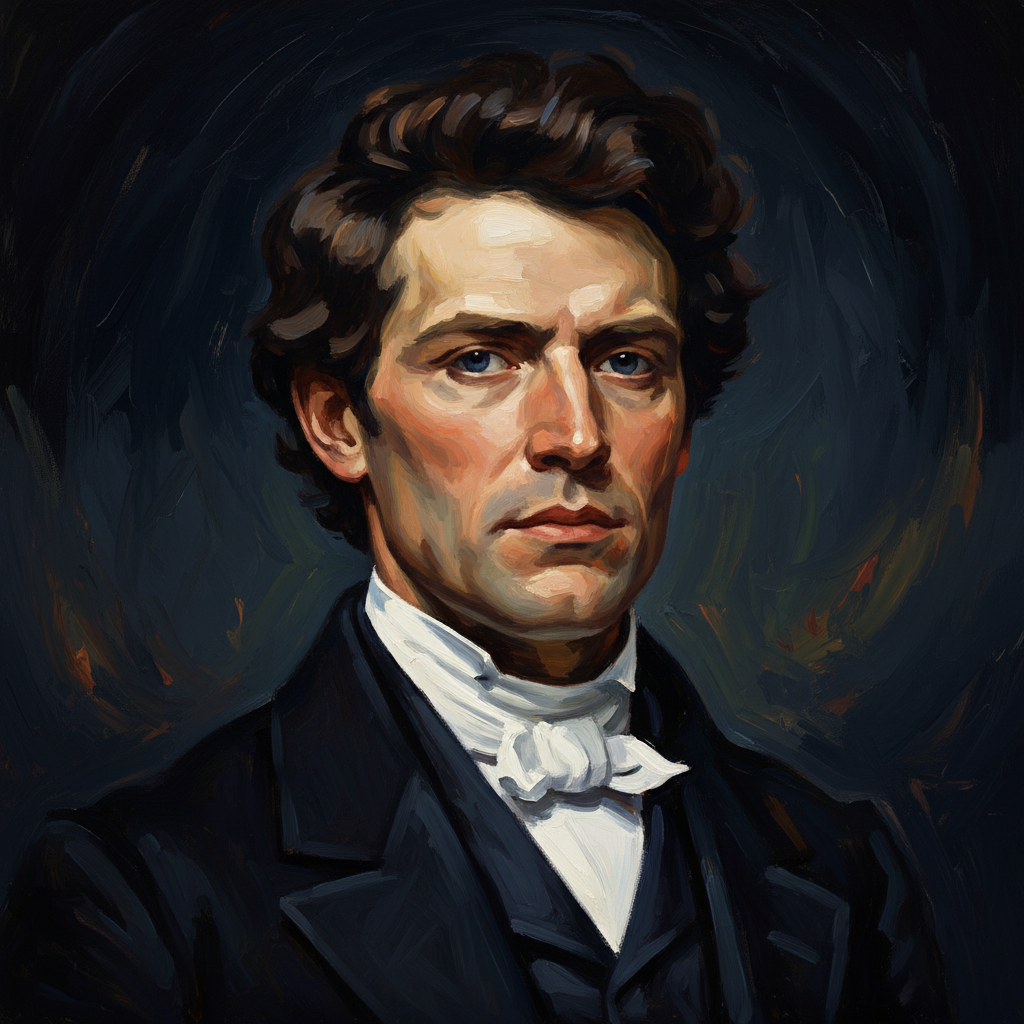
Joseph Smith — "Come on! ye prosecutors! ye false swearers! All hell, boil over! Ye burning moun…"
Come on! ye prosecutors! ye false swearers! All hell, boil over! Ye burning mountains, roll down your lava! for I will come out on the top at last.
Come on! ye prosecutors! ye false swearers! All hell, boil over! Ye burning mountains, roll down your lava! for I will come out on the top at last.
Click any product to generate a realistic preview. Up to 3 at a time.
* Initial load can take up to 90 seconds — revising the preview in another color is nearly instant.
"I have seen the Lord, and he has talked with me face to face."
"I have a testimony that the Book of Mormon is true, and I know that God lives."
"I have more to boast of than ever any man had. I am the only man that has ever been able to keep a whole church together since the days of Adam."
"If I had not actually got into this work and been called of God, I would back out. But I cannot back out: I have no doubt of the truth."
"I believe the Bible as it read when it came from the pen of the original writers. Ignorant translators, careless transcribers, or designing and corrupt priests have committed many errors."
Found in 1 providers: deepseek
1 source checked
A thundering defiance hurled at every enemy, false accuser, and opposing force imaginable. Smith is saying: unleash your worst — legal harassment, lies, the full fury of hell itself — and he will still emerge victorious. It is an expression of absolute, unshakeable confidence in personal vindication, combining apocalyptic fire imagery with stubborn frontier resilience. The speaker refuses to be broken, no matter the scale of opposition arrayed against him.
Smith endured relentless persecution: tarred and feathered in 1832, imprisoned repeatedly, driven out of Ohio, Missouri, and Illinois, and faced over 40 lawsuits. Missouri's governor issued a literal extermination order against his followers in 1838. This quote perfectly captures his documented combative charisma and messianic self-certainty. He genuinely believed divine mandate protected him — a conviction he held until his assassination at Carthage Jail in 1844, making his defiant tone deeply biographical, not merely rhetorical.
The 1830s–1840s frontier United States combined intense religious revival (Second Great Awakening) with mob justice and zero institutional protection for minority faiths. New religious movements were met with organized violence, not just social scorn. Smith's church was legally expelled from two states. Newspapers openly incited mobs against Mormons. In that environment, such volcanic defiance was a survival posture as much as a spiritual statement — backing down signaled weakness that invited annihilation.
AI-generated insights based on extensive research and information for context. Factual errors? Email [email protected].
Your cart is empty