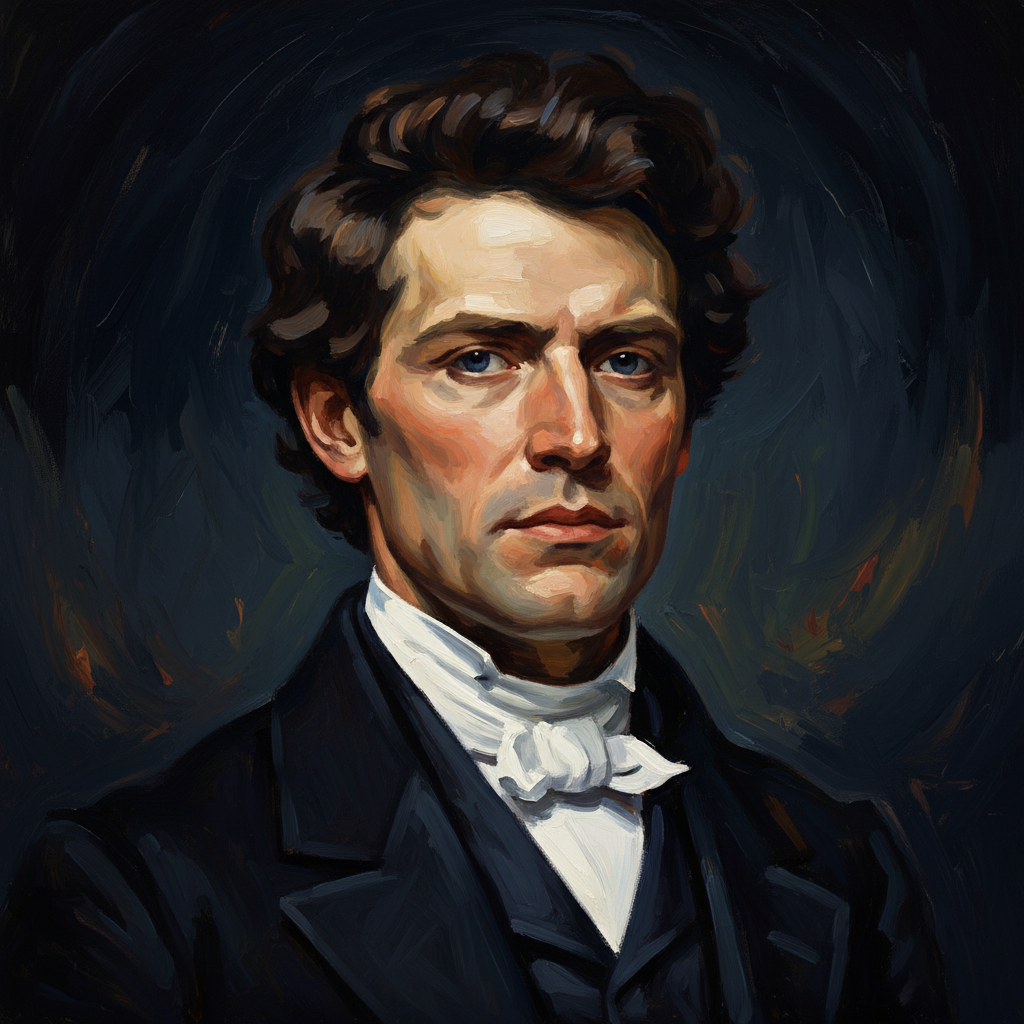
Joseph Smith — "I have a testimony that the Book of Mormon is true, and I know that God lives."
I have a testimony that the Book of Mormon is true, and I know that God lives.
I have a testimony that the Book of Mormon is true, and I know that God lives.
Click any product to generate a realistic preview. Up to 3 at a time.
* Initial load can take up to 90 seconds — revising the preview in another color is nearly instant.
"I have a right to reveal all things, and to teach all things."
"I have learned for myself that God is a being of great condescension, and that he will reveal himself to man."
"There are two churches only; the one is the church of the Lamb of God, and the other is the church of the devil; wherefore, whoso belongeth not to the church of the Lamb of God belongeth to that great…"
"The reason why I cannot be a sectarian is because I am not a sectarian."
"If I had not been persecuted, I would not have been a prophet."
Found in 1 providers: grok
1 source checked
This declaration asserts personal certainty about two foundational religious claims: that a specific sacred text is divinely authentic, and that a supreme deity exists. It frames religious knowledge not as belief or opinion but as direct testimony—an eyewitness-style conviction. The speaker positions themselves as someone who has received spiritual confirmation, making the statement simultaneously a personal confession of faith and a public proclamation meant to persuade others of divine reality.
Smith claimed to have translated the Book of Mormon from golden plates revealed by an angel, making this testimony self-referential and foundational to his prophetic identity. His entire mission depended on others accepting both claims. Smith reported direct visions of God and Jesus Christ, so asserting God's existence wasn't abstract theology but claimed personal encounter. His credibility as prophet rested entirely on the veracity of these two interlocked assertions.
Smith lived during America's Second Great Awakening (1790s–1840s), a period of intense religious revivalism, competing denominations, and widespread anxiety about which church held divine authority. New religious movements proliferated across the frontier. Smith's testimony emerged directly from this context of spiritual seeking and sectarian conflict, positioning his new scripture and restored church as the definitive answer to the era's urgent question: which religion is true?
AI-generated insights based on extensive research and information for context. Factual errors? Email [email protected].
Your cart is empty