What it means
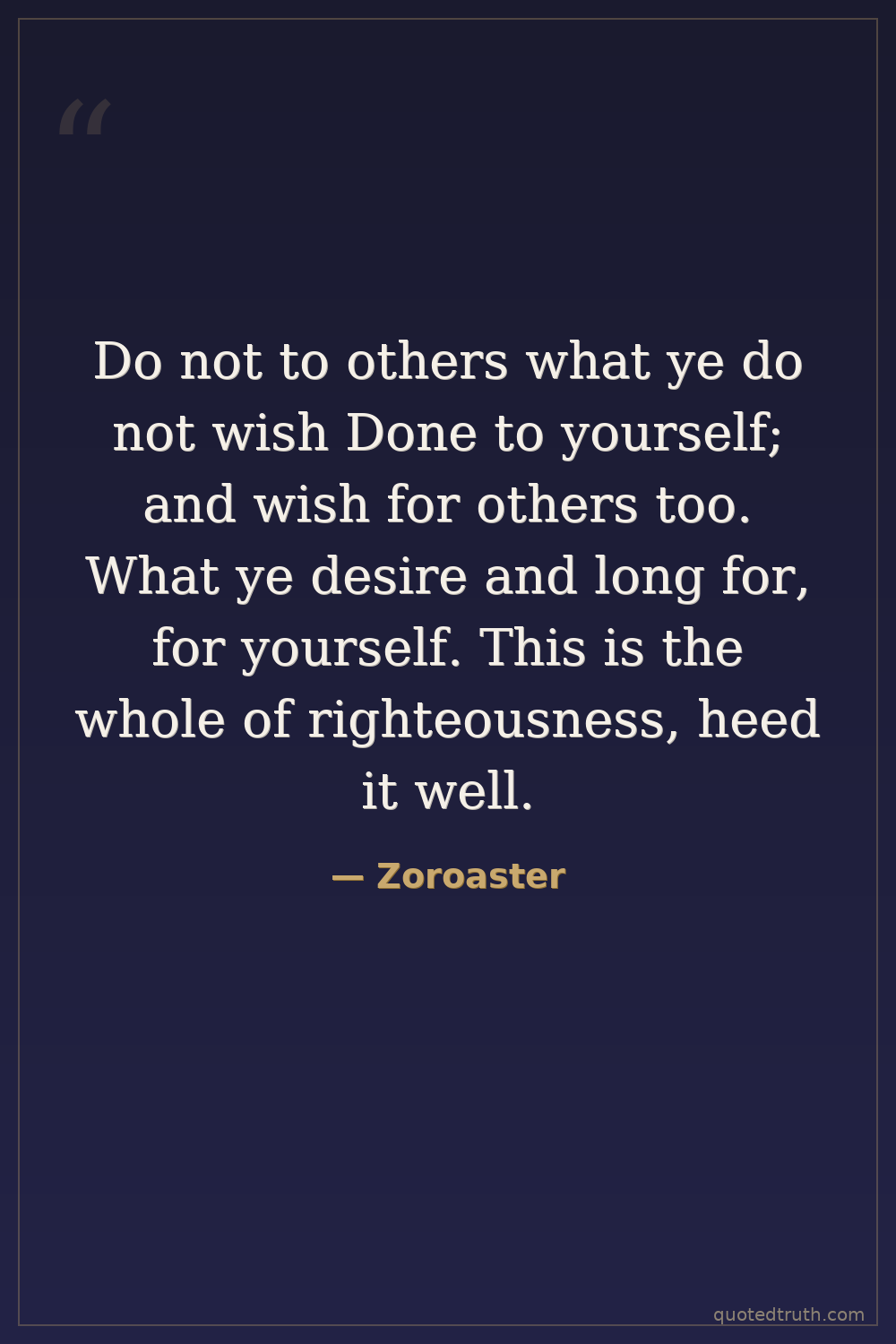
Treat other people the way you want them to treat you. Don't inflict harm, insult, or unfairness on anyone if you wouldn't want to be on the receiving end, and actively want good things for others the same way you want good things for yourself. This mutual standard of care, the quote says, is the entire foundation of moral behavior, not just one rule among many.
Relevance to Zoroaster
Zoroaster founded one of the world's earliest ethical monotheisms, organized around the triad of good thoughts, good words, and good deeds. He preached personal moral accountability and a cosmic struggle between truth (asha) and lie (druj), where each individual's choices tipped the balance. Framing reciprocity as 'the whole of righteousness' matches his practice of boiling complex ritual religion down to simple, universally testable ethics.
The era
Zoroaster lived in Bronze/Iron Age Iran, likely between 1500 and 1000 BCE, amid tribal polytheism, cattle-raiding warlords, and blood-sacrifice cults. Ethical conduct was typically owed only to kin or clan, not outsiders. By declaring a single wise creator and extending moral duty to all people, his teaching was radical, and later shaped Persian imperial law under the Achaemenids and influenced Jewish, Christian, and Islamic ethics.
AI-generated insights based on extensive research and information for context. Factual errors? Email [email protected].