What it means
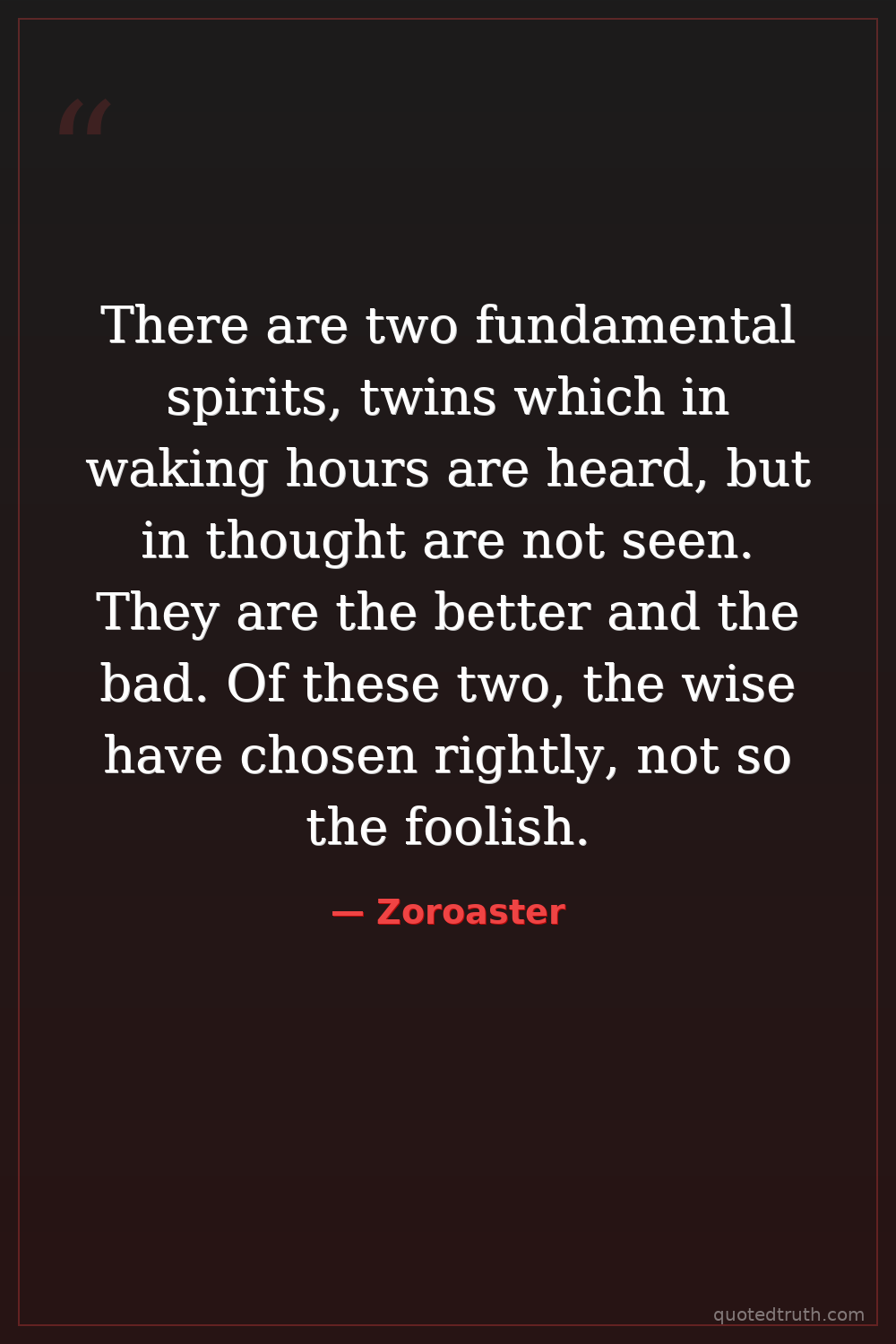
Two opposing forces exist in every moment of life—one that builds and one that destroys, one honest and one deceitful. You can hear them speaking through people's words and actions, but you cannot see them directly in the mind. Every person faces a choice between them. Wise people recognize the difference and pick the constructive path; foolish people either cannot tell them apart or knowingly choose harm.
Relevance to Zoroaster
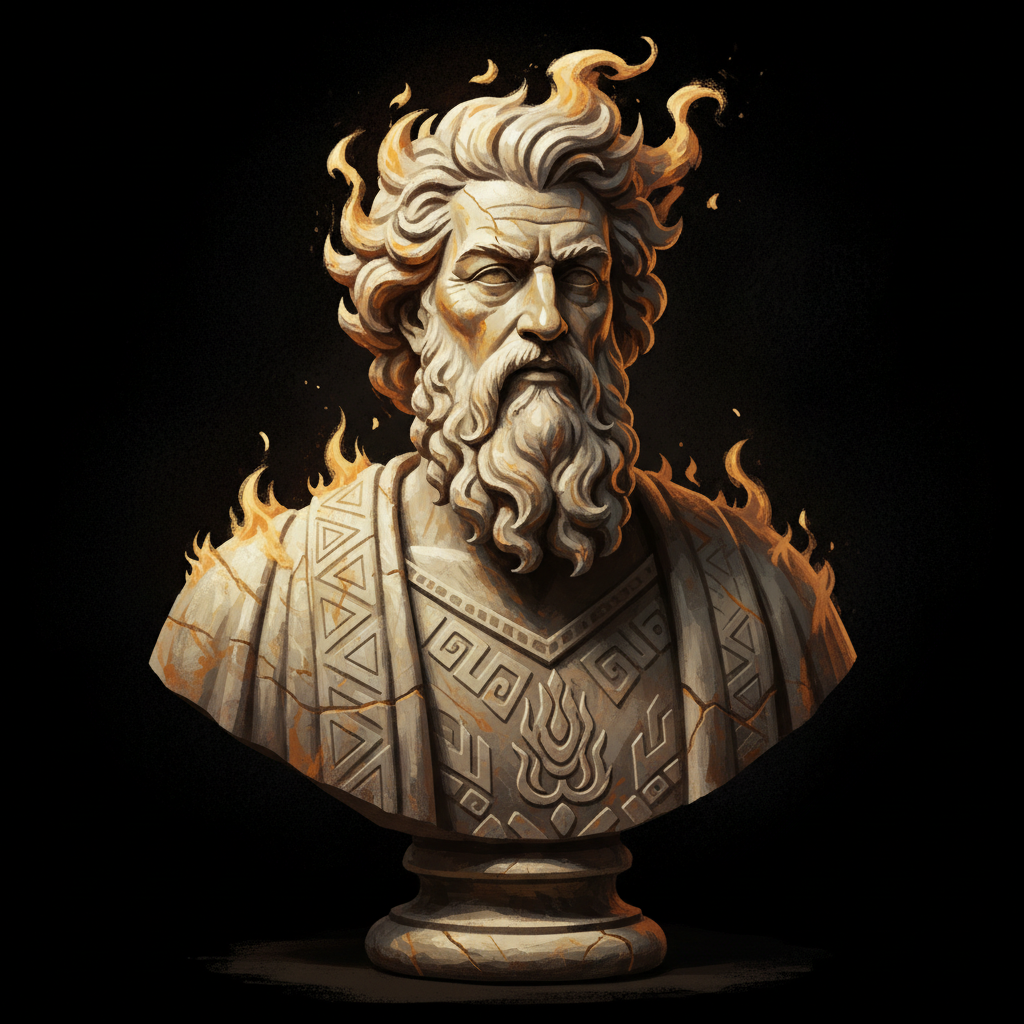
Zoroaster built his entire religious system around this cosmic dualism between Spenta Mainyu (beneficent spirit) and Angra Mainyu (destructive spirit). As a priest-reformer who rejected the polytheistic Indo-Iranian traditions of his time, he taught that salvation hinged on personal moral choice—good thoughts, good words, good deeds. This verse from the Gathas, the hymns he composed himself, captures the ethical free-will doctrine that distinguished his teaching from the ritualistic religions surrounding him.
The era
Zoroaster lived in ancient Bronze Age Persia, likely between 1500 and 1000 BCE, among pastoral Indo-Iranian tribes who worshipped many nature deities through animal sacrifice and haoma rituals. Tribal raiding, cattle theft, and priestly corruption defined daily life. Into this world of arbitrary divine favor, Zoroaster introduced a revolutionary ethical framework demanding individual accountability—an idea that would later influence Judaism, Christianity, Islam, and Greek philosophy through Persian imperial contact.
AI-generated insights based on extensive research and information for context. Factual errors? Email [email protected].