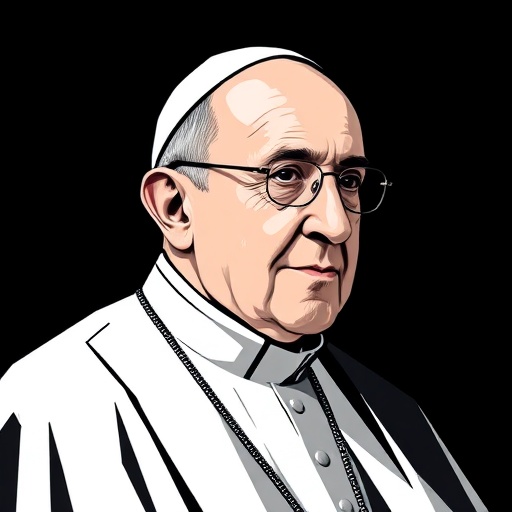
Pope Francis — "Don't forget to pray for me. I need it. Seriously."
Don't forget to pray for me. I need it. Seriously.
Don't forget to pray for me. I need it. Seriously.
Click any product to generate a realistic preview. Up to 3 at a time.
* Initial load can take up to 90 seconds — revising the preview in another color is nearly instant.
"The poor are at the center of the Gospel."
"Who am I to judge a gay person seeking the Lord with good will?"
"The Church must ask forgiveness for the scandals committed by its members."
"The greatest scandal is poverty."
"The true power is service."
First Latin American and Jesuit pope (2013-), who has steered the Catholic Church toward pastoral inclusion on LGBTQ pastoral care, divorced Catholics, and climate. Closely associated with Pope John XXIII (the Vatican II reformer pope) and Cardinal Walter Kasper (his theological ally on pastoral reform). For an intellectual contrast, see Cardinal Raymond Burke, American traditionalist cardinal, former head of the Vatican Apostolic Signatura — Burke is the public face of Catholic traditionalism that views Francis's pastoral approach as doctrinally dangerous — he has formally challenged Amoris Laetitia and other Francis reforms.
Found in 1 providers: grok
1 source checked
A blunt admission of need from someone whose role typically positions him as the spiritual anchor for others. Rather than performing invulnerability, the speaker acknowledges the real weight of his responsibilities and his genuine dependence on communal prayer. The word 'seriously' strips away ceremonial politeness — this isn't a ritual pleasantry but an honest confession that leading a global institution of over a billion people is hard, and he cannot manage it alone.
Francis, born Jorge Mario Bergoglio in Buenos Aires, was elected in 2013 after Benedict XVI's unprecedented resignation. He chose the Vatican guesthouse over papal apartments, rode public buses as a cardinal, and named himself after the saint of poverty. His Jesuit formation centers on personal humility and examination of conscience. He has publicly described himself as 'a sinner whom God has looked upon,' confesses to a regular confessor, and consistently refuses the ceremonial distance popes traditionally maintained.
Francis assumed the papacy in March 2013 amid the Church's deepest institutional crisis in modern times: Benedict XVI's resignation under pressure, the Vatileaks financial scandal, and cascading clergy abuse litigation worldwide. Western church attendance was in steep decline and organized religion faced unprecedented public skepticism. His papacy demanded both structural reform and personal credibility. An unguarded, plainspoken request for prayer — rather than a formal blessing — directly addressed the hunger for authentic, non-performative religious leadership.
AI-generated insights based on extensive research and information for context. Factual errors? Email [email protected].
Your cart is empty