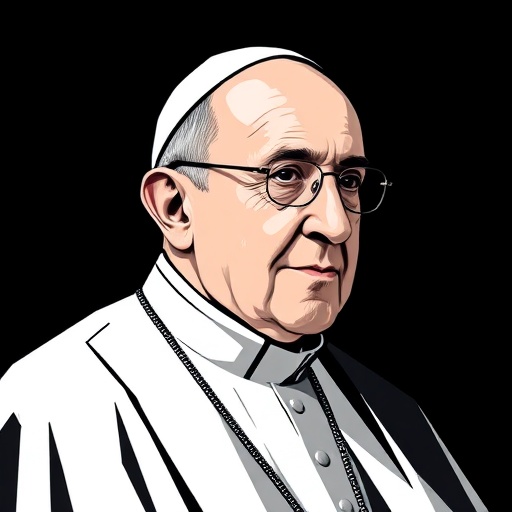
Pope Francis — "The true power is service."
The true power is service.
The true power is service.
Click any product to generate a realistic preview. Up to 3 at a time.
* Initial load can take up to 90 seconds — revising the preview in another color is nearly instant.
"The biggest problem is that we don’t feel the problems of others."
"A world without women would be a sterile world."
"War is madness."
"A person once asked me, in a provocative manner, if I approved of homosexuality. I replied with another question: 'Tell me: when God looks at a gay person, does he endorse the existence of this person…"
"The world needs poets."
First Latin American and Jesuit pope (2013-), who has steered the Catholic Church toward pastoral inclusion on LGBTQ pastoral care, divorced Catholics, and climate. Closely associated with Pope John XXIII (the Vatican II reformer pope) and Cardinal Walter Kasper (his theological ally on pastoral reform). For an intellectual contrast, see Cardinal Raymond Burke, American traditionalist cardinal, former head of the Vatican Apostolic Signatura — Burke is the public face of Catholic traditionalism that views Francis's pastoral approach as doctrinally dangerous — he has formally challenged Amoris Laetitia and other Francis reforms.
Found in 1 providers: grok
1 source checked
Power is not domination, wealth, or authority over others. Real power comes from dedicating yourself to serving people around you. Genuine strength means lifting others up rather than commanding them. This inverts conventional hierarchies—suggesting the most influential people are those who give their time, energy, and care freely. Service, not status, creates lasting impact. Leadership worth having is measured by what you give, not what you accumulate or control.
Pope Francis, born Jorge Bergoglio in Buenos Aires, embodied this upon taking office in 2013—choosing a guesthouse over the Apostolic Palace, washing prisoners' and refugees' feet, personally phoning strangers in distress. As the first Jesuit pope, he was formed by an order whose founding charism is service above status. He has relentlessly criticized clericalism and careerism within the Church, insisting pastors must smell like their sheep rather than accumulate institutional power.
Francis became pope in 2013 as the Church reeled from the clergy abuse scandal and institutional trust collapsed globally. Simultaneously, authoritarian populism surged worldwide, billionaires dominated public discourse, and strongman politics equated power with dominance. Movements like Occupy had recently challenged wealth concentration. Against this backdrop, a pope who rode buses and called for a 'poor Church for the poor' offered a pointed counter-narrative to every prevailing cultural model of what power looks like.
AI-generated insights based on extensive research and information for context. Factual errors? Email [email protected].
Your cart is empty